
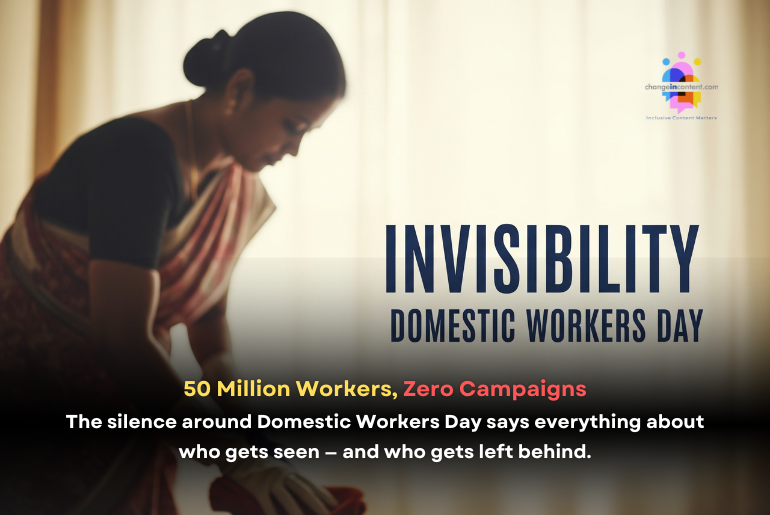
Domestic Workers Day highlights an uncomfortable truth. It is that the very people it aims to celebrate remain unaware of it. This silence is not accidental. It mirrors the broader invisibility faced by domestic workers in India. We are talking about a workforce of over 50 million people, primarily women, whose contributions are often overlooked, not just in campaigns, but also in policies, protections, and pay.
The forgotten observance: Why Domestic Workers Day matters now more than ever
June 16 is International Day for Domestic Workers. But unlike Mother’s Day or Women’s Day, hardly anyone spoke about it. There were no big brand campaigns, no policy announcements, and barely a mention across social media platforms. Only a handful of organisations, mostly non-profits, acknowledged it. Not brands. Not corporates. Just a few voices trying to keep the conversation alive.
It’s strange, isn’t it? Most domestic workers are women. Many of them are also mothers. Yet on Mother’s Day, there is no space for them. On Women’s Day, again, nothing. Even on a day created to recognise their labour and dignity, there is no meaningful attention or effort to include them.
One primary reason is the lack of awareness. 99% of the domestic workers don’t even know a day exists for them. Meanwhile, those with the power to raise awareness, including privileged consumers, influencers, and brands, remain silent.
Does purchasing power decide who gets a campaign?
Think about a working woman who buys a cleaning product, maybe an EXO bar or a bottle of Vim. Her house help is the one actually using it every day. However, the ad film for that product speaks only to the one who buys it, not the one who does the work.
When brand empathy ignores real labour
Brands build campaigns for their customers, also known as those who can afford to spend. You’ll find hand cream ads with poetic taglines like “these hands do all the work” rolled out on Women’s Day or Mother’s Day.
When brands say “these hands do all the work,” they’re usually talking to middle- or upper-class women, the ones who have the money to buy products. However, in many households, the actual hands doing that work belong to a domestic worker. She’s the one using the cleaning supplies, scrubbing the floors, and washing the dishes.
Still, you will not find her in the campaign. She’s not part of the message. She’s invisible.
It demonstrates how visibility, care, and recognition are contingent upon spending power. If someone can’t afford to buy, brands often ignore them, no matter how hard they work. Campaigns that pretend to celebrate women usually leave out those in lower-income roles. It becomes less about honouring effort and more about who’s worth marketing to.
Maternity and sick leave. Only if you work in an office?
Every year, we hear a lot about pregnancy, maternity leave, and balancing work and family, especially around Mother’s Day and Women’s Day. But these conversations usually centre around women in office jobs. What’s rarely asked is what happens when a domestic worker becomes pregnant.
A study by the Indian Institute of Human Settlements looked at over 9,600 households in Bengaluru and Chennai. In Chennai, 62% of households said they would stop employing a domestic worker if she got pregnant. In Bengaluru, 32% said the same. Instead of continuing her job, many households preferred to give her a one-time payment and let her go.
When it comes to basic weekly leave, 80% of households in Chennai reported allowing it, compared to 68% in Bengaluru. Support drops further when a worker falls sick. In Chennai, 55% of households said sick leave should be unpaid. Only 44% supported paid leave. Bengaluru did only slightly better, with 59% supporting paid sick leave and 36% preferring it unpaid.
Housework is work, so why isn’t it treated that way?
Something we often forget is that May Day is also for domestic workers. Housework is work. The women who clean, cook, and care for homes are workers in every sense of the word. Yet, the women who do it in others’ homes are rarely treated like workers.
In many households, even asking for a day off during Diwali, Eid, or Christmas is met with disapproval. While employers enjoy time with their families, they do not extend the same courtesy to the people who clean their homes and cook their meals. Many domestic workers hesitate to ask for a day off. Moreover, when they do, the response isn’t always kind. Some are met with guilt, while others face annoyance. It’s as if their time with their families matters less.
It shows how people still don’t see domestic work as “real work.” They rely on it every day, but don’t respect the individuals who do it. Domestic workers often hear things like “she’s just help,” when in fact, they are workers keeping homes running.
Why do we need to prioritise Domestic Workers Day?
In July 2023, India had 28 million registered domestic and household workers. However, the real number is much higher, possibly over 50 million, because many domestic workers remain unregistered, especially those working informally across cities. The National Domestic Workers Movement, based in Mumbai, estimates that two-thirds of these workers are in urban areas.
Women and girls make up the majority of the domestic workers. In fact, 75% of the increase in domestic workers over the last decade was attributed to women and girls. Most of them have little to no formal education or training. Alongside them, nearly 200,000 children work as domestic helpers, often in homes, eateries, or roadside food stalls.
Domestic Workers Day is not just a date. It is a cry for recognition.
Despite their growing numbers, domestic workers don’t know their fundamental rights or where to seek help. Across the country, millions of domestic workers lack written contracts or fixed working hours. Many work long shifts for very low pay, without any legal protection or social security. Minimum wage laws rarely apply to them, and their employment stays informal. Reports of abuse, harassment, and exploitation continue, especially among live-in workers who are more vulnerable to control and violence in private spaces.
That is precisely why we need to prioritise Domestic Workers Day. For many domestic workers, this day presents an opportunity to raise awareness, offer support, and connect them with the resources they deserve, such as information on fair wages, assistance with legal issues, or access to basic social security.
Currently, domestic workers remain largely invisible in both policy and public discussions. Prioritising this day means recognising their work, demanding better conditions, and making sure they are no longer left behind.
The final thoughts: Domestic Workers Day deserves more
It says a lot when a day meant for domestic workers comes and goes without notice. No buzz, no posts, no real recognition. If brands can run campaigns for women who buy, why can’t they spare a moment for the women who are domestic workers? If society can celebrate hands that nurture, why not the ones that scrub floors, wash clothes, and carry the weight of someone else’s home?
When observed with purpose, brands can use Domestic Workers Day to reach domestic workers with the information and support they’ve never had access to. It can push brands, policymakers, and even everyday employers to think about fair pay, legal protection, and basic respect.
Changeincontent perspective
At ChangeInContent, we believe that the visibility of workers should not depend on their earnings, but on the value they contribute. Domestic workers are the backbone of countless Indian households. If a day exists to celebrate them, we must use it as a tool to create systemic change, from policy to perception.
Also Read: Legal protection for domestic workers in India: Are they getting what they deserve?
Disclaimer: The views expressed in this article are based on the writer’s insights, supported by data and resources available both online and offline, as applicable. Changeincontent.com is committed to promoting inclusivity across all forms of content. We broadly define inclusivity as media, policies, law, and history. It encompasses all elements that influence the lives of women and marginalised individuals. Our goal is to promote understanding and advocate for comprehensive inclusivity.
