
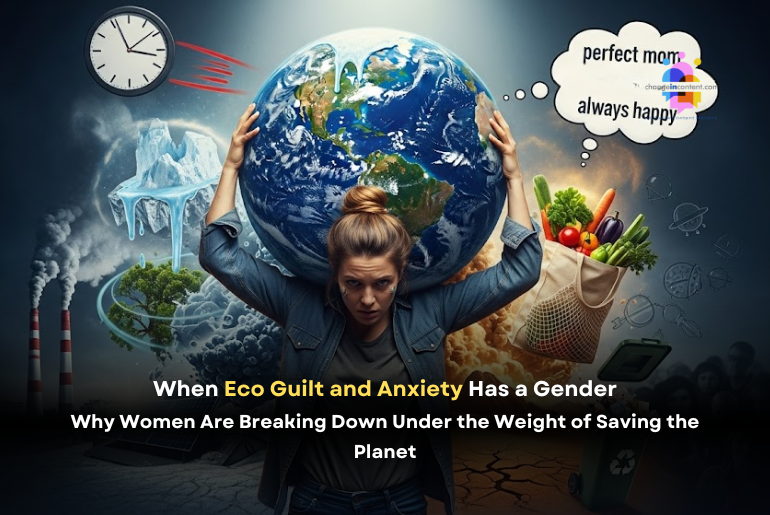
Eco guilt and anxiety in women are gendered burdens shaped by environmental, economic, and societal pressures. Women are not only more affected by the fallout of climate change but are also expected to lead the response, absorb the guilt, and adapt their lives more than others. This article explores why the weight of eco-consciousness is carried disproportionately by women around the world.
UNICEF reports that in 2019, India was the 7th most affected country in the world due to extreme weather and the climate crisis, both in terms of fatalities and economic losses. Years have passed, but the impact of climate change continues to grow more visible and more personal. Summers now bring extreme heat, while monsoon seasons are delayed or irregular in occurrence. Temperatures above 40°C or even 45°C have become disturbingly common.
While many acknowledge climate change as a serious concern, only a few take meaningful steps toward addressing it. A paper straw here, a reusable bag there, and a quiet, persistent voice keeps reminding us to “do better” for the planet. This feeling is called eco-guilt, and studies show it is not shared equally. Women carry eco-guilt and eco-anxiety more than men.
Understanding eco guilt and anxiety in women
Eco-guilt is the uneasy feeling people experience when they believe they’ve made choices that harm the environment. It could be something as small as throwing out plastic packaging or buying a fast-fashion item. Many start to feel they are not living up to the “right” standard of sustainable living. For women, it often turns into a constant mental load.
Eco-guilt falls heavily on women
From how they shop to what they eat or wear, women find themselves rethinking almost everything. For some, it becomes difficult to ignore the guilt. It builds quietly, influencing decisions at work, at home, and even when planning for the future. What makes this worse is that only women are expected to care about the environment, about families, about society.
A 2021 study in Energy Research & Social Sciences looked at data from 66 countries. It found that 66% of climate activists under 25 were women. Even in the 25-35 age group, over half were women. The numbers show that women take action and feel more responsibility for the planet’s future.
The gender divide in eco-conscious behaviour has gained enough attention to earn a name: the “eco gender gap.” British market research company Mintel coined the term after discovering that 71% of UK women were trying to live more sustainably, compared to only 59% of men.
Research found that single men and male-dominated families consumed more energy than single women or women-dominated families, primarily due to lifestyle choices. Another study pointed out that cisgender men tend to consume more meat, contributing to higher greenhouse gas emissions.
Why eco guilt and anxiety in women leaves a deeper impact
There are various reasons behind this gender gap in eco-guilt. Women’s lives, especially in lower-income communities, are more directly affected by climate change. In many parts of the world, women work in agriculture, fetch water, manage household tasks, and take care of children and elderly family members. Rising temperatures and unpredictable weather make all of these tasks harder and more dangerous.
Women’s bodies also respond differently to heat stress. Studies have found that long-term exposure to high temperatures puts women at higher risk for dehydration, heart problems, and respiratory illnesses. In places with poor infrastructure, where access to cooling, healthcare, and clean water is limited, this risk becomes even more serious.
There are emotional repercussions. Many women face anxiety, stress, and depression, depending on how bad their surrounding environmental issues are. For those already dealing with poverty or social disadvantage, climate stress becomes another concern. A 2023 study found that 69.7% of women exposed to short-term heatwaves experienced higher levels of anxiety and mental distress.
Is green marketing the new pinkwashing?
The market for eco-friendly products keeps growing, but most of it still targets women. From reusable menstrual cups and cloth pads to bamboo toothbrushes and shampoo bars, the shelves are packed with products that expect women to lead the way in saving the planet. Even the packaging often comes in soft pastels with words like “pure,” “natural,” or “clean.”
Sustainable living is sold as a lifestyle choice, but mostly to women. She is the one carrying the canvas bag, buying chemical-free laundry detergent, and swapping plastic razors for metal ones. There are endless guides on how women can go green, from their wardrobe to their wellness routine. For men, the options are fewer and the expectations even lower.
She has to recycle, switch to slow fashion, avoid plastic, educate her children, and still remember to compost.
Conclusion: Breaking the gender bias in climate responsibility
The emotional and physical effects of climate change are not the same for everyone. Many women report changing major life plans because of climate anxiety. Some delay having children. Others rethink their careers or worry about whether the world will be safe enough in the years to come.
What needs to change is who gets involved and how. Responsibility must shift from individuals to industries, from women to everyone. Change will only be fair when the responsibility is shared, the support is equal, and the eco-guilt no longer has a gender.
Changeincontent perspective
At Changeincontent, we believe that climate justice must include gender justice. Eco guilt and anxiety in women are not just side effects of climate change. Instead, they are warning signs that systemic inequalities continue to persist. True sustainability demands more than lifestyle shifts by women. It requires collective accountability from corporations, governments, and communities to recognise emotional labour, redistribute environmental responsibility, and rethink who is genuinely doing the heavy lifting.
Also read: Unhappy leaves: A radical policy by a Chinese retail company sparks global interest.
Disclaimer: The views expressed in this article are based on the writer’s insights, supported by data and resources available both online and offline, as applicable. Changeincontent.com is committed to promoting inclusivity across all forms of content. We broadly define inclusivity as media, policies, law, and history. It encompasses all elements that influence the lives of women and marginalised individuals. Our goal is to promote understanding and advocate for comprehensive inclusivity.
