
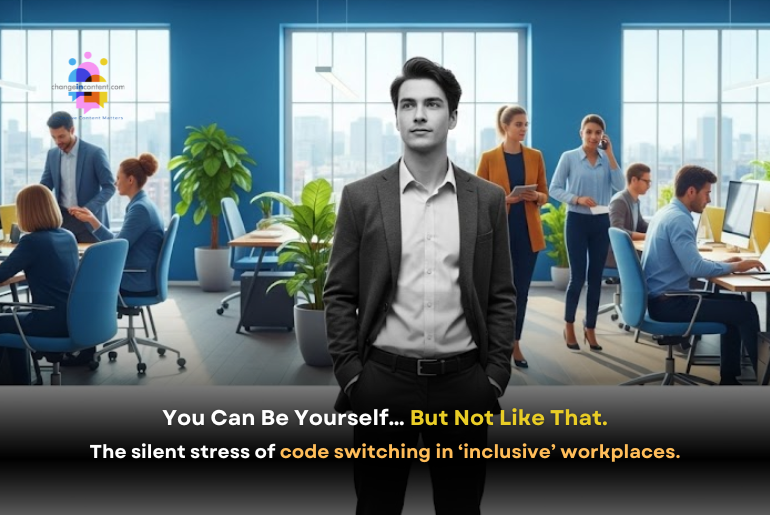
Despite growing conversations around diversity and belonging, code-switching remains one of the most overlooked and under-discussed forms of emotional labour. The term may sound technical, but its impact is deeply personal. For many women and LGBTQ+ employees, code switching is not a choice; it is survival. This article explores how and why this behaviour emerges, and why it is time for companies to dismantle the systems that demand it.
Every article or report on inclusion talks about creating safe spaces, especially in workplaces, where everyone can show their true selves. Yet many LGBTQ+ employees still feel marginalised or unable to express who they are at work. Many hide parts of their identity through code-switching. Despite all the rainbow logos and Pride month messages, many still feel the need to mask their true selves.
What is Code Switching?
Code-switching began as a term for bilingual speakers who switched between languages depending on the setting. Over time, it has evolved to describe how people alter their mannerisms, voice, or self-expression to match the dominant culture around them.
While anyone can code-switch, it is far more common among marginalised communities. These groups often feel pressure to “adjust” their behaviour to meet the unwritten rules of a professional or educational space. For instance, an Indian professional might avoid speaking in their natural accent and instead adopt a Westernised tone. A queer employee might deepen their voice to sound more traditionally masculine or feminine. Someone in a same-sex relationship might refer to their partner as “they” to avoid revealing too much about their personal life. This constant self-editing can take a toll on an individual’s confidence and mental health.
Why Code Switching affects LGBTQ+ employees the most
A LinkedIn survey shows that 74% of LGBTQ+ employees feel the need to code-switch to avoid negative stereotypes, while 57% are uncomfortable expressing their full identity at work. Many also feel they must seek allies at work to feel safe. About 66% said they needed at least one trusted colleague to rely on.
The practice of code-switching among LGBTQ+ employees can feel like a survival tactic rather than a choice. While it may help someone avoid awkwardness or discrimination, it also encourages the idea that being fully authentic is not safe or acceptable.
How women navigate voice, tone, and expectations
Women, too, face similar challenges. A study by Preply found that nearly 2 in 5 women code-switch at work to appear more competent, while almost two-thirds feel pressured to use a “work voice.” About 21.92% of women make their voices deeper, while 30.14% speak louder to gain attention. These changes happen as a response to workplace bias, not personal preference.
One in six women reported being told to change their tone or communication style. For a third of them, this adjustment feels unnatural. On top of that, one in four women finds the practice emotionally exhausting.
The emotional toll of Code Switching
Code-switching may help someone blend in, but it comes at a high emotional price. Constantly monitoring how you speak, move, or express yourself is draining. It creates a split between one’s true identity and the version they feel forced to show at work.
For LGBTQ+ employees, this can lead to feelings of invisibility or isolation. For women, it can result in frustration and burnout, especially when their natural communication style is dismissed as less professional. In both cases, code-switching highlights a workplace culture that values conformity over individuality.
Organisations need to shift from performative actions. It means building spaces where authenticity is welcomed, leaders address biases openly, and create policies that promote equality beyond checkboxes and campaigns. Inclusion must be part of everyday decisions, not seasonal events.
The final take: Breaking the code of conformity
Inclusion is not about putting up posters during Pride month or celebrating International Women’s Day with a token gesture. It is about creating space where people no longer feel they need to adjust who they are to be accepted. Employees must trust that they can voice their opinions, share their identities, and express themselves without fear of judgment or career setbacks.
Changeincontent perspective
At Changeincontent, we believe inclusion begins with allowing people to show up as their full selves, without editing, diluting, or translating their truth. Code switching may be invisible, but its impact is real, and it tells us that many systems are still designed for uniformity, not diversity. Until we build workplaces that accept voices as they are, true belonging will remain out of reach.
Also Read: Nobel Laureate Claudia Goldin on Greedy Jobs: The unpaid trap behind gender pay gaps.
Disclaimer: The views expressed in this article are based on the writer’s insights, supported by data and resources available both online and offline, as applicable. Changeincontent.com is committed to promoting inclusivity across all forms of content. We broadly define inclusivity as media, policies, law, and history. It encompasses all elements that influence the lives of women and marginalised individuals. Our goal is to promote understanding and advocate for comprehensive inclusivity.
