The Brief
- The corporate hair loss crisis is a media label, not a medical diagnosis.
- Significant stress, including pressure at work, can trigger excessive hair shedding.
- Shedding may appear months after a trigger; other causes need consideration.
- A doctor can assess the cause before you spend on treatments or supplements.
- Employers should address excessive workloads while respecting employees’ medical privacy.
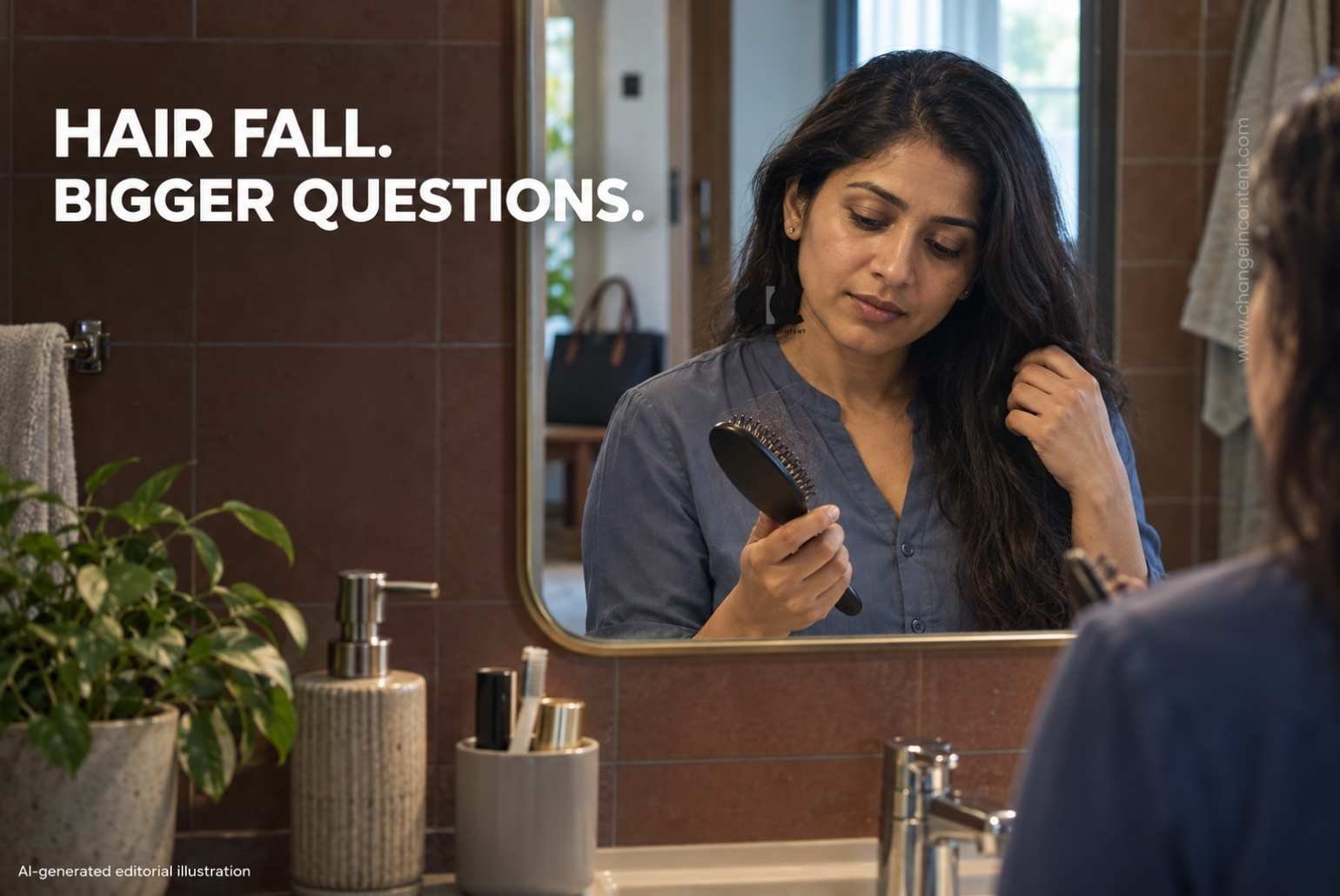
A wellness webinar is an awkward invitation when the calendar leaves no room for lunch. The corporate hair loss crisis, as a recent headline calls it, brings that contradiction into the bathroom mirror.
Women are being encouraged to manage their stress, improve their routines and look after their hair. There is rather less enthusiasm for asking what could come off their to-do lists.
A Times of India report published on 22 September connects working women’s hair concerns with sustained pressure and disrupted routines. It raises a worthwhile question. It does not, however, present a population study establishing a new corporate epidemic or measuring how much hair loss among working women has increased.
We can take the concern seriously without treating every strand as evidence against an employer.
Can work stress affect your hair?
Yes, significant psychological stress can trigger a condition called telogen effluvium. The American Academy of Dermatology explicitly includes pressure at work among possible triggers. That does not mean a difficult meeting will make your hair fall out the following morning.
Hair grows in cycles. In telogen effluvium, more hairs than usual move into the resting and shedding phase. According to the British Association of Dermatologists, increased shedding can become noticeable around three months after a trigger and usually occurs across the scalp. The delay can make the connection difficult to recognise.
Stress is one possibility among several. Illness, childbirth, marked weight loss and changes in medication can also precede shedding. Thyroid conditions and iron deficiency may need investigation, while female pattern hair loss can resemble or coexist with telogen effluvium. A job title cannot settle the diagnosis.
This is a useful reason to widen the conversation about working women’s health beyond motherhood. A concern does not need to fit a familiar corporate benefits category to deserve attention. Nor does a woman need to establish that her employer caused it before seeking care.
Before buying another bottle
If shedding worries you, arrange an appointment with a doctor or dermatologist. The NHS advises getting a medical assessment before approaching a commercial hair clinic. Mention the effect on your confidence or wellbeing as well as what you have noticed physically.
Bring a short timeline: when the change began, recent illness or childbirth, changes in diet or weight, medicines and supplements, and periods of significant stress. Let the clinician decide which examinations or tests are appropriate. Persistent shedding, visible thinning or changes in the scalp should not be waved away with a casual instruction to relax.
The shopping basket can wait. The AAD’s treatment guidance cautions against taking biotin, iron or zinc without evidence of deficiency; unnecessary supplementation can be harmful. A product being labelled for hair health does not establish that it addresses your particular problem.
Telogen effluvium often resolves, although recovery of hair volume takes time. Avoid interpreting every wash as a progress report. A clinician can help distinguish a temporary episode from another condition needing a different approach. Support for distress also belongs in the conversation; caring about a visible change is hardly a character flaw.
The office cannot outsource everything to self-care
Employers do not need to become amateur dermatologists. They can examine the parts of working life they actually control.
The World Health Organisation identifies excessive workloads, long or inflexible hours, and low control over work as risks to mental health. Its recommendations include organisational changes that address working conditions. That supports a response to harmful pressure; it does not establish a hair-regrowth treatment.
In practice, a manager could ask which deadlines can move, whether staffing matches the workload and whether evening messages genuinely require evening replies. Protected breaks and time for appointments need to survive contact with the working day. Employees should be able to raise workload problems without sharing a diagnosis or discussing their appearance.
Our wider discussion of overwork culture belongs here. A breathing exercise may be welcome. It cannot decide which of five supposedly urgent assignments should wait. Someone with authority has to make that call.
The Change Ahead
The useful outcome of this conversation would be fewer women dismissing their concerns, fewer speculative purchases and more workplaces willing to adjust unreasonable demands. Hair should never become a test of someone’s resilience, professionalism or capacity for responsibility.
Women deserve medical answers without being told that ambition is the problem. Employers can start with a less glamorous intervention than a wellness campaign: make the workload manageable enough for people to use the support on offer. The shampoo has its own job to do.
Editorial Note
This is a reported explainer with editorial commentary, prompted by the Times of India article and checked against public guidance from dermatology organisations, the NHS and WHO. No original patient interviews or clinical assessment were conducted. “Corporate hair loss crisis” is used as a media framing, not a diagnosis or a measured prevalence claim. This article provides general information, not individual medical advice; readers concerned about hair loss should consult a qualified clinician.
Sources
- Times of India: The corporate hair loss crisis, 22 September 2026: The report that prompted this article.
- American Academy of Dermatology: Six skin and hair conditions linked to stress: Stress and excessive shedding.
- British Association of Dermatologists: Telogen effluvium: Hair cycle, timing, differential causes and recovery.
- NHS: Hair loss: Seeking medical assessment and recognising emotional impact.
- American Academy of Dermatology: Hair loss, diagnosis and treatment: Diagnosis and supplement cautions.
- World Health Organisation: Mental health at work: Organisational risks and responses, rather than hair-specific treatment.