
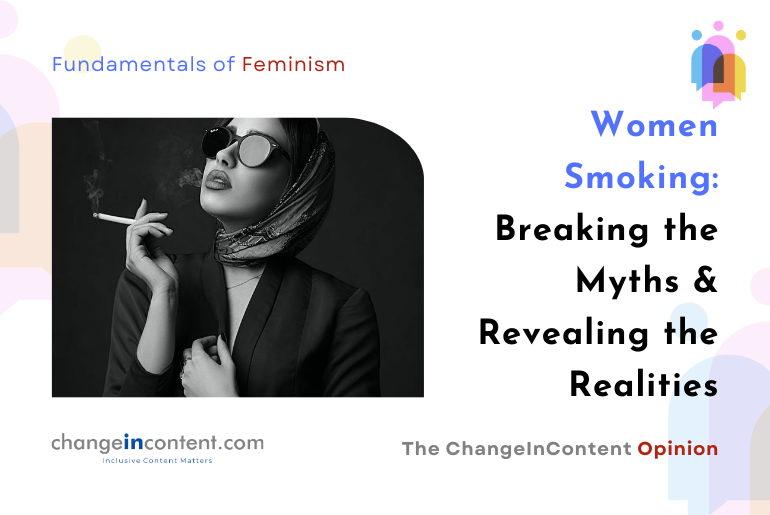
A beautiful woman wearing black, with red lips and a long cigarette in her hand—quite a powerful visual. Many ads, features, and movies have portrayed bold women in this manner. It also somehow shows the woman as someone who is at ease in a man’s world. Virginia Slims ads are a testament to this. They show smoking as a sign of equal rights and the women smokers as powerful beings.
Kentucky Kings, back in the 1960s, used a woman in the last frame for their ad talking about the all-new filter. Winston Cigarette shows a woman dressed like Audrey Hepburn from Roman Holiday lighting up with her man in the middle of a photoshoot amidst nature. She is abundantly joyous.
And who can forget the iconic scene from Roman Holiday when Audrey Hepburn escapes her stately duties and becomes a carefree girl for a day? However, smoking was almost exclusively a male privilege, as society viewed it as “unladylike” for women.
Women smoking: The history
After the First World War, tobacco use among men skyrocketed. Smoking became a badge of manly pride, apparently making men look more in control and virile. However, women who smoked were often portrayed as women beneath certain strata and from dubious backgrounds, and smoking became synonymous with prostitution. This stigma painted women smokers as characterless or immoral figures.
Traditionally, advertisers successfully branded cigarettes as a masculine accessory. It implied that ‘ladies’ did not smoke, and it was yet another way for men to assert control over women’s actions. Thus, when a woman chose to smoke, it was more than just an act of dare but downright rebellious. That is how cigarettes became a symbol of First Wave Feminism. By the 1920s, cigarette manufacturers, seeing an opportunity, began marketing cigarettes to women as “torches of freedom.”
How ‘Torches of Freedom’ sold smoking to women
“Torches of Freedom” was a clever marketing move by Edward Bernays, one of the first to use propaganda in advertising. Since it was scandalous for women to smoke publicly then, Bernays branded cigarettes as “torches of freedom,” connecting smoking with the idea of women gaining more freedom and rights. By making cigarettes seem like a symbol of independence and progress, Bernays’ campaign convinced more women to start smoking. Therefore, this boosted sales because women saw smoking as a way to break away from traditional roles and show they were modern and independent.
In the following decades, tobacco companies targeted women with advertising slogans like “You’ve come a long way, baby. You’ve got your own cigarette now, baby…” and “Find your voice.”
Brands, in their quest for gender-based marketing, cleverly used colour, like the pink packaging and cigarette papers of Pink Dreams in North America and the vanilla-flavoured Pink Elephants in Europe.
Women smoking and gender equality
Is gender equality really about women mimicking behaviours traditionally associated with men, even harmful habits like smoking? In their fight against patriarchy, women overlooked how tobacco companies were cashing in on the feminist movement. The resulting consumerism created only an illusion of empowerment.
Cigarettes symbolised men’s social power, and women didn’t smoke because they wanted to be men. They smoked to show they could be socially equal to men. However, women’s desires to be equal to men have been commercialised and exploited for profit.
Women smoking on screen: Feminism or cliché?
According to movie logic, showing a woman smoking is the best way to show her as liberated, strong, and different from the “traditional” woman. When a male actor smokes on screen, people see it as a casual habit without much thought. However, when a woman smokes, it’s often interpreted as a sign of progressiveness.
Consider how frequently we’ve seen female characters light up a cigarette, and our immediate reaction is to view her as a strong and independent woman. Due to the stereotypes and clichés in movies, women often view smoking as a symbol of progress. Movies and TV series portray female smokers as cool, sexy, independent, fun, attractive, and full of life. This image appeals to many young girls who want to feel unique and like the modern “IT” girl. In the end, they may try smoking without realising that they can become addicted after smoking as few as 100 cigarettes (five packs).
In countries like India, where women’s empowerment still has a long way to go, the romanticisation of smoking on our screens sends the wrong message about feminism.
The vamp who smokes
It’s often a familiar scene where a vamp pulls out a cigarette, a man offers his lighter or match and strikes up a conversation. There’s also the lingering, sensual shot of her relaxing after intimacy, cigarette in hand, with smoke swirling around her. It does look cool. However, this portrayal of a vamp sadly stands out as the only depiction of “modern women” on screen.
Bollywood movies also have this sexist way of showing “good” traditional women in modest attire. In contrast, “not-so-good” women are scantily clad and indulging in substances like weed and cigarettes. This jaded definition needs to disappear. Also, sometimes hysterics get accompanied by women and smoking. It implies that a woman who is neurotic smokes and drinks. These stereotypes that movies perpetuate. There are far more meaningful ways to show women as strong and empowered or undergoing mental trauma than relying on smoking as the symbol.
The final thoughts on women smoking and the concerns around it
While for some women, smoking is a choice in defining their freedom, it’s essential to move beyond the stereotype that modern feminism revolves solely around smoking, drinking, or both. When mainstream media reduce feminism to these simplistic portrayals of women smoking, drinking, and dancing provocatively in skimpy dresses, it trivialises the true essence and purpose of the movement.
The implicit association that makes women smoke is harmful to their physical health. Data shows that overall smoking prevalence grows, and female smoking is increasing at a faster rate than male smoking. It is an emerging concern for tobacco control in India and requires the urgent attention of policymakers. Addressing this issue is crucial to curbing the rising tide of tobacco use among women, ensuring better public health outcomes, and reducing the burden of tobacco-related diseases in the country.
Disclaimer: The views expressed in this article are based on the writer’s insights, supported by data and resources available both online and offline, as applicable. Changeincontent.com is committed to promoting inclusivity across all forms of content, which we define broadly to include media, policies, law, and history—encompassing all elements that influence the lives of women and gender-queer individuals. Our goal is to promote understanding and advocate for comprehensive inclusivity.
