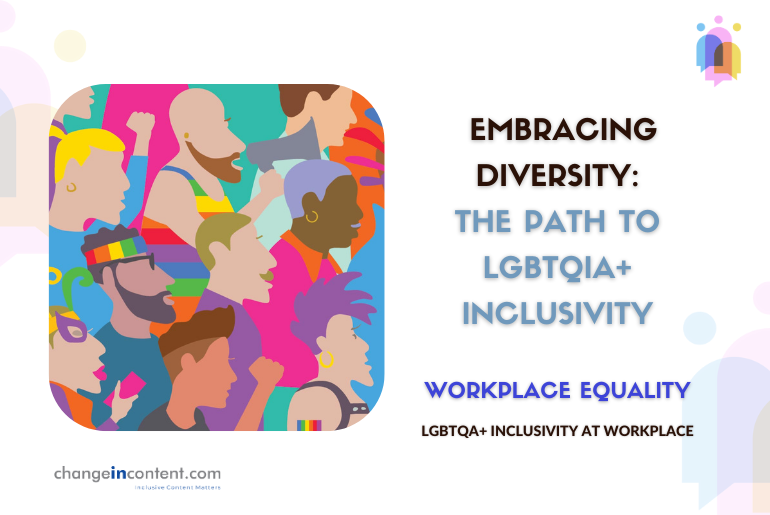
LGBTQIA+ refers to lesbian, gay, bisexual, transgender, queer (or sometimes questioning), intersex, asexual, and others. The “plus” represents sexual identities outside these boundaries, including pansexual and Two-Spirit. The first four letters of the acronym have been in use since the 1990s. In the last few years, there has been a pressing need to be inclusive of other sexual identities as well. Read on as we explore LGBTQIA+ inclusivity and its impact on mental health.
An overview of LGBTQ+ inclusivity
We are aware that the LGBTQIA+ community experiences discrimination, stigma, and lack of empathy and understanding at every step of their lives. Research states that compared with heterosexual and cis-gendered people, they are more prone to poorer mental health outcomes. The healthcare industry is not yet very active in addressing these issues. Or even if they are, it’s not really very visible. A safer environment, workplace and awareness can go a long way in fostering a world where all marginalised communities feel they can live freely. At changeincontent.com, we talk about the work that is happening to change the way we look at queer people in India.
The need for a common terminology
A unified terminology creates a safety net for queer people. It also helps to engage in political advocacy. A sense of social solidarity can enhance visibility, combat discrimination, and advance causes, including anti-discrimination and equality laws.
The term LGBTQIA+ can help people feel connected to a larger group of people with shared experiences. We come across articles and content where the term is used to depict only homosexuality. However, LGBTQIA+ does not refer to a single, homogenous group. Instead, it is a summation of many individual communities made up of diverse sexual orientations. These communities have shared objectives, but each component has its own unique identity.
India – Today
In 2018, following a landmark decision by the Supreme Court in the Navtej Johar v. Union of India case, consensual intercourse between adults of the same sex was only decriminalised in the country in 2018. In the last six years, homosexuality and queerness have been far from being accepted in most parts of India. The removal of the sodomy law is considerable progress. In social media, we see influencers from the LGBTQIA+ communities talking freely. We also see brand endorsements. But we also come across incidents of hate speech and trolling, resulting in disaster and deaths.
Source: News18
On the other hand, shows like Made in Heaven have dealt with LGBT characters in positive ways. But there is a lack of awareness about LGBTQ people. We rarely discuss queerness and related issues. Family members find it difficult to accept their children when they come out as queer. Even in death, queer bodies remain unclaimed by their parents.
Source: India Times
LGBTQAI+ and workplace discrimination
Research suggests that while attitudes have shifted towards greater acceptance, LGBTQ+ people still face considerable homophobia and discrimination. Harassment, bullying, and workplace discrimination are not uncommon. As we scan through LinkedIn, the largest online professional community, we see that Accenture in India is, for the fourth consecutive year, the Gold Employer for LGBT+ inclusion by India Workplace Equality Index 2023!
Zahara Fernandes: A visionary leader
A post by Zahara Fernandes, managing director | global delivery leader | India Pride Sponsor at Accenture, talks about the organisation’s unwavering commitment to LGBTIQ+ inclusion in the workplace. What we love is the eloquence and the integrity of this post.
It resonates with an inclusive world that changeincontent.com believes in. The post nudges professionals to be mindful of diversity, inclusion, and equality.
As a member of the LGBTIQ+ community, she talks about the power of embracing authenticity, spreading love and supporting others on their journey to self-discovery. She talks about her traditional Muslim upbringing and sexual orientation and her inability to discuss such issues with her family. She also talks about her marriage, a not-happy one and 19 years of struggle to keep it going.
“My love for my daughter and the desire to be a role model for her pushed me to break barriers and focus on my career. Through a global role, I connected with diverse perspectives and witnessed the freedom enjoyed by others. Sharing my story with a foreign client who understood me, I began joining underground groups for the LGBTIQ+ community, sparking my journey of queer advocacy.” As a leader, she was part of the sexual harassment committee. She led important events, ensuring zero tolerance for inappropriate jokes.
She talks about her journey of self-discovery and its challenges. She spoke about anxiety and persistent depressive disorder that she has gone through. She also talks about her daughter and her coming out in the open and, as a parent from the LGBTQ community, how Sweekar has played a role. She also mentions the inclusive policies and benefits that uplift and celebrate all at Accenture.
Accenture: Committed to Queer advocacy
Accenture keeps showing the organisation’s commitment to inclusivity. It goes beyond tokenism to create a workplace where everyone can authentically be themselves with validation, agency and choice.
For example, the Self-ID program at Accenture provides people with a platform to share information about their gender identity and sexual orientation voluntarily. This program helps the team at Accenture to craft I&D initiatives based on data rather than assumptions.
Accenture’s commitment to creating an inclusive environment for all employees, regardless of their sexual orientation, gender identity, or expression (SOGIE), is noteworthy. The organisation has developed comprehensive policies that cater to the unique needs of a diverse workforce, policies that go beyond the tokenism of inclusion and foster a deep sense of belonging.
Another praiseworthy initiative is Accenture’s progressive medical insurance program. It meets the specific needs of LGBTIQ+ people by offering coverage for gender reassignment surgery, hormone replacement therapy, fertility and surrogacy treatment, and coverage for the partner’s parents under the ‘parents-in-law’ category. Moreover, the parental leave policies prioritise the significance of caregiving, irrespective of gender, to support LGBTIQ+ individuals in their parenting journeys.
The final thoughts on LGBTQIA+ inclusivity
We love how Zahara Fernandes ends the post by saying, ” The journey to a freer future may be long, but the rewards are immeasurable. This Pride Month, let’s embark on a collective voyage of empathy to make a difference, embrace diversity, become allies and advocate for change within our own spheres of influence.” We will publish more such pieces that celebrate diversity and applaud inclusivity.
Disclaimer: The views expressed in this article are based on the writer’s insights, supported by data and resources available both online and offline, as applicable. Changeincontent.com is committed to promoting inclusivity across all forms of content, which we define broadly to include media, policies, law, and history—encompassing all elements that influence the lives of women and gender-queer individuals. Our goal is to promote understanding and advocate for comprehensive inclusivity.