
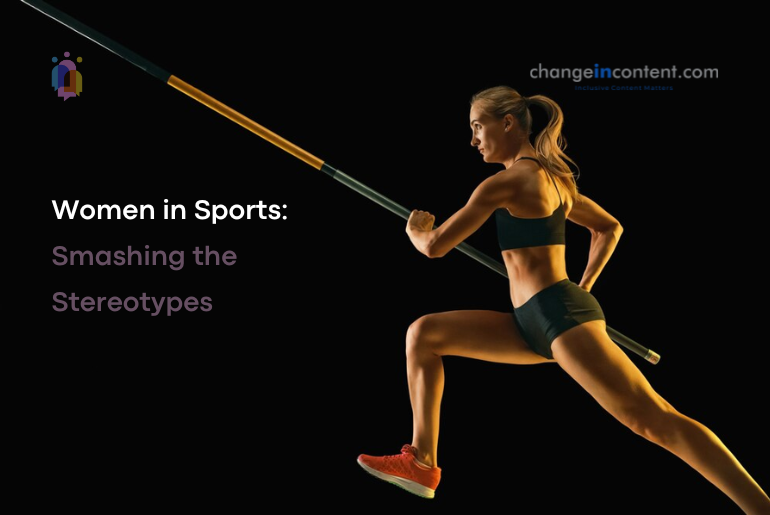
For decades, women in sports have been battling stereotypes. One minute, the media praises them as “glam athletes” with all-toned bodies and perfect looks. Then, they are labelled “tomboyish,” which is not feminine or sexy. Sometimes, their strength and fierce competitiveness go against the very definition of commonly understood femininity. But guess what? All definitions and understandings are way off-base!
A sportswoman can be like Simone Biles, defying gravity with elegance, or Serena Williams, a powerhouse who dominates the court with every swing, or Steffie Graph, the epitome of lingering and fragile beauty that endures. What do they have in common? They are dedicated and extremely talented women. They are also diverse, like all women. However, they should show that to be strong and athletic; they need performers while shattering outdated ideas of femininity.
Women in sports: The funding gap
There is also the belief that women’s sports are less competitive or exciting than men’s. Women like Megan Rapinoe, a force on the soccer field with a powerful voice for equality, or Mikaela Shiffrin, an “alpine skiing machine” dominating the slopes, prove otherwise.
Despite these achievements, women’s sports face a significant funding gap. A 2021 study by the University of Southern California found that media coverage of women’s sports represents just a fraction of men’s coverage. Similarly, sponsorship deals and overall investment in women’s sports need to catch up. Imagine Serena Williams, a tennis powerhouse, having to practice on subpar courts with limited coaching in her early years!
This lack of funding creates a vicious cycle. With less media coverage, sponsorships become more challenging to secure, which means less money for future development. Many female athletes, from Hollywood’s fictional Rocky Balboa to Indian cricketers like Mithali Raj, have had to overcome this hurdle with sheer grit and determination.
Beyond the game: Social stigmas faced by female athletes
Female athletes are rewriting the narrative of sports, showcasing their dedication, skill, and undeniable talent. However, their journey is not without hurdles. Society often throws outdated stereotypes their way, judging them based on appearance and behaviour, not their athletic prowess.
Here are some of the biggest social stigmas female athletes face:
Sexuality under scrutiny
One pervasive misconception is that not-so-feminine female sportspeople are gay. While many LGBTQ+ athletes have proudly competed and advocated for themselves, this assumption should not be applied to everyone. Questioning a woman’s sexuality simply because she excels in sports is disrespectful and dismissive of her achievements.
Remember Komal in Chak De! India. Why does one prominent player in sports films have a tomboy? Isn’t that a stereotype? Could she have belonged to the LGBTQ community? Why is her sexuality or orientation not explained? Because a family film cannot venture into that space. The filmmakers finally make her look demure in her saree. Does she not conform to the standards of feminine fashion? Does it not put undue pressure on closeted athletes who might not be ready to come out publicly?
Can you be strong and feminine?
The debate surrounding sex testing in athletic sports is common. Take the case of middle-distance runner Caster Semenya. In 2019, Semenya faced a significant legal setback when the Court of Arbitration for Sport ruled against her complaint challenging World Athletics’ regulations on female athletes’ testosterone levels. This decision mandated Semenya to undergo hormone-reducing medication to participate in the 800-meter run in international competitions.
Associate Professor Mari Haugaa Engh from the Norwegian University of Science and Technology (NTNU) sheds light on how the discourse surrounding this case is often framed around Semenya herself. Engh’s recent article in the Journal of Gender Research explores the intersection of gender and race in attitudes toward femininity in elite sports.
Engh observes that the focus of the debate tends to centre on Semenya’s body and sex rather than questioning the broader practice of measuring, categorising, and determining sex within the realm of sports. Therefore, this highlights a fundamental consensus that perceives Semenya’s body and sex as the “problem” rather than critically examining the methods and implications of sex testing in sports.
Gender identity in sports
Engh invites a deeper reflection on the societal norms and power dynamics at play. As discussions continue, it’s imperative to interrogate the underlying assumptions and biases that shape attitudes toward femininity and gender identity in sports, ensuring fairness, dignity, and inclusivity for all athletes.
Engh delves into the complex history and evolving methods used to determine femininity in sports competitions since women participated in events like the Olympic Games. Over time, there has been a persistent concern that individuals might seek to gain an unfair advantage by posing as women, prompting various measures to verify athletes’ sex.
Historically, methods to establish femininity have ranged from intrusive nude parades scrutinising performers’ bodies to doctor’s certificates attesting to an athlete’s sex. Even DNA and hormone tests are prevalent. However, since the 1990s, obligatory testing has ceased mainly due to the recognition of the complexities in determining a person’s biological and physical sex. Instead, scrutiny has shifted to those deemed “suspicious.”
Presently, organisations like World Athletics have implemented testosterone limits to determine eligibility for women’s competitions. Therefore, this marks a departure from widespread testing to focusing on individuals with “differences of sexual development,” often encompassing intersex conditions. However, the regulations primarily target women with naturally high testosterone levels.
Engh’s analysis highlights the ongoing challenges and debates around femininity in sports, underscoring the need for approaches that respect athletes’ rights and dignity while ensuring fair competition. As discussions continue, it is crucial to navigate these complexities with sensitivity and consideration for all individuals involved.
The clash between the average woman and the female sportsperson
It is challenging for female athletes. They are expected to be strong enough to compete effectively yet switch back to being a delicate woman off the field. Does being feminine mean being weak? In her analysis, Engh challenges the underlying assumptions and expectations surrounding women’s participation in international sports. She argues that the premise for admitting women into these competitive arenas is based on an imaginary construct: the average woman. This notion perpetuates the belief that women are inherently different, weaker, and slower than men, effectively reinforcing the idea of men as natural athletes.
Engh contends that it’s illogical to expect athletes, whose very essence is to push boundaries and exceed limitations, to conform to average standards. The nature of sports is to transcend the ordinary and achieve extraordinary feats. Yet, female athletes are expected to adhere closely to predetermined notions of femininity and athleticism.
Furthermore, she highlights the inconsistency in expecting exceptional performers to fit within the confines of average characteristics. In men’s sports, deviation from the norm is a mark of outstanding skill and achievement, yet the same latitude is not there for female athletes.
Engh’s critique underscores the need to reassess the criteria and expectations placed on female athletes in sports. Rather than confining them to outdated stereotypes and expectations, there should be recognition and celebration of their talents, regardless of how they may deviate from perceived norms. By challenging these ingrained assumptions, we can create a more inclusive and equitable environment for all athletes to thrive and excel.
Body image issues
Female athletes face societal beauty expectations and the misconception that athleticism makes them less feminine. Muscles, a natural result of training, are viewed as masculine. Also, this pushes girls towards “feminine” sports that are less demanding and lack aggression. Research shows body image concerns are a significant reason girls drop out of sports. Even uniforms can be an issue, with tighter styles leading to objectification and pressure to conform to unrealistic body standards. This constant scrutiny can lead to unhealthy eating disorders as well.
“You play like a girl.”
Every sports person dreads hearing, “You play like a girl.” This seemingly harmless phrase carries a heavy weight, implying that playing with skill and power is somehow incompatible with being female. It downplays the hard work and dedication female athletes put into their sport, dismissing their achievements. This negative comment discourages young girls from pursuing sports altogether, fearing the judgment that might come with playing “like a girl.”
The final thoughts
Women in sports are rewriting the rules! From dusty fields to packed stadiums, their talent and dedication are undeniable. But even today, outdated ideas hold them back. We talked about how some people judge female athletes based on their looks or sexuality, which just isn’t fair. Plus, society often expects them to be both tough and graceful, which can be confusing! A Sania Mirza or a P.V. Sindhu would get brand endorsements due to their capabilities and looks, which a real-life Komal Chautala would not.
We also saw how unfair it is that women’s sports get less funding and media coverage compared to men’s. It means that there are fewer training opportunities and facilities for female athletes. Thankfully, things are changing. Campaigns like “Ride Your Fire” and Dear Car Girl are inspiring young girls to chase their dreams on the field, court, or track.
Women in sports are more than just beautiful faces or aggressive competitors. They are fierce athletes, strategic minds, and incredible role models. By shattering stereotypes, increasing investment, and celebrating their achievements, we can create a world where every girl who dreams of playing sports can reach her full potential.
The way forward: Beyond stereotypes, a brighter future
Imagine a world where “play like a girl” means giving your all, leaving it on the field, and being unstoppable. That’s the future we’re working towards. Here’s what you can do to help: Be a champion! Watch women’s games, wear their jerseys, and spread the word about these amazing athletes. Let’s create a world where every girl who dreams of playing sports can do so, free from limitations and fueled by pure passion. The game is on, and women in sports are ready to win!
Disclaimer: The views expressed in this article are based on the writer’s insights, supported by data and resources available both online and offline, as applicable. Changeincontent.com is committed to promoting inclusivity across all forms of content, which we define broadly to include media, policies, law, and history—encompassing all elements that influence the lives of women and gender-queer individuals. Our goal is to promote understanding and advocate for comprehensive inclusivity.
