The Quick Read
- The Annual Survey of Unincorporated Sector Enterprises recorded 7.92 crore unincorporated non-agricultural establishments in 2025, up from 7.34 crore in 2023-24. The sector employed about 12.81 crore workers.
- Women accounted for about 29% of the total workforce in the sector. Female proprietors headed over 60% of establishments in manufacturing, while the overall share of female-headed proprietary establishments rose from 26.17% to 26.93%.
- The report shows women are increasingly visible as business owners. But ownership has not yet translated into equal employment for women across the sector.
- Nearly 72% of female-led hired-worker establishments employed at least one female hired worker, indicating that women-led businesses can be strong channels for women’s employment.
- The next step is to help women-owned enterprises scale, formalise, digitise, access finance, hire more women and create better-quality work.
Annual Survey of Unincorporated Sector Enterprises shows a quiet shift in women’s economic power
India’s smallest businesses often tell the country’s biggest labour stories.
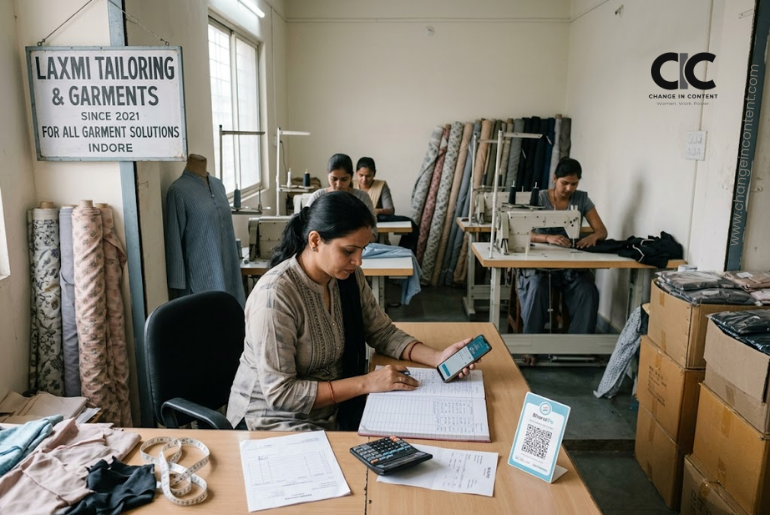
A tailoring unit; a small food business; a beauty service; a neighbourhood retail shop; a repair service; a home-based manufacturing activity; a local trading unit; a tiny enterprise with one owner, one assistant, two family members and a phone full of customers.
That is where many women enter the business world.
The Annual Survey of Unincorporated Sector Enterprises 2025 gives the world a clearer shape. The National Statistics Office survey captures unincorporated non-agricultural establishments in manufacturing, trade and other services, excluding construction. These are not the companies that ring bells on stock exchanges. They are the small and often informal enterprises that keep local economies moving.
The 2025 data shows progress. Women are no longer only workers, helpers or invisible family contributors. More women are being counted as proprietors. That matters.
But the data also reveals the gap. Women’s ownership is rising, yet women’s participation in the workforce remains far lower than it should be. In simple terms, women are starting and heading businesses, but these businesses are not yet creating enough employment for women at scale.
At Change in Content, we believe that it is the real story. Women’s entrepreneurship cannot stop at ownership. It has to move towards hiring, skilling, income, dignity and wealth creation.
What does ASUSE 2025 reveal about women entrepreneurs?
ASUSE 2025 estimates that India had 7.92 crore unincorporated non-agricultural establishments, up from 7.34 crore in ASUSE 2023-24. That is a growth of 7.97%. The sector employed about 12.81 crore workers, adding more than 74.52 lakh jobs over the previous survey period.
These are large numbers. They show the scale of India’s unincorporated economy. Within this, the gender signal is important.
Female proprietors headed over 60% of establishments in the manufacturing sector. Across the sector, the share of female-headed proprietary establishments increased from 26.17% in ASUSE 2023-24 to 26.93% in ASUSE 2025. Women also accounted for about 29% of the total workforce in the unincorporated non-agricultural sector.
This tells us two things at once. One, women are becoming business owners. Second, women still lack equal representation in the workforce.
We must not brush that contrast aside. A woman owning a business is powerful. But if the ecosystem does not help that business grow, hire and pay better, the ownership story remains incomplete.
A previous Change in Content piece on women moving from unpaid family work to self-employment in India made a similar point. Visibility in data is a start. The harder question is whether women gain income, control, mobility and recognition.
ASUSE 2025 pushes that question into the enterprise economy.
Why women’s ownership matters
Ownership changes how women are seen.
A woman who owns a small enterprise is not only “helping” the family. She is running a unit. At the same time, she is dealing with customers. She is managing money while also making decisions. And she is taking the risk.
That shift can change her status inside the household and the market.
It can also create local role models. In many towns and neighbourhoods, a woman-led business becomes proof for other women. A girl sees a shop run by a woman. A homemaker sees someone earning from a skill. And a younger worker sees that business ownership is not reserved for men.
It matters even more in sectors where women’s labour has long been present but undervalued.
Manufacturing of wearing apparel is one such area. ASUSE 2025 notes that nearly 22% of total female workers in the sector were engaged in the manufacturing of wearing apparel. That tells us where women’s work is concentrated. The real task is to ensure that such work leads to higher incomes, better skills and greater leadership.
The story of women entrepreneurs driving India’s economic growth often gets told through visible founders. That is necessary. But India’s women entrepreneurship story is also being built by women in smaller, local, unincorporated enterprises.
They may not be raising venture capital. They are still building the economy.
The contrast: Ownership is rising, but employment is still uneven
That is where the ASUSE story takes a serious turn.
If women head over 60% of manufacturing establishments, why do women make up only around 29% of the total workforce in the overall unincorporated non-agricultural sector? The answer is not one thing.
Many women-led enterprises are small. Some operate from homes, while some are own-account enterprises with no hired workers. At the same time, some depend on family labour. A few enterprises lack sufficient working capital to hire. Some operate in low-margin sectors, and some women owners may prefer to hire family members because trust and flexibility matter. Some may struggle to find trained women workers nearby.
There is also the social side.
Women workers may not be able to travel far. Families may restrict work outside the home. Safety concerns may shape job choices. Care responsibilities may limit full-time participation. Employers may avoid hiring women if they lack basic facilities, flexible shifts, or predictable work.
So, the problem is not that women-owned businesses do not care about hiring women. The problem is that many of them are operating inside the same gendered constraints that affect women workers. That is why we need a more layered reading.
Women entrepreneurs need support as owners. Women workers need access as employees. The two must meet.
Women-led businesses can become employment bridges
There is one finding in the ASUSE 2025 release that deserves more attention.
Nearly 72% of female-led hired-worker establishments employed at least one female hired worker. That is a strong signal. It suggests that when women-led businesses grow beyond owner-only models and begin hiring, they can become important employers of women.
That should shape policy and business support. If a woman-owned enterprise is given working capital, market access, digital tools, mentoring, registration support and hiring support, it may not only grow as a business. It may also create work for other women.
That is what women supporting women can look like in economic terms.
- It is not only mentorship.
- It is hiring.
- It is training.
- It is paying fairly.
- It is giving flexible work where possible.
- It is building safe and respectful small workplaces.
- It is helping another woman move from unpaid labour to paid identity.
That is how inclusion becomes practical.
What women entrepreneurs can learn from the Annual Survey of Unincorporated Sector Enterprises
There is a lot for women entrepreneurs to learn from the Annual Survey of Unincorporated Sector Enterprises.
The first lesson is that ownership is a foundation, not the finish line.
Starting a business is important. Keeping it alive is important. But the next stage is growth. Women entrepreneurs need to ask: Can this enterprise create a stable income for me and work for others?
The second lesson is formalisation.
ASUSE 2025 notes that the share of registered establishments rose only marginally, from 37.20% to 37.50%. Registration remains slow.
For many women, formalisation can feel intimidating. Paperwork, GST, licences, bank documents and compliance language often push small entrepreneurs away. But without some level of formal identity, growth becomes harder. Credit becomes harder. Government schemes become harder. Bigger buyers become harder.
The third lesson is digital adoption.
The ASUSE release says internet use for entrepreneurial purposes rose from 26.68% to 39.37% overall. In urban areas, it rose from 37.01% to 48.94%. More than 50% of trading establishments used the internet for entrepreneurial purposes in 2025.
For women entrepreneurs, digital tools are no longer optional. Payments, customer discovery, marketing, inventory, sourcing, bookkeeping and credit access increasingly move through digital channels.
The fourth lesson is finance.
ASUSE 2025 says more than 80% of outstanding loans were routed through institutional sources, including commercial banks and government schemes. That is promising. But women need to be able to access the right kind of finance, not only small survival loans.
A Change in Content article on complex business loans for women entrepreneurs in India explained why working capital, cash credit, overdrafts and larger-ticket growth finance matter when businesses want to scale.
Small loans can keep a business alive. Growth finance can help it hire.
A practical action plan for women entrepreneurs
Women entrepreneurs can use the ASUSE findings as a mirror.
- The first step is to count the business seriously. Track sales, expenses, profit, inventory, customer repeat rates, digital orders and credit needs. What is not measured is hard to grow.
- The second step is to build one layer of formal identity. Depending on the business, this may mean Udyam registration, a current account, digital payment records, licences, GST registration where needed, or basic bookkeeping. Not every business needs the same compliance path. But every growing business needs records.
- The third step is to hire with intention. If the business can afford one worker, think about whether a woman from the local community can be trained. If full-time work is not possible, part-time or task-based work may still create income for women.
- The fourth step is to train before judging. Many women workers may have skills but not formal work exposure. A woman-owned enterprise can become a first workplace for another woman. That role is powerful.
- The fifth step is to use digital tools for more than payments. Use the internet to find customers, compare prices, learn packaging, access government schemes, join business communities, maintain records and build visibility.
- The sixth step is to ask for growth support. Women entrepreneurs should seek mentoring, credit counselling, market linkages, SHG networks, MSME facilitation centres, local industry associations and women-led business groups.
A business grows faster when the owner is not alone.
What policymakers and institutions should do
The ASUSE 2025 findings should push institutions to think beyond counting women-owned enterprises. The question should be: How many of these enterprises can become employment creators for women?
Policy support should focus on five areas.
- First, easier formalisation. Registration and compliance systems must be simpler, multilingual and friendly to first-generation women entrepreneurs.
- Second, working capital. Many small women-owned enterprises do not need only one-time loans. They need credit that matches business cycles, inventory needs and receivables.
- Third, local skilling. Training should be linked to actual local enterprise demand. If a cluster has garment units, food processing, beauty services, retail or repair activity, women workers should be trained for those opportunities.
- Fourth, market access. Women-owned enterprises need help reaching buyers beyond their immediate neighbourhoods. Digital marketplaces, local procurement, exhibitions and institutional buying can help.
- Fifth, hiring incentives. If female-led establishments are already more likely to hire women when they have hired workers, targeted support can help them expand that role.
That is also where financial institutions matter. Banks, NBFCs and government schemes should not treat women entrepreneurs as a small social category. They are part of India’s productive economy.
What businesses and larger companies can do
Large companies often speak about women’s inclusion in corporate offices. That is important. But supplier ecosystems matter too.
Companies can procure from women-owned micro and small enterprises. They can help them improve packaging, quality, compliance, invoicing and digital readiness. At the same time, they can include women-led unincorporated businesses in local supply chains.
It is especially relevant in apparel, food, retail, services, crafts, wellness, local manufacturing and community-based services.
A company that buys from women-owned enterprises is not doing charity. It is building a more diverse business ecosystem.
There is also a workforce angle. Women-owned micro-enterprises can become local employment partners for women who cannot enter formal corporate jobs due to mobility, caregiving, or educational constraints.
That is what inclusion can look like outside head offices.
What women supporting women should mean now
People often use the phrase “women supporting women” emotionally. It is time we also start using it economically.
- Support can mean buying from a woman-owned business.
- It can mean paying her on time.
- It can mean recommending her service.
- It can mean helping her open a current account.
- It can mean teaching her how to use digital payments.
- It can mean hiring a woman worker when the business grows.
- It can mean sharing supplier contacts.
- It can mean not bargaining unfairly with a woman entrepreneur simply because her business is small.
Women’s economic ecosystems are built through many small acts of seriousness.
If we want women to become wealth creators, we must treat their enterprises as real businesses. Not hobbies; not side income; not “timepass”; not something they do after housework. Businesses.
The Change in Content View
The Annual Survey of Unincorporated Sector Enterprises gives us a hopeful signal. Women are becoming more visible as proprietors in India’s vast unincorporated economy. That is progress. But progress needs direction.
If women own more businesses, the next step is to help those businesses grow, formalise, digitise, and employ more women. A woman-owned enterprise should not remain trapped as a small survival unit if it has the potential to become a local employer.
India needs women as workers. India needs women as employers. And India needs women as wealth creators.
The ASUSE 2025 data shows that the shift has started. Now the ecosystem has to make sure women not only enter business but also gain the power to expand it.
FAQs
Q: What is the Annual Survey of Unincorporated Sector Enterprises?
A: The Annual Survey of Unincorporated Sector Enterprises is conducted by the National Statistics Office under MoSPI. It measures economic and operational characteristics of unincorporated non-agricultural establishments in manufacturing, trade and other services, excluding construction.
Q: What did ASUSE 2025 find about women entrepreneurs?
A: ASUSE 2025 found that female proprietors headed over 60% of manufacturing establishments. Across the sector, female-headed proprietary establishments increased from 26.17% in ASUSE 2023-24 to 26.93% in ASUSE 2025.
Q: Are women-owned businesses creating jobs for women?
A: The data gives a mixed picture. Women accounted for about 29% of the total workforce in the unincorporated sector, but nearly 72% of female-led hired-worker establishments employed at least one female hired worker. This shows potential, but the employment gap remains.
Q: Why does women’s ownership not automatically mean equal employment?
A: Many women-owned enterprises are small, informal or owner-operated. They may lack capital, market access, formal registration, digital tools or hiring capacity. Social barriers such as safety, care work and mobility also affect women workers.
Q: What should women entrepreneurs do next?
A: Women entrepreneurs should track business numbers, formalise gradually, use digital tools, seek working capital, hire women where possible, train local workers and build support networks. Ownership becomes more powerful when it leads to income, growth and employment.
Editorial Note and Sources
This article is based on publicly available official information from MoSPI and the Press Information Bureau on ASUSE 2025. It interprets the findings through the lens of women, work, entrepreneurship and inclusion. The article is intended for editorial and informational purposes only. It should not be read as financial, legal, investment, tax or business advisory guidance. Women-owned enterprises vary widely by sector, size, location, access to capital, and market conditions.
Sources used
- Ministry of Statistics and Programme Implementation: Annual Survey of Unincorporated Sector Enterprises (ASUSE)
- Press Information Bureau, Government of India: 7.92 crore unincorporated non-agricultural establishments driving economic expansion