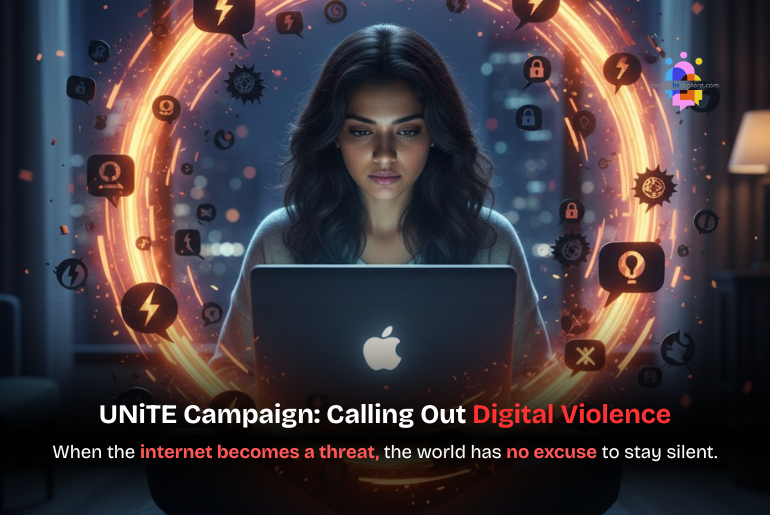
The UNiTE Campaign has always been about making violence against women impossible to ignore. In 2025, it steps firmly into the digital world. Every year, 25 November marks the International Day for the Elimination of Violence against Women and the start of the global 16 Days of Activism. This year’s theme, “UNiTE to End Digital Violence against All Women and Girls”, turns the spotlight on the screens we hold in our hands and the harm that flows through them.
Online harassment, cyberstalking, doxxing, deepfakes, and misogynistic abuse have become routine for women and girls across the world. What was once seen as “just the internet” is now recognised as a serious threat to safety, livelihoods, mental health, and free expression. The 2025 UNiTE Campaign pushes governments, platforms, and communities to finally treat digital violence as real violence, with real consequences.
Inside the 2025 UNiTE Campaign
The UNiTE Campaign, “UNiTE to End Digital Violence Against All Women and Girls,” runs from November 25 to December 10. The event brings together Member States, UN agencies, civil society groups, youth leaders, well-known public figures, and partners from the tech and creative sectors. They stand together to push for stronger laws, better safety tools, and responsibility from everyone who designs and runs digital platforms.
UNESCO Peru joins this global effort with a national initiative that stresses the importance of digital safety. The campaign slogan “For a web without violence” reminds people that our online spaces reflect the choices we make every day. The campaign encourages everyone to break the silence, step in when needed, and build digital spaces shaped by respect and care.
During the 16 Days of Activism, UNESCO Peru will share a series of awareness messages across its social media channels and particularly in spaces such as schools, science, sports, culture, and digital platforms. In each space, the messages show how gender-based violence appears and how it affects millions of women and young girls. Through this effort, the campaign explains why everyone needs to act together and why shared responsibility creates safer online and offline spaces.
Rising digital violence against women and girls
The report Your Opinion Doesn’t Matter, Anyway (2024) highlights that young girls face harassment from the age of fourteen, and 58% of young women say they have experienced online abuse at some point in their lives.
Women journalists face some of the harshest online attacks. According to the same report, 73% of them deal with online violence that drains their emotional energy and stops them from speaking freely in public spaces. In Latin America, the study Medios Sin Violencias (2024) shows 75% of professionals know at least one case of gender-based violence against journalists.
New digital threats in the age of AI
Artificial intelligence tools have led to a rise in deepfakes, image-based sexual exploitation, AI-generated abuse, online dating abuse, and grooming. The scale of abuse grows at an alarming rate. 90 to 95% of all deepfakes online show sexualized images of women. Verified AI-generated child sexual abuse material grew by 380% in 2024 compared to 2023.
Read more in our feature on AI and online violence against women.
Digital violence affects women entrepreneurs
Many women who run small businesses rely on social media to reach customers, promote their products, and build trust. Online abuse cuts into these spaces and often pushes them offline. Every step back from visibility results in lost income, reduced customer reach, and limited access to the digital economy.
The Cherie Blair Foundation for Women report Empowered or Undermined? Women Entrepreneurs and the Digital Economy says 57% of respondents say they have faced online abuse in the form of verbal attacks, stalking, or unwanted sexual messages. More than 75% take extra steps to protect themselves, both online and offline. Some use encrypted messaging apps or secure payment methods. Others avoid sharing personal details or screening clients before agreeing to meet. A few rely on male relatives for safety or legitimacy because online harassment makes independent work more difficult.
A call to action for safer digital spaces
This year, under the Secretary-General’s UNiTE campaign, UN Women’s call goes out to governments, civil society, and technology companies to hold individuals who commit violence online or offline accountable through clear, rights-based laws that align with global digital standards such as the Global Digital Compact. Law enforcement and justice systems also need more substantial support so they can work together across sectors and borders and respond to survivors without delay.
Survivors need specialised services and full reparations that help them rebuild their lives. Women and girls also need safe digital spaces where they can speak, lead, and participate freely. This goal requires broader investments in digital literacy and resilience across all parts of society.
Technology developers play a crucial role. They must place safety, privacy, and security at the centre of every design stage. Digital tools can also support efforts that challenge misogyny and encourage positive and healthy expressions of masculinity.
Women’s and children’s rights organisations need long-term, flexible funding to improve digital safety, support survivors, and lead advocacy efforts. Only then can the digital space uphold everyone’s rights and dignity.
The final thoughts
The fight against digital violence requires collective commitment and action. Rising harassment, deepfakes, and online abuse show how urgent it is to create safe and inclusive digital spaces for women and girls. Beyond laws and technology, creating awareness, resilience, and accountability is key to protecting rights and amplifying voices that have long been silenced.
The UN Women UNiTE initiative deserves commendation for placing global attention on the rising threat of digital violence against women and girls. ChangeInContent actively contributes to this mission by raising awareness and amplifying the voices that advocate for safer digital spaces. Our content and outreach ensure that communities, young women, and leaders remain informed, empowered, and ready to act.
Individuals, organisations, or initiatives with ideas to improve digital safety are encouraged to reach out. Changeincontent continues to produce content that raises awareness. We aim to amplify the voices of those working toward a safer, more inclusive online world for women and girls.
Disclaimer: The views expressed in this article are based on the writer’s insights, supported by data and resources available both online and offline, as applicable. Changeincontent.com is committed to promoting inclusivity across all forms of content. We broadly define inclusivity as media, policies, law, and history. It encompasses all elements that influence the lives of women and marginalised individuals. Our goal is to promote understanding and advocate for comprehensive inclusivity.