
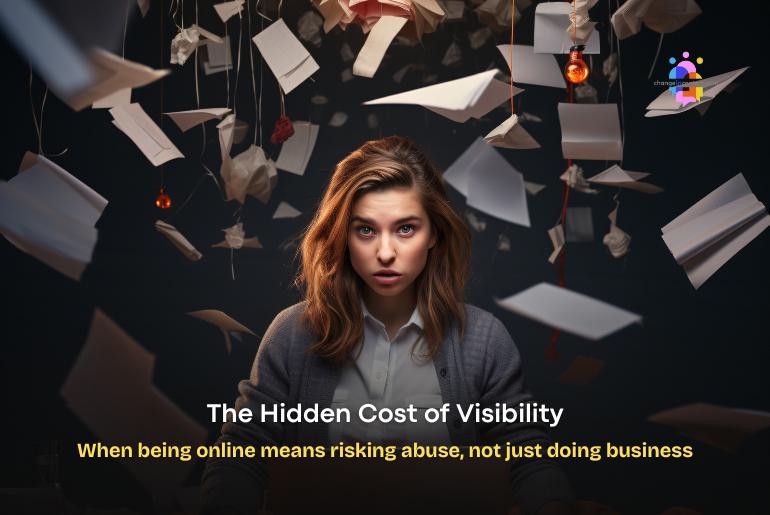
The phrase “Digital Abuse Disrupts Women-Led Businesses” is not just a headline. Instead, it is a systemic warning. For thousands of women, building a digital business is not only about entrepreneurship; it is also about surviving the onslaught of gendered hate. This article examines what it truly means to be a woman entrepreneur in the age of online abuse, backed by the Cherie Blair Foundation’s powerful research.
Social media has become an excellent opportunity for women who want to start small businesses from home. Platforms like Facebook, Instagram, and even WhatsApp make it easier for women to reach customers, advertise their products, and manage operations using mobile phones.
For many, especially those balancing work and family, this flexibility is a game-changer. Online platforms enable women to establish businesses on their own terms. It eliminates the need for physical storefronts or substantial investments. At the same time, women entrepreneurs often deal with online gender-based violence on these platforms.
What is online gender-based violence?
Online gender-based violence refers to any kind of abuse or harassment that happens through digital platforms and targets individuals because of their gender. While anyone can be a victim, women and gender minorities face this disproportionately. This abuse also targets other vulnerable groups, including LGBTQ+ communities.
Digital abuse can be in the form of unwanted sexual messages, cyberstalking, threats, doxing (publishing private information), non-consensual sharing of intimate photos, and impersonation.
Online gender-based violence is a growing problem that targets women simply because of their gender. For women entrepreneurs, this abuse often happens when they post items for sale or promote their businesses online.
What digital abuse looks like for women entrepreneurs
Take, for example, the case of Marissa Rivera, a member of the Talk of Pearland Facebook group in Texas. The group serves as a community hub where locals share recommendations and buy and sell items. When Marissa tried to sell a dress, she received inappropriate messages asking if she was single and demanding her phone number or photos. Frustrated, she posted publicly, “I just wanted to sell my dress without being harassed by a bunch of freaking perverts and horndogs.”
Some people suggested Marissa would be safer selling under a male name. Advice like this shows how normalised it has become to ask women to make compromises instead of fixing the root issue.
Digital abuse disrupts women-led businesses: Cherie Blair Foundation Report, every platform must read
The digital economy has opened new paths for women in low- and middle-income countries to start and expand businesses. However, the same platforms that offer growth are also spaces where women face online abuse. It includes harassment, threats, and the sharing of unsolicited sexual content. The Cherie Blair Foundation for Women’s report, Empowered or Undermined? Women Entrepreneurs and the Digital Economy highlights this issue in detail.
The foundation collaborated with Intuit and the World Bank’s Women, Business, and the Law project to conduct this study. The research, conducted by the firm Shared Pathways, surveyed 2,870 women business owners in November and December 2024. These women ran micro, small, or mid-sized businesses across 96 low- and middle-income countries. The survey covered regions such as Latin America, the Caribbean, East Asia, the Pacific, and Sub-Saharan Africa.
Most respondents fell within the age range of 30 to 40, with a median age of 36.5. Around 42% held bachelor’s degrees. Countries with the highest number of responses included Nigeria, South Africa, Kenya, Malawi, Zambia, Pakistan, Botswana, India, Uganda, and Zimbabwe.
‘Empowered or Undermined?’ Report Reveals Online Harassment Faced by Women Entrepreneurs
According to research by the Cherie Blair Foundation for Women, many women reduce their online visibility or leave digital platforms entirely because of the abuse. For entrepreneurs who rely on social media to grow their business, this can lead to lost income, limited customer reach, and isolation from the digital economy.
57% of respondents said they had experienced online abuse, including verbal attacks, unsolicited sexual messages, and stalking. Over 75% of the women surveyed reported taking active steps to stay safe, both online and offline. Some try to protect themselves by using encrypted messaging apps or secure payment platforms. Others avoid sharing personal details or screening clients before meeting them. A few even rely on male relatives for protection or credibility.
Digital empowerment or exposure?
UN Women reports also support the findings of the Cherie Blair Foundation, showing how widespread and damaging online gender-based violence has become for women entrepreneurs. In developing countries, 47% of women entrepreneurs reported facing some form of gender-based violence online. In Europe, the number stood at around 20%, with most of the abuse taking place on social media platforms. About 38% of women who experienced online abuse said it had a direct negative impact on their business operations, affecting their ability to engage with customers, market their products, or maintain a visible presence online.
“We need better reporting tools, user moderation, stronger enforcement, and more public awareness,” said Dhivya O’Connor, CEO of the foundation. “When women feel safe online, they are empowered to fully participate, innovate, and succeed. A safer digital world doesn’t just benefit women – it benefits everyone.”
Digital abuse disrupts women-led businesses: Will the future be safer or silenced?
The digital economy has the potential to transform women’s lives for the better, providing them with flexibility, increased income, and greater independence. However, safety must be a part of that progress. When women cannot trust the platforms they use, they lose access to growth, stability, and equal opportunity. Without strong protections and clear support from both tech companies and governments, the digital space will remain inaccessible to many women who are simply trying to build something of their own.
At ChangeInContent, we believe the promise of digital inclusion means nothing if women must trade safety for visibility. As policies lag and platforms fail to respond, women are forced to create boundaries rather than build businesses. Do not mistake it as just a tech issue; it is a systemic failure. It is time platforms, governments, and communities rethink what real safety in the digital economy looks like.
Also Read: Take It Down Act: Protecting Women and Girls from Deepfake Abuse.
Disclaimer: The views expressed in this article are based on the writer’s insights, supported by data and resources available both online and offline, as applicable. Changeincontent.com is committed to promoting inclusivity across all forms of content. We broadly define inclusivity as media, policies, law, and history. It encompasses all elements that influence the lives of women and marginalised individuals. Our goal is to promote understanding and advocate for comprehensive inclusivity.
