
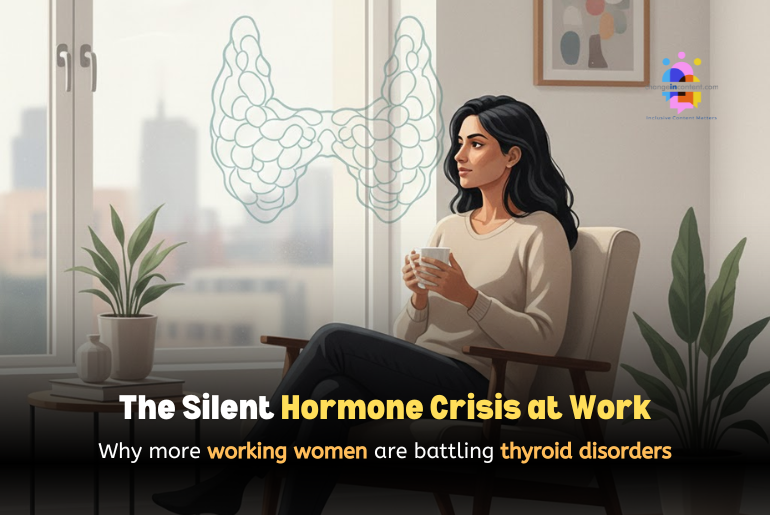
For many women, Sundays are quiet. The work laptop is shut, laundry hums in the background, and the body finally has space to feel tired. It is often in these moments that persistent fatigue, unexplained weight changes, anxiety, or mental fog refuse to stay silent. For a growing number of professionals, this is not just stress or overwork. It is thyroid disorders in working women, a silent hormone crisis playing out behind office desks, deadlines, and performance reviews.
Across industries, women at work are reporting symptoms that are routinely normalised or overlooked. Yet medical data suggests something deeper is unfolding. It is an intersection of hormonal health, workplace pressure, and gendered expectations that deserves attention, not dismissal.
Understanding thyroid disorders in working women
The thyroid is a small, butterfly-shaped gland, but its impact on the body is vast. It regulates metabolism, energy levels, heart rate, mood, and even cognitive function. When it malfunctions either by producing too little hormone (hypothyroidism) or too much (hyperthyroidism), the effects ripple through everyday life.
Women are significantly more likely than men to develop thyroid disorders. Studies indicate that women are up to eight times more likely to suffer, particularly during reproductive years and mid-career phases. For working women, this timing is critical. These are the years marked by professional growth, caregiving responsibilities, and sustained mental load.
What makes thyroid disorders especially challenging is their subtle onset. Symptoms often overlap with what society labels as “normal” for working women. These symptoms are fatigue, mood swings, sleep disturbances, difficulty concentrating, and weight fluctuations.
Why the workplace intensifies the hormone crisis
Modern work culture rarely accommodates biological realities. Long hours, chronic stress, irregular meals, disrupted sleep cycles, and constant digital engagement place continuous pressure on the endocrine system. For women, this stress compounds existing hormonal fluctuations linked to menstruation, pregnancy, postpartum changes, and perimenopause.
Research increasingly points to stress as a significant trigger for thyroid dysfunction. Cortisol, the stress hormone, interferes with thyroid hormone production and conversion. Over time, this imbalance can escalate into clinical disorders.
Yet in professional settings, we often misread symptoms. For example, workplaces label a woman struggling with hypothyroidism as disengaged or unmotivated. Moreover, they mistake brain fog for a lack of focus. People brush off anxiety as personality rather than physiology. The cost is not only health-related, but also professional.
Thyroid disorders in working women are often missed
One of the most concerning aspects of this hormone crisis is delayed diagnosis. Many women report years of being told their symptoms are stress-related before receiving proper testing. Thyroid panels are not always part of routine health check-ups, and symptoms vary widely.
According to public health data, a significant proportion of thyroid cases in India remain undiagnosed. Among working women, this gap is wider. That is because of the time constraints, caregiving priorities, and the tendency to downplay personal health concerns.
The result is prolonged suffering that quietly affects productivity, mental health, and overall quality of life.
The gendered cost of “Pushing Through”
Workplace narratives often reward endurance. The society expects women to multitask, adapt, and perform without complaint. This culture discourages rest and medical attention. At the same time, it reinforces the idea that health struggles are personal weaknesses rather than systemic concerns.
Thyroid disorders challenge this narrative. These disorders demand consistency, medical monitoring, and lifestyle adjustments. Ignoring them does not lead to resilience. Instead, it leads to burnout, long-term complications, and emotional exhaustion.
What is particularly troubling is how frequently women internalise these struggles. Many blame themselves for not coping better. They do so without realising that their bodies are signalling a deeper imbalance.
The changeincontent perspective
At changeincontent, we believe women’s health at work cannot remain a private battle. Thyroid disorders in working women are not isolated medical issues; they are reflections of how workplaces ignore hormonal health altogether. Awareness must move beyond individual diagnosis to collective responsibility.
We need organisations that normalise health conversations, encourage preventive screening, and stop equating constant availability with commitment. We need policies that recognise hormonal health as part of workplace wellbeing, not an exception.
This conversation also links directly to the broader lack of institutional support for women’s health, which we have explored earlier. You can read more here.
The silence around thyroid health is not accidental. It is structural. And it is time we changed that.
Thyroid disorders in working women: Final thoughts
Thyroid disorders rarely announce themselves loudly. They arrive quietly, blending into work stress, family responsibility, and everyday fatigue. For working women, recognising this distinction can be life-changing.
This Sunday, the intention is not to alarm, but to acknowledge. To remind women that persistent exhaustion is not a personal failure. To encourage listening to the body before it demands attention through a crisis.
Health is not a distraction from work. It is what sustains it.
Disclaimer: The views expressed in this article are based on the writer’s insights, supported by data and resources available both online and offline, as applicable. Changeincontent.com is committed to promoting inclusivity across all forms of content. We broadly define inclusivity as media, policies, law, and history. It encompasses all elements that influence the lives of women and marginalised individuals. Our goal is to promote understanding and advocate for comprehensive inclusivity.
