The Quick Read
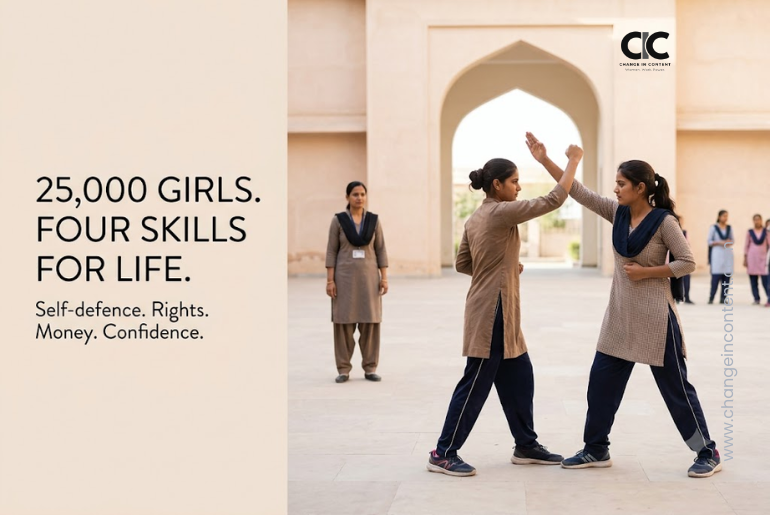
- The Rajasthan government plans to operate Rani Laxmi Bai Kendras in 150 colleges, reaching around 25,000 girls during 2026–27.
- The centres are designed to strengthen physical safety, confidence and practical decision-making.
- Training covers areas such as self-defence, legal rights, financial awareness, health and capacity building.
- The programme works through the state’s college system, making the support accessible where young women already study.
- Its impact will depend on training quality, participation, follow-up support and whether students can use these skills outside organised sessions.
Rani Laxmi Bai Kendra Rajasthan: A Change in Content
A college education can prepare a young woman for an examination. Rajasthan wants it to prepare her for much more.
Through the Rani Laxmi Bai Kendra Rajasthan programme, thousands of college students are learning how to protect themselves, understand their legal rights, manage money and respond more confidently to situations that affect their everyday lives.
The Rajasthan government’s 2026–27 Budget provides for Rani Laxmi Bai Kendras across 150 colleges, with an intended reach of 25,000 girls. The Department of College Education has since issued guidelines for establishing the centres and directions for organising self-defence training.
The scale is important. So is the programme’s design.
Instead of treating women’s empowerment as one isolated lecture or annual event, the centres bring several practical capabilities into the college environment. A student may learn how to respond to physical danger, recognise a violation of her rights, understand basic financial decisions and build the confidence to seek help.
These are skills that influence whether education eventually leads to independence.
What is the Rani Laxmi Bai Kendra programme?
The Rani Laxmi Bai Kendras operate through Rajasthan’s Department of College Education. Government records show that the programme has been under implementation through college-level activities, budget utilisation directions and training guidelines.
In March 2026, the department issued formal guidelines for establishing the centres under the 2026–27 Budget announcement. In July, it followed with instructions on conducting self-defence programmes at the Kendras. The Budget identifies 150 colleges and 25,000 intended beneficiaries.
Individual college pages describe the centres as spaces intended to improve students’ self-defence, confidence and capacity to respond during difficult situations. The aim includes helping colleges provide a safer and more fear-free environment for women students.
The larger programme brings together several parts of personal agency:
- Physical self-defence
- Awareness of legal rights
- Financial knowledge
- Health and personal safety
- Confidence and communication
- Capacity to respond during emergencies
This combination gives the initiative its value. Young women rarely experience safety, money, law and confidence as separate issues. They often meet them together.
A student who knows her rights but cannot travel safely may still lose an opportunity. A student who earns but cannot manage her account may remain financially dependent. A student trained in self-defence may still need to know where to report harassment and how to document it.
The Kendras attempt to build a more connected response.
Why self-defence belongs in the college experience
Self-defence programmes are sometimes presented through dramatic images of punches, kicks and confrontations. Their practical value can be much quieter.
Good training helps a student assess danger, establish boundaries, call attention to threatening behaviour, identify an escape route and respond under pressure. Physical techniques form one part of that preparation.
Confidence matters because fear can narrow women’s movement long before an incident occurs. It can affect which college they attend, whether they stay for an evening class, accept an internship, use public transport or travel for work.
The Government Girls College in Tonk describes the Rani Laxmi Bai Kendra as a response to the need for students to protect themselves and, where necessary, help others in their families or surroundings. It also connects the programme with stronger physical and mental confidence.
Self-defence cannot replace safe transport, responsive policing, functioning complaints systems or institutional accountability. Girls should not carry the full responsibility for preventing violence against them.
Training can still provide a useful layer of preparedness.
Knowing the law changes how a young woman responds
Many young women recognise that something feels wrong without knowing whether the behaviour is unlawful, reportable or covered by an institutional policy. Legal awareness can reduce that uncertainty.
Students need clear, practical information about:
- Sexual harassment in educational institutions and workplaces
- Stalking and online abuse
- Domestic violence
- Forced marriage
- Property and inheritance rights
- Cybercrime
- Police complaints and emergency support
- Institutional grievance procedures
- Free legal assistance
The usefulness of a rights session depends on how it is taught. Reading provisions from a presentation will have limited effect. Students need realistic situations, local points of contact and simple explanations of what to do next.
A young woman should leave knowing whom to approach, which records to preserve and what support she can request. That knowledge becomes particularly important as students move from college into internships, employment, entrepreneurship or marriage.
Financial literacy turns money into agency
A bank account does not automatically give a woman financial control. She must also understand how to use it, protect it and make informed choices.
Basic financial training can help students learn about budgeting, saving, digital payments, interest, credit, insurance and fraud. It can also prepare them for their first salary or stipend.
Many financial decisions begin before a woman earns a large income. A student may already be managing scholarship funds, paying examination fees, using a digital wallet or deciding whether to borrow for further education.
Early financial literacy can prevent small mistakes from becoming long-term problems.
Change in Content earlier examined Rajasthan’s Maru Udaan initiative, which also brought financial awareness, self-defence, health and cybercrime education into women’s empowerment programmes. Participants were introduced to safer savings and investment options rather than keeping all their money at home.
The overlap points to an encouraging policy direction within the state: women’s independence is being approached through practical capability, not welfare alone.
Colleges are a smart place to deliver the programme
Many government initiatives struggle because potential beneficiaries must locate a separate office, understand an unfamiliar process or travel to attend a programme.
Rani Laxmi Bai Kendras in Rajasthan use an institution students already enter regularly. That can make participation easier and more trusted. Colleges can organise sessions around academic schedules, identify local trainers and connect students with existing faculty members or support cells.
The setting also reaches women at an important stage of life.
College students may soon begin searching for work, moving away from home, opening independent bank accounts or negotiating greater freedom with their families. Skills acquired during these years can influence decisions for a long time.
Rajasthan’s broader set of women-focused programmes covers education, mobility, savings, entrepreneurship and social protection. The Rani Laxmi Bai Kendras add something distinct: a place where young women can practise handling decisions rather than merely receive a benefit.
A broader guide to women-centric government schemes in India shows how such initiatives are often spread across several departments and stages of life. The strongest outcomes are likely when those programmes connect rather than operate in isolation.
What will determine whether the Kendras create lasting change?
The announcement has scale and a promising structure. Implementation will decide its real worth.
Training must be practical
Self-defence requires qualified instructors and repeated practice. Financial education needs exercises built around real choices. Legal awareness should use relatable cases rather than technical language.
One presentation in each subject will not create lasting capability.
Students need follow-up support
A student may recognise a legal or safety problem during a session. The college must know how to respond when she asks for help afterwards.
Centres should have updated contacts for counsellors, legal services, police support, health facilities and institutional complaints bodies.
Participation should be inclusive
Students with disabilities, women from rural areas, first-generation learners and those from socially or economically marginalised communities may have different needs.
Training methods, venues and information should remain accessible to them.
Colleges should measure outcomes
Attendance is useful, but it cannot be the only measure.
The state can assess whether students understand key rights, feel more confident using financial services, know where to report abuse and retain self-defence skills after training.
Feedback from participants can improve the programme from one cycle to the next.
Safety must remain an institutional duty
A woman trained to defend herself still deserves a safe campus, reliable transport, effective lighting and a responsive complaints system.
The Kendra should strengthen institutional responsibility rather than shift it towards students.
Rajasthan has created a model worth watching
Public policy for girls often concentrates on enrolment, scholarships or preventing them from leaving education. Those priorities remain important. The Rani Laxmi Bai Kendras extend the conversation beyond staying in college.
They ask what a young woman should be able to do when she leaves it.
- Can she understand a contract?
- Can she recognise financial fraud?
- Can she identify harassment?
- Can she seek legal support?
- Can she protect herself during an emergency?
- Can she make decisions about the money she earns?
These questions connect education with adult life.
The programme also recognises that confidence grows through knowledge and practice. Telling girls to be fearless has limited meaning when they have not been given tools for difficult situations.
Rajasthan is placing some of those tools within reach.
The Change in Content Perspective: Teach girls to use their freedom
A policy becomes powerful when it prepares people to act.
Rani Laxmi Bai Kendras do not offer one answer to every challenge young women face. Their strength lies in bringing several useful forms of knowledge together at the moment many students are preparing to enter adult life.
25000 girls learning to throw a punch makes for a striking headline. Their ability to question an unfair demand, control a bank account, identify a legal violation or seek help may prove even more valuable.
The programme now needs consistent trainers, credible partnerships and close monitoring across all 150 colleges.
Done well, these Kendras can help ensure that a degree gives a young woman more than an academic qualification. It can leave her better prepared to protect her choices, understand her rights and direct her own future.
Editorial Note and Sources
This report is based on official Rajasthan Budget documents, circulars issued by the Department of College Education and information published by participating government colleges. Programme targets and activities may be revised during implementation. Change in Content has not independently evaluated training outcomes at all participating institutions. This article is published for editorial and informational purposes and does not constitute legal, financial or personal-safety advice.
Sources
- Government of Rajasthan, Finance Department: Budget 2026–27 Press Note
- Department of College Education, Rajasthan: Guidelines and Circulars
- Government Girls College, Tonk: Rani Laxmi Bai Kendra