The Brief
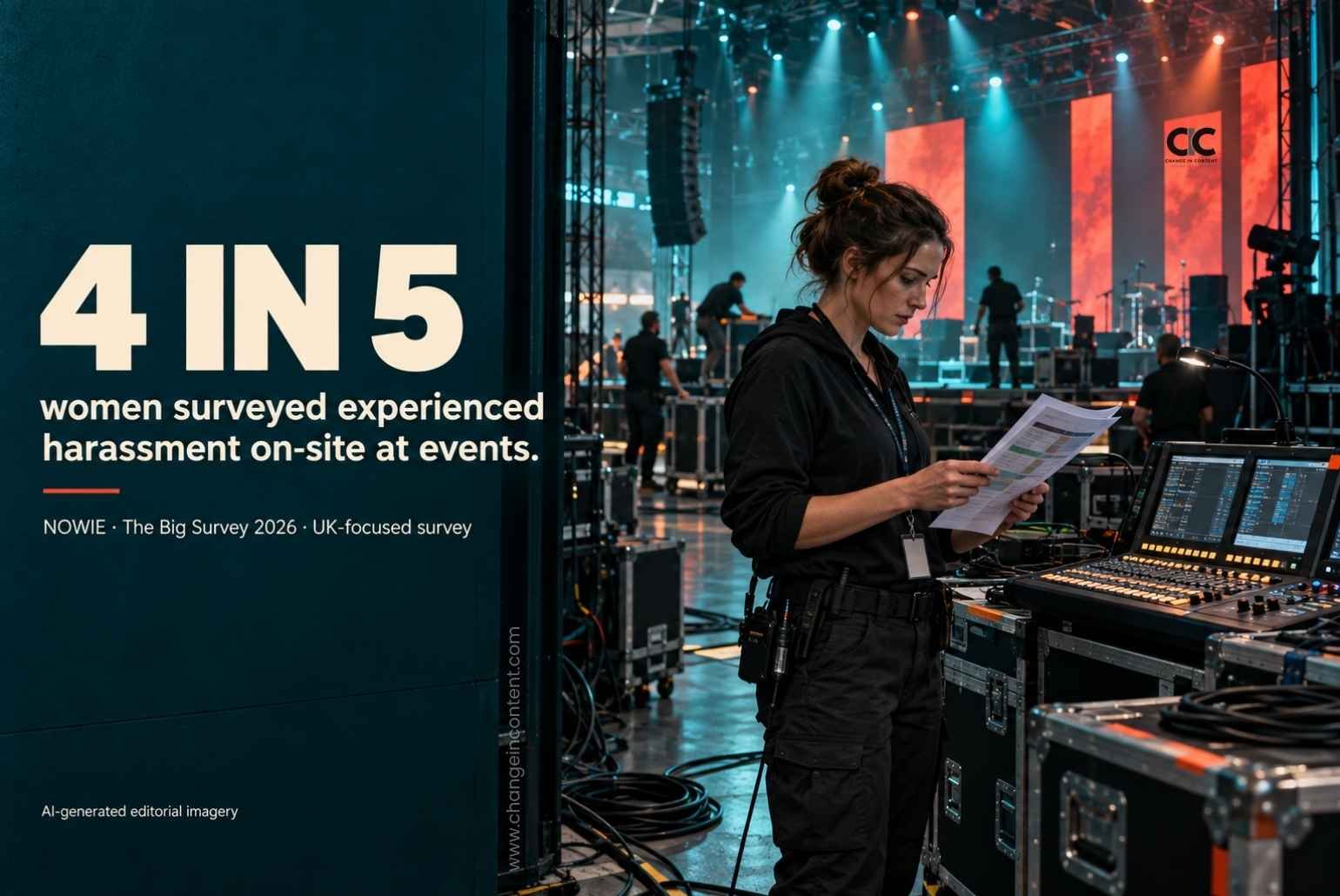
- 80% of women respondents had experienced harassment on-site at an event.
- 61% did not report their most significant incident; 19% had left a role or declined work over safety or harassment concerns.
- Only 28% of freelance and self-employed women knew of a clear reporting process, compared with 64% of employed women.
- NOWIE’s UK-focused study received 519 responses, including 476 women. It is a self-selecting sample, not an estimate for India or the global workforce.
- Event safety needs a visible contact, a fair complaint process and support that continues after the crew leaves.
The Big Survey 2026
An event can finish on time, satisfy the client and still have failed the women working on it. The Big Survey 2026 asks the industry to examine that possibility: four in five women respondents said they had experienced harassment while working on-site at an event.
Published by the Network of Women in Events (NOWIE), in collaboration with UN Women UK and with Ipsos as research partner, the study makes uncomfortable reading. Alongside the headline figure, 19% of women had left a role or turned down work because of safety or harassment concerns. A booking declined for self-protection can carry a cost in income, contacts and future opportunities.
The study concerns the UK events sector. Its figures cannot establish how often the same experiences occur in India. But its central question travels well: when several organisations share a workplace for a few days, who ensures that a woman can report harm and continue working safely?
The job continues while a woman weighs her options
The report records a range of experiences, including unwanted comments, verbal sexual harassment and unwanted physical contact. These should not be collapsed into a single claim that 80% experienced sexual assault. The headline measures harassment more broadly.
The reporting findings deserve just as much attention. Some 61% did not report their most significant incident. Among reasons for not reporting, concern about career prospects or future work featured prominently.
For someone hired assignment by assignment, a complaint can raise questions that an employee handbook barely addresses. Will the client hear? Who will handle it when the agency and venue are different organisations? Will someone still respond after the event closes? These are practical questions a reporting system should answer before anyone needs it.
In an interview with Safecity co-founder Supreet K Singh, she described how victim-blaming and distrust can discourage reporting. Telling women to speak up achieves little unless the people receiving a disclosure know how to help.
The survey also found that 86% described the industry as safe or mostly safe. That does not cancel their accounts of harassment. Someone can value a career, trust many colleagues and have experienced harm within it. A broad question about feeling safe cannot replace specific questions about conduct and response.
Freelancers face a particularly clear gap
Freelance and self-employed women reported on-site harassment at a similar level to employed women: 81% and 79%, respectively. Yet only 28% of the former knew of a clear reporting process, compared with 64% of the latter.
That gap gives organisers something concrete to address. Every worker should receive usable reporting information, including those absent from the permanent staff email list. The briefing needs to explain who is available on-site, where concerns go afterwards and how to bypass a contact implicated in a complaint.
Responsibility should also be agreed between the organiser, venue, agency and client. A worker should receive support while those organisations resolve which formal process applies. Passing her from one inbox to another risks making the procedure itself another burden.
What this means for India
India’s PoSH framework already recognises that work extends beyond a permanent office. Its definition of workplace includes places visited during employment and employer-provided transport. Protection is not confined to women on a permanent payroll. The appropriate complaint route depends on the circumstances and jurisdiction.
For an Indian conference, exhibition or brand activation, the practical task is to explain how that protection operates at the venue. Who receives a concern involving a guest or client? Which committee has jurisdiction? What immediate support is available? A designated event contact can help someone navigate these questions, but cannot replace the statutory complaint process.
Resources such as this guide to SHe-Box and workplace complaint routes can help make formal options more visible. Organisers still need to brief crews directly, in accessible language, and make sure temporary workers receive the same information.
The UK survey should prompt those checks without being presented as Indian prevalence data. India needs its own credible research into event workers’ experiences, including the people hired through suppliers and short-term contracts.
Plan the response before the doors open
NOWIE recommends visible event contacts, clearer reporting, bystander training and policies that account for work-related travel and accommodation. It is also developing Safe to Work, an industry programme intended to translate the findings into practical support. Its effectiveness will need to be assessed as it develops.
An organiser can begin with a rehearsal. Suppose a crew member raises a concern during an evening shift. Who can help immediately? Where can she speak privately? Who records the concern securely, explains the next steps and stays in contact once the venue has emptied?
Support should preserve her choices wherever possible. Moving the person who reports, reducing her shifts or excluding her from future bookings can create another penalty. Employers and agencies should check for those consequences while ensuring a fair inquiry and appropriate confidentiality.
Clients have a role before contracts are signed. They can ask suppliers how temporary workers access support, how concerns involving senior people are handled and who follows up afterwards. Those answers belong alongside staffing plans and production schedules.
It is part of helping women stay in work. A low complaint count, on its own, cannot show whether people are safe or simply unwilling to use the process.
Women facing harassment on-site: Change in View
Women should be able to accept the next assignment for its pay, prospects and creative possibilities without having to budget for harassment. The event may last a weekend; the consequences can follow someone much longer. Responsibility must remain reachable after the staging comes down and the client has signed off.
Editorial note and sources
This article draws on NOWIE’s original 2026 report and its methodology, alongside official Indian guidance on workplace sexual harassment. The online survey ran from 17 June to 28 July 2026. Participation was voluntary, recruitment used community and industry channels, and question bases vary. Some 90.7% of respondents identified as white; the report cautions that its sample does not represent the full workforce. Recommendations beyond the report are CIC’s analysis. The Indian context is explanatory, not individual legal advice; no Indian prevalence estimate or new survivor interview is claimed.
Sources:
- NOWIE: The Big Survey 2026 report page.
- NOWIE: Original report, Uncovering the truth: Women’s realities in the events industry, 2026 edition.
- Event Industry News: Research announcement, 6 October 2026.
- Patna High Court: PoSH FAQs, including workplace and aggrieved-woman definitions.