
The Brief
- Livlong 365 reported anaemia in 34.7% of women screened in one employer’s workforce; this is not an all-India prevalence estimate.
- Anaemia affects the blood’s ability to carry oxygen. Fatigue is one possible symptom, but it has many other causes.
- Iron deficiency is a common cause of anaemia, not the only one. Treatment depends on the cause.
- A useful workplace response connects testing with confidential medical advice, time for care and follow-up.
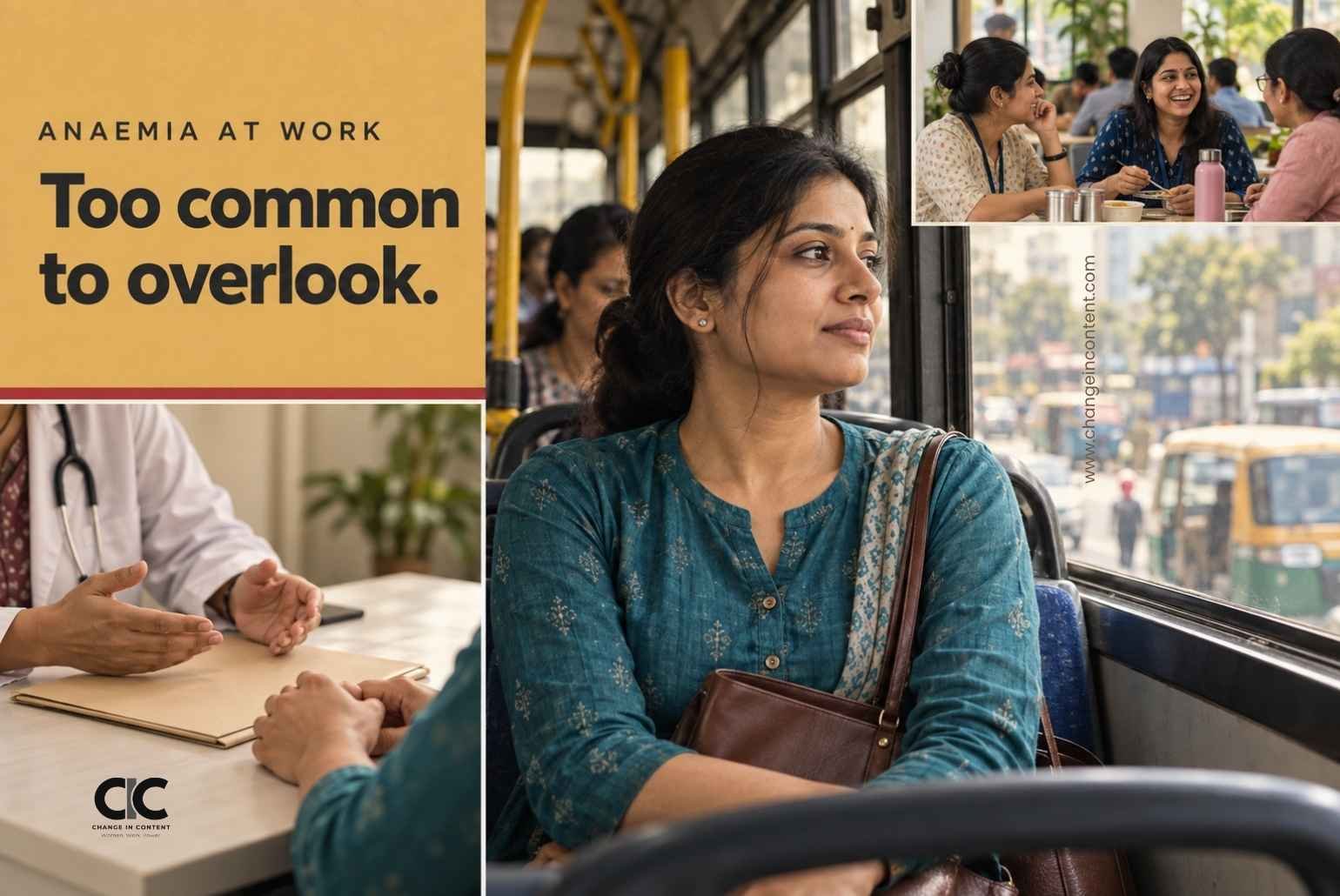
Anaemia in working women: 1 in 3 women are dealing with it
Getting through the workday can become its own reassurance: the tasks are done, the meetings attended, dinner sorted. Yet completing a day tells us little about how hard the body worked to get through it. Anaemia in working women deserves attention before exhaustion becomes something to explain away as ordinary life.
Recent findings from Livlong 365’s Workforce Health Index offer a reason to look closer. According to Pharmabiz’s coverage, the company screened 10,604 employees through 417 camps across India between January and March 2026. Among women tested, 34.7% were anaemic, compared with 7.5% of men. pharmabiz.com
These checks covered one enterprise client. They cannot tell us the prevalence among all working women in India. The accessible coverage also does not give the female sample size or diagnostic thresholds. Even with those limits, the reported finding merits a serious conversation about what happens after a health concern is identified.
What anaemia actually does
Anaemia means the red blood cell count or haemoglobin concentration is below normal. Haemoglobin helps carry oxygen around the body. When that capacity is reduced, a person may experience tiredness, dizziness or breathlessness, especially during exertion, according to the World Health Organisation.
Its effects can extend beyond a difficult afternoon at work. WHO identifies consequences for physical work capacity and quality of life. That wider perspective belongs in discussions of working women’s health: feeling well has value even when no employer is measuring the output lost.
There is an important limit to what symptoms can tell us. Tiredness alone does not establish anaemia, and a colleague’s appearance is no basis for a diagnosis. Persistent or unexplained symptoms deserve medical attention rather than assumptions about someone’s motivation, workload or diet.
Why “eat better” is an incomplete answer
Iron deficiency is a common nutritional cause, but anaemia can also involve other nutrient deficiencies, blood loss, infections, chronic illness or inherited blood disorders. Heavy menstrual bleeding can contribute. These different routes explain why advice that works for one person may miss another person’s problem.
For suspected iron deficiency anaemia, NHS guidance describes assessment through medical history and a full blood count, with further investigation where the cause remains unclear. A clinician needs to interpret the result and decide what comes next. A low haemoglobin reading should begin a conversation about its cause.
Food matters, but it cannot carry the entire responsibility for care. A varied diet that includes appropriate iron sources can help; a diagnosed deficiency may also require treatment.
Recommending supplements to every tired woman skips the assessment that makes treatment appropriate. Women should seek guidance before starting them simply on the assumption that fatigue means low iron.
This is also why judgement is unhelpful. A woman with anaemia has not necessarily been careless about eating. Absorption problems or ongoing blood loss, for example, need attention that a well-stocked lunchbox cannot provide.
The relationship between haemoglobin and participation appears elsewhere, including the discussion of women blood donors in India. A screening result can reveal a health need that deserves care in its own right, beyond whether someone can donate blood or complete a shift.
The useful part of a health camp begins afterwards
Consider an illustrative situation: an employee receives an abnormal result from a workplace camp, followed by a message advising her to consult a doctor. Her working hours overlap with clinic appointments, she is unsure what the company plan covers, and nobody has explained the result. Screening has identified a concern; the next step remains difficult.
Organisations can make that step easier. Arrange confidential clinical interpretation, explain consultation and diagnostic coverage, and give employees a practical way to attend appointments. Where someone needs treatment, the healthcare provider should set the follow-up schedule. Employers should avoid inventing a universal quarterly testing rule or circulating health details to line managers.
Make meal breaks workable, too. A nutrition session has limited use if the shift regularly runs through lunch. Where food is provided, ask a qualified dietitian to review variety, affordability and nutritional quality. These changes support everyday health without claiming to treat every cause of anaemia.
The broader discussion of unresolved health concerns at work points to a useful question for benefits teams: can employees actually use the care on offer? Attendance at a camp is easy to count. Confidentiality in establishing whether people could obtain the recommended next step takes more effort, and offers a better account of what the programme achieved.
Women have a role in recognising persistent changes, seeking advice and following an agreed treatment plan. If medicines cause side effects or appointments are difficult to manage, that is worth discussing with the clinician rather than quietly abandoning care. Family members can share practical responsibilities so that an appointment does not mean returning to an untouched second workload at home.
None of this establishes why any individual in the screening programme developed anaemia. It sets out what a more useful response could involve.
Change in View on Working Women’s Health
A common condition can become strangely easy to overlook. Everyone has heard of it, so nobody feels obliged to explain it properly or ask whether care followed. We should give anaemia more space in the conversations women, families and organisations already have about health. A woman should not need to stop functioning before her health earns that attention.
Editorial note and sources
The screening findings are attributed to Pharmabiz’s 18 September 2026 coverage of Livlong 365’s Workforce Health Index; the full underlying report was not available for independent review. Clinical explanations draw on WHO and NHS guidance. The workplace example is illustrative, and proposed organisational measures are Change in Content’s analysis. This article provides general information, not a diagnosis or individual treatment advice.
Sources
- Pharmabiz: 1 in 3 working women are anaemic: Livlong 365 data.
- World Health Organisation: Anaemia.
- NHS: Iron deficiency anaemia.
