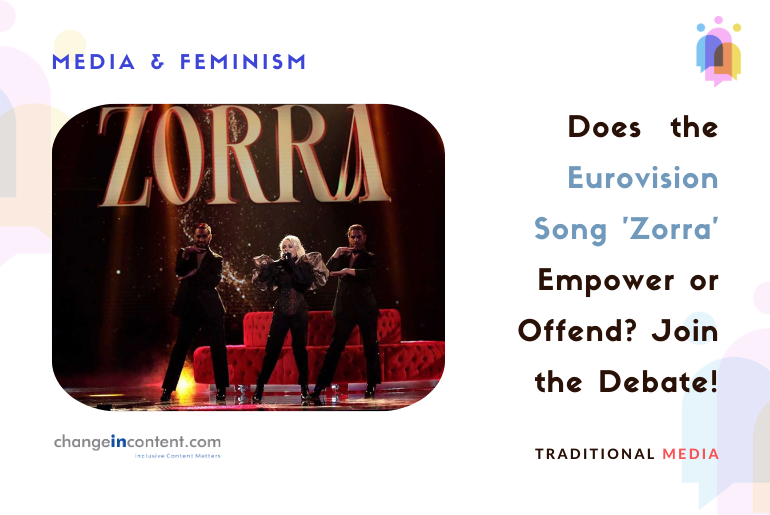
The Eurovision song ‘Zorra’ and the controversy
Spain’s Prime Minister, Pedro Sánchez, recently found himself defending the country’s Eurovision entry, an electro-pop anthem titled “Zorra,” after it was criticised for being “anti-women.” The controversy stems from the title of the Eurovision song ‘Zorra’, which, while translating to “vixen,” is commonly used as slang for “bitch” or “slut” in Spanish. The Feminist Movement of Madrid condemned the song, stating it “insults women in a sexist way.” In contrast, Sánchez argued that the song challenges sexist stereotypes, suggesting that “feminism is not only fair, it can be fun, and this type of provocation must come from culture,” during his appearance on La Sexta’s Al Rojo Vivo.
About the band: Nebulossa
Performed by Nebulossa, a duo consisting of María “Mery” Bas and Mark Dasous from the village of Ondara in Alicante, the song has quickly become a viral sensation, amassing over 2.5 million views on YouTube. Nebulossa, a married couple with two children, formed their band in 2018 and were recently chosen to represent Spain in a public vote, narrowly beating contestant Jorge González.
The Eurovision song ‘Zorra’: The lyrics
The song’s lyrics, translated to English, include provocative lines such as: “If I go out alone, I’m the slut/If I’m having fun, I’m the sluttiest/When I get what I want – Bitch, bitch/It’s never because I deserve it.” While intended as a commentary on misogyny and the double standards women face, the Feminist Movement of Madrid found the repetition of the word “zorra” problematic, arguing that it does not empower women.
Does Zorra break the stereotype?
Spain’s equality minister, however, described “Zorra” as a “fun song, which breaks stereotypes.” Prime Minister Sánchez went further, suggesting the criticism originated from the right-wing “fachosphere,” whom he claimed would have preferred the song to be “Cara al Sol,” the anthem of the Spanish falangist movement.
The European Broadcasting Union (EBU), which organises Eurovision, confirmed that “Zorra” does not violate any rules against lyrics that could bring the contest into disrepute. In a statement, the EBU acknowledged the multiple meanings of the song’s title and deemed it eligible for the competition.
The Nebulossa perspective on the Eurovision song ‘Zorra’
Nebulossa’s singer dismissed the backlash, stating, “We are not 20 years old. I don’t give a damn about anything.” As Spain gears up for the Eurovision Song Contest in Malmö, Sweden, Nebulossa’s “Zorra” is set to take the stage unchanged, ready to challenge norms and spark conversation.
Misogyny in music
Misogyny in music is not a new phenomenon. For decades, lyrics that demean and objectify women have been prevalent across genres. These songs often perpetuate harmful stereotypes. It reinforces the notion that women’s worth is tied to their sexuality or appearance. Such content can have a profound impact on societal attitudes. Moreover, it subtly shapes the subconscious biases of listeners. When derogatory terms become normalised in popular culture, they reinforce a cycle of disrespect and inequality.
Language is tricky
While some argue that reclaiming these words can empower women, others believe that repeated exposure to sexist language, even in an ironic or provocative context, can contribute to a culture that tolerates misogyny. The debate surrounding “Zorra” highlights this tension. Some supporters view it as a bold challenge to stereotypes, and critics see it as perpetuating harmful norms.
The Eurovision song ‘Zorra’: The Final Thoughts
The anticipation and debate surrounding these entries highlight the contest’s ongoing role as a cultural battleground. The conversation around songs like “Zorra” is crucial in examining how music can both reflect and influence societal values. It also questions where the line between empowerment and perpetuation of bias lies.
The exciting part of this debate is whether to erase certain words and phrases altogether from common lingo or to rewrite specific phrases. There is no fixed rule here. But yes, humour is tricky, and so is language. Even if one person feels affronted, one needs to rethink the same. Do we like the Prime Minister’s stand? No.
What do you think? Let us know in the comments.
Disclaimer: The views expressed in this article are based on the writer’s insights, supported by data and resources available both online and offline, as applicable. Changeincontent.com is committed to promoting inclusivity across all forms of content, which we define broadly to include media, policies, law, and history—encompassing all elements that influence the lives of women and gender-queer individuals. Our goal is to promote understanding and advocate for comprehensive inclusivity.