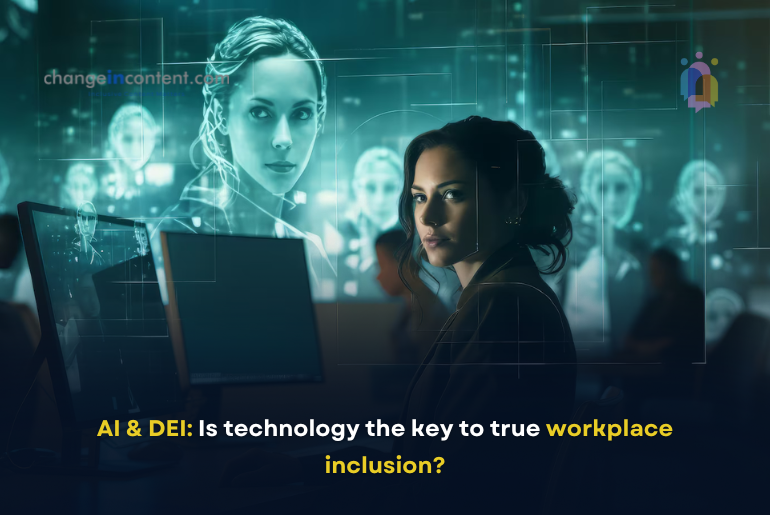
Generative AI in DEI is emerging as a transformative force with the potential to drive inclusion, equity, and diversity across industries. While businesses have long struggled to implement bias-free hiring and leadership representation, Sabyasachi (Saby) Mukherjee explores how AI-powered systems can bridge these gaps by eliminating unconscious biases, fostering inclusive work cultures, and ensuring equitable career growth opportunities. With the right approach, AI can analyse workforce trends, flag discriminatory language, and tailor career development paths—creating workplaces that value true diversity. But the question remains: Are we ready to embrace AI as an ally in DEI?
Generative AI in DEI: Introduction
Generative Artificial Intelligence (Gen AI) is revolutionising various sectors of society and industry. It offers significant opportunities to address challenges in those sectors. It has become the buzzword in various functional forums. Have you ever wondered how Gen AI can help in Diversity, Equity, and Inclusion (DEI)?
DEI is critical for creating environments where individuals feel valued and respected and have equal access to opportunities. Gen AI, with its capacity for advanced data analysis, automation, and personalised solutions, can help organisations enhance DEI practices. Additionally, it can help create more inclusive and equitable environments in both professional and social settings.
Eliminating biases in the workplace with AI
One of the primary ways Gen AI can assist in DEI is by eliminating biases in hiring and recruitment. Traditional recruitment processes often involve human biases—conscious or unconscious—that affect decisions about which candidates are selected for positions. These biases may be based on gender, ethnicity, age, or educational background.
Generative AI models trained on diverse and inclusive data can help. They can analyse resumes and job applications objectively. They can identify candidates who possess the necessary skills and qualifications without being influenced by demographic information. Moreover, AI can recommend adjustments in job descriptions to make them more inclusive. That will ensure that language does not inadvertently alienate certain groups of applicants.
Promoting diversity in leadership roles: The Gen AI way
Beyond recruitment, Gen AI can contribute to promoting diversity in leadership roles. Research consistently shows that women and minorities face underrepresentation in higher-ranking positions across various industries. AI-powered systems can identify gaps in leadership diversity within an organisation and propose strategies to address these disparities.
The AI model will also suggest whether you can achieve this through mentorship programs, leadership development courses, or targeted outreach. These systems can analyse organisational structures, employee demographics, and career progression trends to suggest interventions that will create a more inclusive and diverse leadership team.
Generative AI in DEI: Building an inclusive work culture
Another important aspect where Gen AI can advance DEI is in creating inclusive work cultures. AI-powered tools can help companies identify and address microaggressions and discriminatory language in real time. It can be through any communication method, whether in emails, chat messages, or public communications. For example, AI systems can scan written communication and flag language that could be considered offensive or exclusionary.
Additionally, organisations can use AI to create virtual environments or simulations that train employees on the importance of DEI and teach them how to respond appropriately in diverse settings. These immersive learning experiences can raise awareness of unconscious biases and improve employees’ ability to engage inclusively with their colleagues.
Addressing equity concerns
Gen AI can also help address equity concerns by providing personalised learning and development opportunities. AI-driven platforms can assess the skills, needs, and potential of individual employees. Depending on that, they can create tailored development plans to ensure that everyone, regardless of their background, has access to the resources and opportunities needed to succeed. By analysing performance data, AI can identify employees who might need additional support or resources to thrive. That will ensure a more equitable distribution of opportunities within the organisation.
Uncovering hidden inequality using AI
Generative AI can contribute to DEI efforts by analysing large datasets to uncover hidden patterns of inequality. By processing vast amounts of demographic and performance data, AI can reveal systemic barriers that disproportionately affect underrepresented groups. These insights can help organisations make data-driven decisions about policies and practices that promote fairness. For example, AI can pinpoint trends in pay disparities, revealing any wage gaps between different demographic groups and offering actionable recommendations for closing these gaps.
Generative AI in DEI: The final thoughts
Generative AI has the potential to play a transformative role in advancing Diversity, Equity, and Inclusion. By eliminating biases in recruitment, promoting diverse leadership, establishing inclusive cultures, offering personalised development, and uncovering hidden inequities, AI can help organisations create environments where everyone feels valued and has equal access to opportunities. However, it is essential to recognise that AI must be carefully designed. It must be trained on diverse datasets. Moreover, regular monitoring is necessary to ensure that it continues to support DEI efforts without inadvertently perpetuating biases. When used responsibly, generative AI can be a powerful tool for building a more inclusive and equitable society.
Changeincontent perspective
As we explore the possibilities of Generative AI in DEI, it is crucial to remember that technology is only as unbiased as the data it is trained on. While AI can flag microaggressions, remove hiring biases, and suggest equitable policies, it also risks replicating existing inequalities if not carefully designed.
At Changeincontent, we believe that AI should enhance human accountability rather than replace it. It should enable organisations to move beyond surface-level diversity and towards a genuinely inclusive workforce. The challenge is not just implementing AI but ensuring that it is ethically structured, continuously monitored, and built with inclusivity at its core.
Disclaimer: The views expressed in this article are based on the writer’s insights, supported by data and resources available both online and offline, as applicable. Changeincontent.com is committed to promoting inclusivity across all forms of content. We broadly define inclusivity as media, policies, law, and history—encompassing all elements that influence the lives of women and gender-queer individuals. Our goal is to promote understanding and advocate for comprehensive inclusivity.