
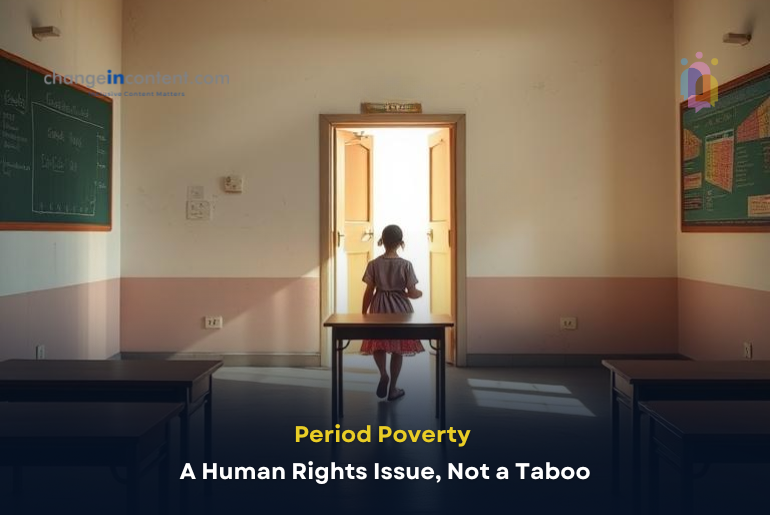
India has more than 20% of the world’s menstruating adolescents, yet period poverty keeps millions from managing their menstrual health with dignity. Period poverty describes the lack of access to menstrual products, proper sanitation, and even basic education on menstrual health. Only 36% of India’s 355 million menstruating women use sanitary pads. The rest rely on cloth, husk, ash, or whatever substitute they can find. One in ten girls under 21 resorts to unsafe alternatives because sanitary products remain out of reach.
All this leads to poor menstrual hygiene, which contributes to over 70% of all reproductive health issues in the country.
For many, the cost of menstruation is simply unaffordable. The average Indian woman needs to spend about ₹300 per month on period products. Meanwhile, the minimum daily wage in India hovers around ₹180. With a budget stretched thin, menstrual products quickly become a luxury rather than a necessity. This explains why 43 million women are left without the means to manage an essential biological function.
Period poverty pushes millions of girls out of school
Nearly 71% of girls enter puberty without knowing anything about menstruation. This lack of awareness turns their first period into a confusing and distressing experience. Without proper guidance, many struggle to manage their periods, leading to school dropouts.
Every month, one in four girls in India misses school because of their period. For many, menstruation cuts their education short, with nearly 23 million girls dropping out of school each year after reaching puberty. Those who stay might miss up to five days of school every month, struggling to keep up with their studies.
A 2011 UNICEF study revealed that only 13% of Indian girls knew about menstruation before their first period. Around 60% missed school because of it, while 79% suffered from low confidence. Nearly half of them felt humiliated by the restrictions imposed on them.
School absenteeism due to periods isn’t just India’s problem. It affects girls worldwide. In Kenya, 95% of menstruating girls miss one to three school days each month. At the same time, in Sub-Saharan Africa, one in ten girls skip school during their period, adding up to 20% of the school year. In the United States, 1 in 5 girls misses school during their period. A study in the UK by Plan International found that nearly two million girls, 64% of menstruating students, miss part or a full day of school every period.
Why girls are forced to miss school when menstruating
The biggest reason girls miss school during their periods is the lack of proper infrastructure. Schools fail to provide even the most basic necessities, making it nearly impossible for girls to manage their periods. Another major obstacle is affordability. Many families cannot afford the cost of menstrual products, leaving girls with no option but to use cloth rags. These are difficult to clean and even harder to change at school.
Many schools lack private toilets or safe spaces where girls can change their period products. Without proper dustbins, they often carry soiled pads in their bags all day, an experience that is as unhygienic as it is humiliating. Limited access to clean water makes matters worse, increasing the risk of urinary tract and vaginal infections.
No safe space, No support
Period poverty is more than just a lack of sanitary products. It also means not having a safe space to ask questions or seek guidance. Many girls grow up without basic information about menstruation. When schools fail to provide that knowledge and instead create shame, girls will feel isolated.
The social stigma and shame surrounding menstruation leave many girls with no choice but to stay home. Society often views menstruation as something shameful rather than a normal, biological event. Instead of accepting it as part of life, people treat it as something to hide or be embarrassed about.
A small stain can lead to teasing from classmates or scolding from teachers, turning school into an uncomfortable place. This stigma also prevents open conversations about menstrual health. Even teachers, instead of offering support, sometimes scold girls for period-related issues, treating it as an inconvenience rather than a natural and legitimate concern.
Period poverty is not just a women’s issue.
Fighting period poverty needs real change that includes everyone. Menstruation is not the same for all. Not everyone who menstruates is a woman, and not all women menstruate. Ignoring this fact leaves many without the support they need. A fair solution must consider every person affected and avoid leaving out any vulnerable group. Among them are people with disabilities, sex workers, older adults approaching menopause, and non-binary and trans people.
Period poverty is not just a health issue. It is a money and policy issue. When menstrual products remain expensive, the system is failing millions of people. These products should be free or at least affordable, and schools, workplaces, and public spaces must have safe and clean places for people to manage their periods.
Periods are not a “women’s problem” or a “private matter” to be dealt with in hushed tones.
The final thoughts on period poverty and the associated crisis
A few free pad distribution programs exist, but they’re either inconsistent or fail to reach those who need them most. Meanwhile, many workplaces, schools, and public spaces still lack proper toilets. Let’s not brush aside how menstrual education in India is still limited to whispers and awkward glances.
If menstrual products were affordable or freely available, if sanitation facilities were built with menstruating people in mind, and if menstrual health education was not a taboo topic, period poverty wouldn’t exist at this scale. The problem is, period poverty isn’t just simply happening. It’s being allowed to happen because those in power fail to address it.
Research sources
- Dasra 2024: Progress and action on menstrual health in India
- Krishnashree Achuthan, Sugandh Khobragade, Vysakh Kani Kolil, Beyond access to sanitary pads: a comprehensive analysis of menstrual health scheme impact among rural girls in Northeast India, Health Policy and Planning, Volume 40, Issue 2, March 2025, Pages 218–233
- World Bank: Menstrual Health and Hygiene
- TOYBOX.org: Spotlight on period poverty in India
- Nearly two million girls in the UK miss school because of their period
Disclaimer: The views expressed in this article are based on the writer’s insights, supported by data and resources available both online and offline, as applicable. Changeincontent.com is committed to promoting inclusivity across all forms of content. We broadly define inclusivity as media, policies, law, and history—encompassing all elements that influence the lives of women and gender-queer individuals. Our goal is to promote understanding and advocate for comprehensive inclusivity.
