
The Short Read
- From the late 1960s onwards, around 6,000 nurses from Kerala migrated to Germany, becoming an important part of Indian migration to the country.
- West Germany was facing a serious nursing shortage in the 1960s and recruited nurses from abroad, including from Kerala, South Korea and the Philippines.
- The WHO notes that Kerala has a long history of providing nurses to both local and international health systems.
- Today, Germany continues to recruit nurses from Kerala through structured routes such as the Triple Win Programme, run by Germany’s Federal Employment Agency and GIZ in cooperation with Norka Roots.
- The story of Kerala nurses and Germany’s healthcare system is one of women’s skilled labour becoming part of the global infrastructure.
Kerala nurses and Germany’s healthcare system: A story that began with a suitcase
The story of Kerala Nurses and Germany’s healthcare system begins quietly.
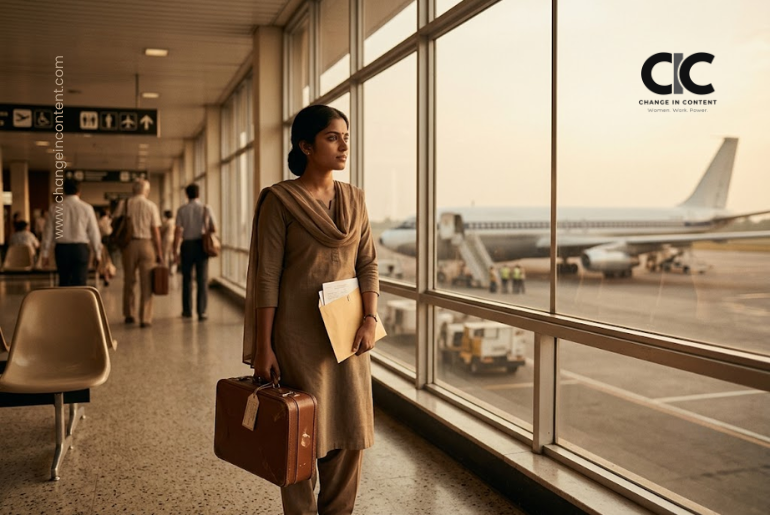
A young woman leaves home. She has a suitcase, a nursing certificate, a few words of a new language, and a family that may be proud, anxious, or both. Then she boards a flight from Kerala to a country she has likely never seen. The weather will be colder, the food unfamiliar, and the wards busy. And the language will not wait for her to become comfortable.
Yet she goes neither as a dependent nor as someone following a husband. She does not even go as a supporting character in a migration story. She goes as a trained worker, and that point matters.
In the late 1960s and 1970s, thousands of nurses from Kerala travelled to West Germany as the country’s hospitals needed care workers. German policy research has described this movement as one of the early phases of Indian migration to Germany. They note that around 6,000 nurses from Kerala arrived beginning in the late 1960s.
Their names are not widely known. And their shifts were not photographed for national memory. Also, their contribution did not arrive as a speech or a headline. It arrived in hospital corridors, night-duty rooms, patient bedsides, and letters sent back home.
It is the kind of history that sits inside everyday work.
Germany needed nurses. Kerala had women ready to work.
West Germany’s need was real.
A nursing history article published in the European Journal for Nursing History and Ethics notes that West Germany faced a considerable shortage of nursing staff in the 1960s. One response was to recruit nurses from abroad, including from Kerala in southern India, South Korea and the Philippines.
Kerala, meanwhile, had already built a strong culture of nursing education and migration. The WHO’s review of international nurse migration from Kerala notes that the state has a long history of supplying both local and international health systems with a considerable number of nurses. It also notes that many nurses leave Kerala in search of better employment prospects, lifestyle options and professional advancement.
Those sentences can sound technical. The human story behind them is bigger.
For many young women, nursing offered a rare route to mobility. It could take them beyond the village, beyond the state, beyond the country, and sometimes beyond the expectations placed on women of their generation.
They entered a profession where care was the skill. Discipline was the method. Endurance was expected. And migration became a way to build both income and identity.
The women who travelled first carried more than care
The first generation of Kerala nurses in Germany did something that deserves more attention: they changed what migration looked like.
People often narrate migration from India as men leaving for work and women joining later as family members. The Kerala nurses disrupted that pattern. They moved first, earned first, and supported families from afar. What is more intriguing is that these women learned new systems and built professional lives in another country.
Some were very young. Many were single. Most had to learn not only clinical routines, but also German workplace culture, hospital hierarchy, food habits, loneliness, racism, weather and distance.
The work itself would have been demanding. Nursing is never abstract. It is lifting, cleaning, monitoring, comforting, documenting, responding, translating pain into action, and staying alert when everyone else is exhausted.
In a new country, each of those tasks carried another layer: language.
Imagine learning how to respond to a patient’s fear before you are fully fluent. And imagine understanding medical instructions in a new tongue while proving that you belong on the ward. Then, imagine being homesick and still showing up for night duty.
That is why this story deserves to be remembered with dignity. These women were not only “helping” Germany. They were skilled professionals entering a health system in need of them.
Their labour became part of Germany’s care infrastructure
We often describe healthcare systems in terms of hospitals, technology, insurance, policy, and budgets. Yet every system eventually comes down to people who do the work.
A health system cannot function without nurses to monitor patients, support doctors, manage recovery, explain care, manage medication, calm families, and notice what machines cannot. Kerala nurses became part of the backbone of the workforce in Germany.
Their contribution was not dramatic in the way public history likes. It was repetitive, skilled and intimate. They cared for strangers in a foreign language. These nurses took difficult shifts. They adapted to institutions that were not built around them. The Kerala nurses became colleagues, neighbours, mothers, community members and eventually part of Germany’s migrant history.
The lesson is simple: women’s work can shape national systems even when it is not placed at the centre of national storytelling.
That is also why this story connects with our earlier Change in Content piece on one million more midwives and the global health workforce. Health systems everywhere depend heavily on women’s skilled care labour. Nurses, midwives and care workers often hold the system together long before they are fully recognised for doing so.
The story did not end in the 1970s
It is not only a memory from the past.
Germany continues to need nurses. The German Federal Employment Agency’s page on the Triple Win Programme states that Germany’s nursing sector already faces a significant shortage of skilled staff, and experts predict that around 500,000 more nurses will be needed by 2030.
The same page says the Triple Win Programme, set up in 2013 by Germany’s Federal Employment Agency’s International Placement Services and GIZ, places qualified nurses from abroad in Germany. For Kerala, the programme is implemented through an agreement between the German Federal Employment Agency and Norka Roots, a Government of Kerala company.
The current process is more structured than the early migration decades. Licensed nurses from Kerala receive language and technical training, support for starting their lives and work in Germany, and assistance with qualification recognition upon arrival. The official programme page also says placement, language preparation, technical preparation and integration assistance are free for applicants. This continuity matters.
The first generation opened a route with courage. The current generation walks a route that is more formal, regulated and visible. But the core remains familiar: skilled women moving across borders because health systems need care, and because women seek professional growth, income and mobility.
What women can take from this story
This is a story of migration. It is also a story of career imagination.
Many of the women who travelled from Kerala decades ago did not have perfect conditions. They did not have the kind of global mobility infrastructure that exists today. Neither did they have training, courage, family pressure, ambition, uncertainty, or work ethic.
Their story leaves three lessons for women today.
First, skills travel.
A strong professional skill can take a woman into rooms, countries and futures that once seemed unavailable. Nursing did that for many women in Kerala. Today, similar routes exist in healthcare, technology, care work, research, design, finance, education and climate jobs.
Second, migration should be safe and informed.
The modern route through official programmes matters because migration can become risky when handled through informal or exploitative channels. Nurses and other professionals seeking overseas work should check official recruitment routes, contracts, language requirements, recognition rules and costs before committing.
Third, care work is skilled work.
Women are often taught to see care as natural. Nursing proves otherwise. Care is trained, technical, disciplined and economically valuable. It saves lives, supports hospitals, and fills workforce gaps. Hence, it deserves pay, respect and safety.
The Change in Content view
The story of Kerala nurses and Germany’s healthcare system is not only about migration from one state to one country. It is about women’s work becoming part of the world’s public infrastructure.
These women crossed borders before global careers became a familiar phrase. They worked in a system that needed them, adapted to a society that did not always know how to receive them, and built lives through skill.
Their contribution should be remembered because it changes how we see women’s migration. These nurses were not waiting at home while men built futures abroad. They were building futures themselves.
The nurses from Kerala entered hospital wards far from Kerala and became part of Germany’s care story. They sent money home, raised families, held patients through illness, and proved that women’s labour can travel across continents and still carry the memory of where it began.
Some histories are written in policy papers. Some are written on night shifts. Nurses wrote this one.
FAQs
Q: Why did Kerala nurses go to Germany?
A: Kerala nurses migrated to Germany for work, professional advancement and better opportunities. West Germany also needed nursing staff in the 1960s and recruited nurses from countries including India, South Korea and the Philippines.
Q: How many nurses from Kerala migrated to Germany in the earlier phase?
A: German policy research notes that around 6,000 nurses from Kerala migrated to Germany from the late 1960s onwards.
Q: Does Germany still recruit nurses from Kerala?
A: Yes. Germany continues to recruit nurses from Kerala through structured routes such as the Triple Win Programme, implemented by Germany’s Federal Employment Agency and GIZ in cooperation with Norka Roots.
Q: Why is this story important for women’s work?
A: It shows how women’s skilled labour can shape global systems. Kerala nurses were not dependents in a migration story; they were workers, earners and professionals whose care labour supported another country’s healthcare system.
Editorial Note and Sources
This DEI Insights article by Change in Content is based on official and academic sources on nurse migration from Kerala to Germany. The reference article shared by the user was used only for topic awareness and has not been cited.
The article avoids religious framing and focuses on women’s labour, migration, healthcare systems and professional mobility. Historical numbers should be read as estimates based on published research, as migration flows from earlier decades were not always recorded with the same precision as those in contemporary recruitment programmes.
Sources used:
- Stiftung Wissenschaft und Politik research on Indian migration to Germany
- European Journal for Nursing History and Ethics article on transnational nurse recruitment in West Germany
- WHO review of the international migration of nurses from Kerala
- German Federal Employment Agency page on the Triple Win Programme for nurses from Kerala.
