
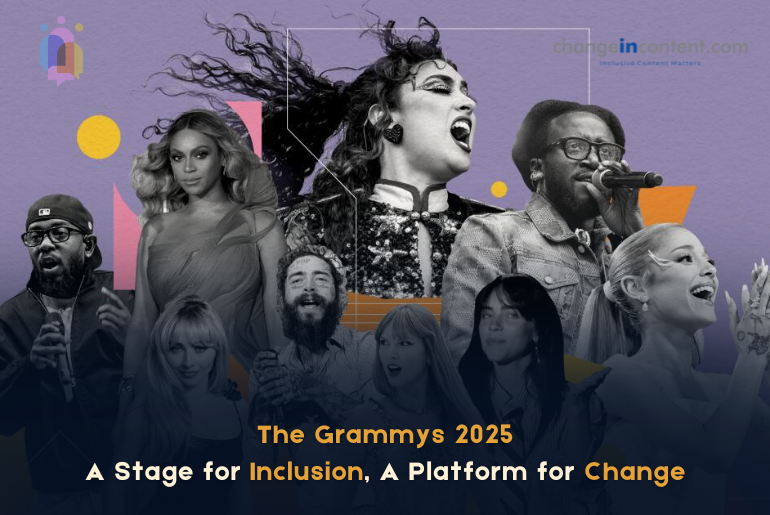
On Sunday, Feb. 2, the 67th Grammy Awards took place. The 2025 Grammys lived up to its reputation as one of the most important nights in the global music industry. This year, the ceremony stood out for its historic representation of women and people of colour. Though women represented only 28% of this year’s nominations, they claimed 12 out of 16 nominations in the two most prestigious categories. Women took home six out of the nine televised Grammy Awards, with three of those wins going to women of colour.
However, the Grammys have not always been a platform for diversity or women’s empowerment. In 2018, reporters asked Neil Portnow, then-President and CEO of the Recording Academy, why only 17 of the night’s 86 awards went to women. “It has to begin with women,” he said, before implying that women artists needed to “step up.” It was, to say the least, a baffling comment. The reality was that women had been contributing to the music industry all along. Still, their work had never received even half the recognition that male artists did.
After years of backlash and allegations over racial bias and male-dominated decision-making, the Grammy Awards finally saw a change for the better. In 2024, every televised award went to women artists. Moreover, the 2025 Grammys stood out not just for its winners but for how artists turned their moment in the spotlight into an opportunity to raise awareness and bring attention to some very serious issues.
Alicia Keys declares ‘DEI is not a threat, it’s a gift’ in the 2025 Grammys acceptance speech
While accepting the Dr. Dre Global Impact Award at the 67th Grammys, singer-songwriter Alicia Keys passionately defended diversity initiatives. Though some argue that DEI efforts create division, Keys presented them as a means to amplify voices that have historically been marginalised.
“DEI is not a threat, it’s a gift,” she stated, addressing the growing backlash against diversity, equity, and inclusion (DEI) initiatives. She didn’t stop there. “This is not the time to shut down the diversity of voices,” she continued. “We’ve seen on this stage talented, hard-working people from different backgrounds with different points of view, and it changes the game.”
Chappell Roan calls out industry exploitation and stands with the trans community
After winning the Grammy for Best New Artist, Chappell Roan wasted no time using her platform to address a long-standing issue in the music industry. She called on record labels to treat artists as more than disposable assets, demanding fair wages, health insurance, and workplace protections. “Treat your artists as valuable employees,” she urged. The music industry, much like many other businesses, has a history of viciously exploiting artists, especially emerging ones.
Roan also used her moment to send a message to the trans community. Speaking with GLAAD on the red carpet, she acknowledged the challenges trans people face. “It’s brutal right now, but trans people have always existed and will forever exist,” she said. “No matter what happens, they will never take trans joy away, and that has to be protected more than anything.” She credited trans women for shaping her artistry and promised to continue standing up for them.
Her words came in the wake of Donald Trump’s latest policies on transgender rights. On his first day back in office, he signed an order recognising only two sexes: male and female. Since then, he has moved to restrict gender-affirming care for minors and seems set on pushing more anti-trans policies.
Lady Gaga honours the trans community at the 2025 Grammys
While accepting the Grammy for Best Pop Duo/Group Performance alongside Bruno Mars for their hit Die with a Smile, Lady Gaga took a moment to send a powerful message to the trans community. “Trans people are not invisible. Trans people deserve love. The queer community deserves to be lifted up. Music is love. Thank you,” she said.
Gaga has long been a vocal ally of the queer community. Her speech was a timely response to recent political attacks on LGBTQ+ and trans rights, as Trump’s administration removed transgender references from federal government websites.
Shakira stands with immigrants
During her acceptance speech for Best Latin Pop Album at the 2025 Grammys, Shakira took a stand on behalf of immigrants in the U.S. as mass deportations continue to disrupt lives across the country. She took the chance to defend a community that continues to be singled out and mistreated.
Dedicating her win to “all my immigrant brothers and sisters in this country,” Shakira sent a message of solidarity. “You’re loved, you’re worth it, and I will always fight with you,” she declared. She also paid tribute to hardworking women who provided for their families, calling them “the true she-wolves.”
The 2025 Grammys: A long overdue celebration of black women in music
Beyoncé Despite being the most-awarded artist in Grammys history, Beyoncé finally secured her first Album of the Year win for Cowboy Carter, which also earned her Country Album of the Year. That win was more than just another trophy; it was a milestone. Only 11 Black artists had ever won Album of the Year, and Beyoncé became the twelfth Black artist in 66 years of The Grammys to claim the prize. She also became the first Black woman to do so since Lauryn Hill in 1999.
Rapper Doechii added to the historic night, winning Best Rap Album for her genre-bending mixtape Alligator Bites Never Heal. She became only the third woman ever to take home that award, joining Lauryn Hill and Cardi B. Taking the stage, Doechii delivered a message that cut through the noise of an industry that often sidelines Black women. “I know there’s some Black girl out there watching me right now, and I want to tell you: You can do it. Anything is possible,” she said.
Changeincontent perspective
While the Grammys 2025 celebrated diversity, breaking long-standing barriers for women, Black artists, and the LGBTQ+ community, it is essential to ask whether this newfound inclusion is a permanent shift or will remain a tokenistic highlight.
For decades, industries have profited from performative activism, where moments of empowerment are spotlighted on grand stages. However, the same systemic biases persist behind closed doors. Inclusion cannot be a PR moment—it needs to be a continuous commitment. The true success of DEI in the music industry will not be measured by who wins awards but by who gets the mic when the cameras are off.
The 2025 Grammys: Summing up
Whether defending DEI, advocating for fair treatment for employees, or standing with marginalised communities, some of the 2025 Grammy’s acceptance speeches reminded the world that visibility matters. Change doesn’t happen in silence, and influence means little if not used for something bigger. The night wasn’t just about who won. It was about who spoke up and who listened.
Disclaimer: The views expressed in this article are based on the writer’s insights, supported by data and resources available both online and offline, as applicable. Changeincontent.com is committed to promoting inclusivity across all forms of content. We broadly define inclusivity as media, policies, law, and history—encompassing all elements that influence the lives of women and gender-queer individuals. Our goal is to promote understanding and advocate for comprehensive inclusivity.
