
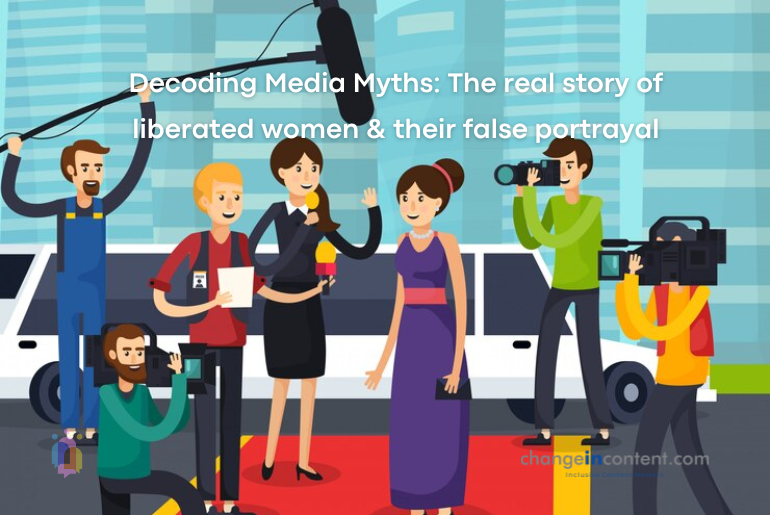
The media plays a crucial role in shaping societal norms and values, including how women are perceived and portrayed. The portrayal of liberated women in the media often exaggerates reality and reinforces stereotypes.
Studies show that it can influence the behaviour and attitudes of adolescents. The study involved a sample of 100 students aged 17 to 20, 50 boys and 50 girls. Surveyors asked the students questions about their views on the portrayal of women in print and electronic media. The data was analysed using statistical methods like percentage, mean, standard deviation, and t-test.
The findings indicate that media often depicts women in stereotypical roles, reinforcing traditional patriarchal views. Female students, in particular, expressed more agreement with these stereotypical representations. Moreover, they felt a need for media content regulation compared to male students. Why it is worrying is that we are seeding the minds of young people, who will grow up with wrong notions and ideas.
Character assassination of liberated women
The importance of promoting more diverse and empowering representations of women in media is to foster gender equality and challenge harmful stereotypes. One such area is the portrayal of women who are seen as sexually liberal.
Villanisation of women
The death of Sushant Singh Rajput, a talented and promising Bollywood actor, sent shockwaves across India and the world in 2020. His untimely demise, ruled as suicide by authorities, sparked intense media scrutiny, public speculation, and conspiracy theories. It created a whirlwind of controversy and sensationalism.
One of the central figures in this media frenzy was Sushant’s girlfriend, Rhea Chakraborty. In the aftermath of his death, Rhea found herself at the centre of a relentless media circus. She faced a barrage of accusations, character assassinations, and trial by media before any formal investigation had even taken place.
The media coverage surrounding Rhea Chakraborty was not only invasive but also deeply troubling in its tone and approach. Rather than adhering to ethical standards of journalism, many news outlets engaged in sensationalism, speculation, and character defamation, turning Rhea into a scapegoat for Sushant’s death.
Scandals and women
The portrayal of women in media, particularly in instances involving scandals or controversies, has a long history. Monica Lewinsky, for example, found herself thrust into the public eye during the scandal involving President Bill Clinton. Despite her being a victim of abuse of power, the media often reduced her to a mere sexual figure. It overshadowed the complexities of her experiences and the systemic power dynamics at play.
Portrayal of liberated women in media: Victimhood in death
The tragic death of Princess Diana was covered in-depth by the media. It focuses very little on her strength and her humanitarian efforts. It was all about her personal life and relationships. Her struggles with mental health and the pressures of a royal life were often overshadowed by tabloid headlines that sought to exploit her sexual exploits and personal tragedies for public consumption. We believe Diana was a strong and independent voice of change who went against the monarchy and the patriarchy. Did she get her dues?
Seeking past histories of a deceased woman
Another example is Sunanda Pushkar, whose mysterious death in 2014 sparked intense media speculation and sensationalism. Despite the lack of conclusive evidence, the media coverage often veered into salacious details of her personal life. It eclipsed the broader questions surrounding her death and the need for a thorough investigation. Whether she was a social climber or not, whether she was a manipulator or not, she deserved dignity in her death.
The final thoughts on the portrayal of liberated women in media
What unfolds in the media is a mix of irresponsible journalism and biased viewpoints. The toxic culture of trial by media and public shaming that prevails in society today is a function of internalised sexism. For example, Rhea became a victim of internalised sexism towards modern women, enduring harassment, threats, and cyberbullying from online trolls and self-proclaimed vigilantes. The sensationalisation of death and the demonisation of Rhea, Monica’s, on the other hand, Diana’s victimhood, or Sunanda’s chequered past overshadows the real issues that troubled these women. The focus should have been not on these women and their lifestyles but on mental health awareness, sexual harassment at work, drug abuse, depression, paparazzi, et al.
In the midst of the media circus, it is crucial to remember that every woman, in life or death, is entitled to dignity or the presumption of innocence until proven guilty. The relentless media scrutiny and character assassination of women remind us of the dangers of sensationalism and the importance of ethical journalism in upholding the principles of fairness, integrity, and justice. Only then can we hope to create a culture of understanding, healing, and accountability in mainstream media, which can percolate down to society at large.
Disclaimer: The views expressed in this article are based on the writer’s insights, supported by data and resources available both online and offline, as applicable. Changeincontent.com is committed to promoting inclusivity across all forms of content, which we define broadly to include media, policies, law, and history—encompassing all elements that influence the lives of women and gender-queer individuals. Our goal is to promote understanding and advocate for comprehensive inclusivity.
