
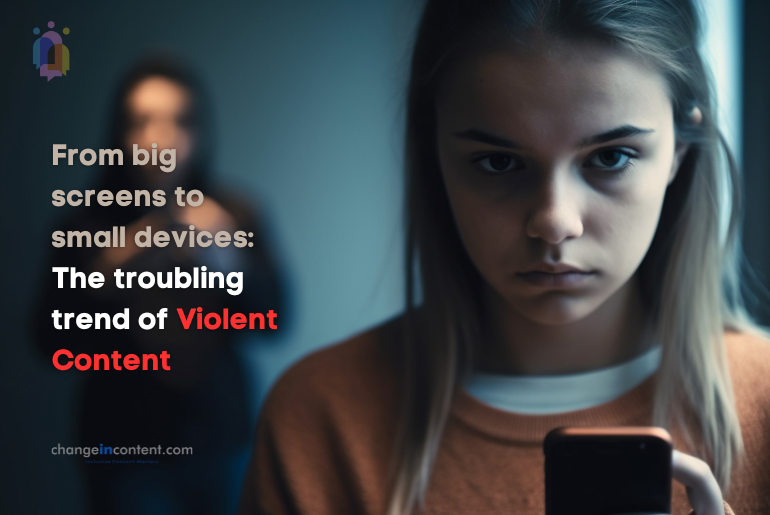
In today’s world, dominated by screens, large and small, the content we consume has expanded more than ever before. From high-budget movies to binge-worthy TV series, our digital landscape offers an overwhelming range of entertainment. However, there is a troubling trend taking over our screens—violent content is becoming more prevalent.
Let us explore the world of digital entertainment and understand the rise of violent content and its impact on our youth, our culture, and, ultimately, our society. We also examine the delicate balance between creative freedom and social responsibility in media production.
The evolution of media consumption
Entertainment has never been more accessible, thanks to the digital revolution. With streaming platforms, viewers can watch anything, anytime, anywhere. This flexibility has changed the way we consume media. However, it has also brought with it an alarming trend: the rise of violent content. From movies to video games, violence has become a staple, influencing the minds of millions of young viewers who engage with this content daily.
Violent content and youth: A critical concern
The influence of media on young minds is undeniable. Numerous studies have shown that violent content can have both short-term and long-term effects on behaviour. Children exposed to high levels of media violence are more likely to exhibit aggressive behaviours, both immediately after exposure and later in life.
Research has revealed that even ‘milder’ forms of aggression, such as verbal and emotional outbursts, can be directly linked to violent content in media. While there is debate about the extent of this impact, the evidence overwhelmingly points toward a correlation between violent media consumption and increased aggression.
The exposure to such content can desensitise viewers, making them more likely to accept violence as a normal part of life. Long-term exposure can even dull a person’s emotional responses to real-world violence, reducing empathy and normalising aggressive behaviour. Research has also shown that violent content affects not only the behaviour of children but also their perception of social interactions, leading them to view conflict and aggression as acceptable problem-solving mechanisms.
The role of media in shaping social behaviour
The role of media in shaping social behaviour is more significant than ever before. With content that glorifies violence and aggression, the boundaries between reality and fiction blur, especially for impressionable young audiences. Violence in the media can alter one’s perception of how to interact with the world, presenting an alarming challenge for society. As India grapples with rising violence, many experts are beginning to question the responsibility of media platforms in contributing to this issue. Violent crimes are becoming more visible through mass media coverage, and serials or programming that promote violence add fuel to the fire.
Relatability and the seduction of violent content
Violence has an almost magnetic appeal. In many forms of entertainment, violence is not just a plot device but the very element that drives engagement. Whether it is a violent showdown in a movie or a brutal conflict in a video game, these moments are crafted to captivate. They offer thrills that keep audiences glued to the screen. This addictive nature of violent content, which often presents violence in a glamorous light, plays a significant role in its consumption.
Shows like India’s Bigg Boss are a testament to the appeal of conflict-driven entertainment. The show thrives on heated arguments, betrayals, and dramatic face-offs. It mirrors real-life tensions but amplifies them to an extreme. Moreover, it allows viewers to engage with the content at an emotional level. However, the problem arises when this fascination with violence starts shaping real-world behaviour, especially among younger viewers who may not yet distinguish entertainment from acceptable social conduct.
The impact of violent content on social interactions
One of the most concerning aspects of violent content is how it seeps into everyday life. Studies have consistently demonstrated that the consumption of violent media leads to more aggressive thoughts, emotions, and behaviours. For children and teenagers who are still developing their understanding of social norms, this can have disastrous consequences. Violent media may encourage them to resort to aggression during conflicts or misunderstandings, having learned that violence is an acceptable, or even heroic, response.
The reach of violent content is vast. With platforms like YouTube, Netflix, and social media at their fingertips, children are exposed to violent imagery at an unprecedented rate. The accessibility of this content means that children and adolescents are spending more time consuming violent media than ever before. As they engage with violent narratives, they internalise the idea that violence is a part of normal life, further perpetuating the problem.
Artistic expression vs. social responsibility
Violence has always been a part of storytelling. From ancient myths to modern cinema, violent acts have been used to drive narratives forward. However, there is a fine line between using violence as a storytelling tool and promoting gratuitous violence for the sake of entertainment. Filmmakers and content creators often defend violent content as part of their artistic expression, but at what point does this freedom become harmful?
Creators must consider the impact their content has on society. With great power comes great responsibility, and those in the media industry must acknowledge that their work shapes cultural norms. It is time to ask: Is this content promoting understanding, or is it eroding the values that make society function cohesively?
The urgent need for action
The time has come for a collective call to action. While the media will continue to evolve, so too must our understanding of its impact. The evidence is clear—violent content influences young minds and shapes their interactions with the world. As a society, we must encourage responsible media consumption and support efforts to regulate violent content in ways that protect impressionable viewers. This is not about censoring creativity; it is about protecting the future.
Conclusion: A call for change in content
Violent content is not just entertainment; it has real consequences for society’s functioning. The more we allow violence to permeate our media, the more we risk normalising aggression and desensitising our youth to its dangers. Content creators, media platforms, and regulators must collaborate to create content that is not only engaging but also socially responsible.
We must begin to prioritise content that encourages empathy, critical thinking, and constructive problem-solving over aggression and violence. Only by addressing the harmful effects of violent content can we ensure a future where entertainment uplifts, rather than undermines, the fabric of our society.
Disclaimer: The views expressed in this article are based on the writer’s insights, supported by data and resources available both online and offline, as applicable. Changeincontent.com is committed to promoting inclusivity across all forms of content, which we define broadly to include media, policies, law, and history—encompassing all elements that influence the lives of women and gender-queer individuals. Our goal is to promote understanding and advocate for comprehensive inclusivity.
