
The Brief
- An October government publication reports over 2.5 lakh recognised startups, with nearly half having a woman director or partner.
- The latest explicit women-specific count verified for this article is over 1.07 lakh, as of 31 March 2026.
- A woman director or partner does not automatically mean a woman-founded or women-controlled business.
- Public funding and state programmes offer useful routes into entrepreneurship, but their reach and conditions vary.
- Working capital, paying customers and independent digital access should shape the next phase of support.
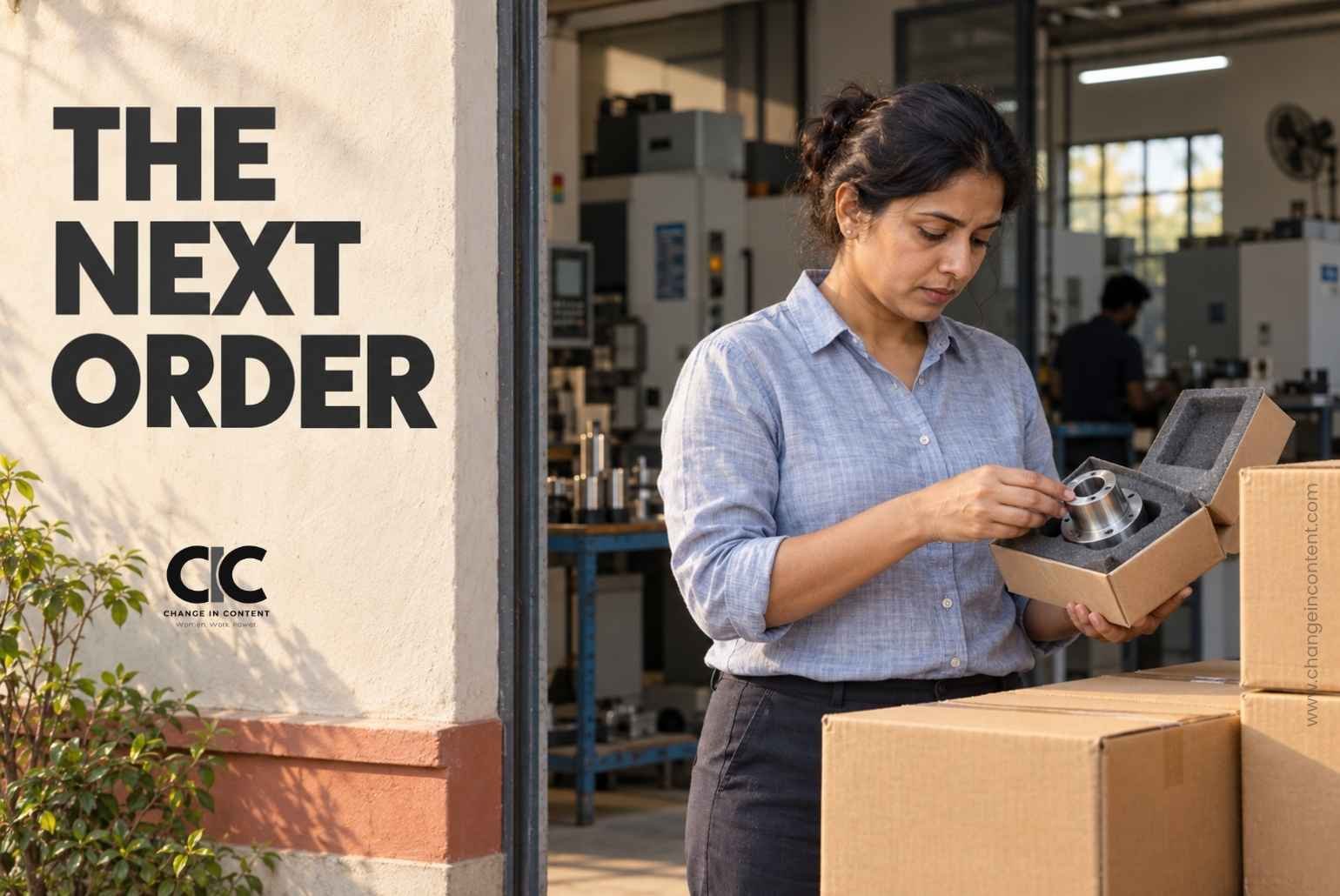
A first large order should be a reason to celebrate. For a founder who cannot afford the materials, wages or delivery costs until the customer pays, it can also become a problem. That gap between winning an opportunity and being able to use it deserves more attention in India’s conversation about startups with women leadership.
The country has good reason to recognise its progress. More women are present in the formal startup ecosystem, and support now extends across finance, incubation and business development. But a registration count cannot tell us whether a founder has enough cash to fulfil an order, influence over the company’s decisions or a business that will still be trading three years later.
Those are the questions that should follow the milestone.
What the latest figures actually show
The government’s 17 March 2026 startup release came from the Ministry of Commerce and Industry. It recorded 1,02,054 DPIIT-recognised startups with at least one woman director or partner, using data as of 31 January 2026. By 31 March, the figure had risen to over 1.07 lakh, approximately 48% of recognised startups.
There is a newer update. The government’s New India Samachar, in its 1–15 October 2026 edition, reports over 2.5 lakh recognised startups by September, with nearly 50% having at least one female director or partner. It also says approximately half originate from Tier-II and Tier-III cities.
That is useful evidence of a wider ecosystem. However, the October publication does not give a separate, exact women-specific total. Multiplying two rounded figures would produce an estimate, not a revised official count.
We should also be precise about what is being counted. A director or partner can exercise substantial authority. The measure alone does not establish who founded the venture, owns a controlling stake or makes its operating decisions. Nor should smaller-city participation be presented as proof that rural women have equal access.
As the business questions facing women entrepreneurs in 2026 become more demanding, our measures of progress should become more useful too.
Funding support is real. Its route matters.
The Centre’s three main startup funding mechanisms address different needs.
- The Fund of Funds for Startups backs investment funds that invest in businesses.
- The Startup India Seed Fund Scheme works through incubators.
- The Credit Guarantee Scheme for Startups supports lending through eligible institutions.
These are separate routes, with different selection processes; recognition does not guarantee funding.
The April 2026 government update reported that seed-fund incubators had approved over ₹605 crore for more than 3,400 startups. The scheme had been extended for continued disbursement and completion of approved activities. That wording should not be read as a promise that every incubator has a fresh allocation available.
The women-specific breakdown verified for this article remains older. As of 31 January 2026, approximately ₹294 crore had been approved for women-led startups under the seed scheme. Women-led borrowers accounted for approximately ₹39 crore in guaranteed loans under the credit-guarantee scheme, against approximately ₹925 crore overall.
These figures describe different instruments and stages. Approvals, investments and guaranteed loans cannot be added together as money received by women. The figures also cannot, by themselves, explain why participation differs between schemes.
They do give policymakers a practical question to investigate: Where do eligible women-led businesses drop out between discovering a programme, applying, receiving approval and obtaining usable finance?
Publishing that journey would help founders choose where to apply. It would also help administrators investigate the obstacles around loans for women entrepreneurs, from unsuitable products to unsuccessful assessments.
States can solve the problems that national totals miss
Telangana’s WE Hub offers a useful example of support organised around business stages. Its WE Reach programme targets aspiring entrepreneurs in Tier-II and Tier-III regions, with an emphasis on digital literacy and financial inclusion. Other programmes cover incubation and expansion.
On WE Hub’s website, Anjum Fatima, founder of MAM Retails, describes receiving business and financial guidance through its Ujaagar programme and securing a ₹3.10 lakh PMEGP loan. This is a participant account published by the programme, rather than an independently audited impact finding. It nevertheless illustrates the kind of joined-up support worth examining: guidance connected to a concrete financing step.
Kerala addresses another practical obstacle. Kerala Startup Mission’s published women’s soft-loan scheme offers up to ₹15 lakh in working capital for eligible startups implementing orders from government departments and public-sector undertakings in the state. The loan is capped at 80% of the purchase order and carries specified repayment conditions.
The design recognises something a founder knows immediately: An order can arrive before the cash required to deliver it.
Both examples deserve attention without being turned into advertisements. Programme descriptions tell us what support is intended to do. To judge performance, we also need to know who receives it, how long the process takes and what happens to the business afterwards.
For founders, the first useful conversation with an incubator should therefore be specific: Can it help with product testing, financial records, loan preparation, a buyer introduction or procurement requirements?
The case for rethinking how women entrepreneurs are supported becomes stronger when guidance responds to an actual business task.
The internet opens markets. Independent access opens possibilities.
India’s expanding connectivity makes remote learning, digital payments and online selling more feasible. TRAI’s annual report, released on 5 October 2026, records 1,092.79 million internet subscriptions at the end of March 2026, up 12.76% over a year. These are subscriptions, not unique people.
The household picture is encouraging too, but less equal at the individual level. The January–March 2025 official telecom survey found internet access within the premises of 83.3% of rural households. Yet only 48.4% of rural women aged 15 and above owned a mobile phone, compared with 80.7% of rural men. This is a dated survey finding, not an October 2026 estimate.
For a business owner, reliable access to a device affects ordinary tasks: Checking a payment, responding to a customer, uploading a document or joining a mentoring call. A household connection does not tell us whether she can do those things when the business needs them.
Support for semi-urban and rural entrepreneurs should therefore include assisted applications, local-language guidance and practical digital training. A useful session might help a founder calculate delivery costs, protect an account or reconcile payments. Attendance alone is a weak measure of success.
The opportunities offered by digital tools for women entrepreneurs become more meaningful when women can use them independently and confidently.
Give the next phase a business test
India now needs a clearer picture of what follows entry into the ecosystem. Government agencies and incubators should track active businesses, women’s ownership and decision-making roles, finance actually disbursed, repeat customers and survival over time. We should then separate results by location and business stage wherever the data permits.
Buyers have a role too. Corporates and public bodies can offer paid pilots, proportionate onboarding requirements and clear payment schedules. A supplier-development programme should help an eligible business become a dependable supplier, with a realistic route to repeat orders.
Incubators could ask each founder to identify one immediate constraint, then organise support around it. A product venture awaiting certification needs different assistance from a company with orders but insufficient working capital. Founders should also be able to find out quickly whether a programme fits their business and whether an application window is open.
These are achievable improvements. They make existing support easier to use and give public spending a more demanding test than the number of people trained or applications received.
The CIC view on the growth of startups with women leadership
India’s wider participation of women in startups deserves recognition. It reflects an ecosystem where more women can see a route into building a business.
The next phase must make that route more dependable. A woman who has developed a viable product should be able to find the right guidance, compete for finance and reach customers without navigating a fresh maze at every stage.
Count the startups. Then follow the orders, the payments and the decisions. That is where we will see how much economic power women are gaining.
Editorial note
This article draws on public government releases, official programme pages and existing CIC reporting reviewed up to 16 October 2026. Publication dates and data reference dates are stated separately. “At least one woman director or partner” is not treated as equivalent to woman-founded or women-controlled. The WE Hub account is identified as a programme-published testimonial. Recommendations are editorial analysis; this is not a funding eligibility assessment. Applicants should confirm current windows and terms with the implementing agency.
Sources
- Ministry of Commerce and Industry / PIB — startup recognition and funding, 17 March 2026.
- Ministry of Commerce and Industry/PIB — FY2025–26 startup update, 17 April 2026.
- New India Samachar — 1–15 October 2026, printed page 40.
- WE Hub, Government of Telangana — Social Impact Entrepreneurship.
- Kerala Startup Mission — Soft Loan Scheme for Women Entrepreneurs.
- TRAI/PIB — Indian Telecom Services Yearly Performance Indicators 2025–26, released 5 October 2026.
- MoSPI / PIB — Comprehensive Modular Survey: Telecom 2025, released 29 May 2025.
