
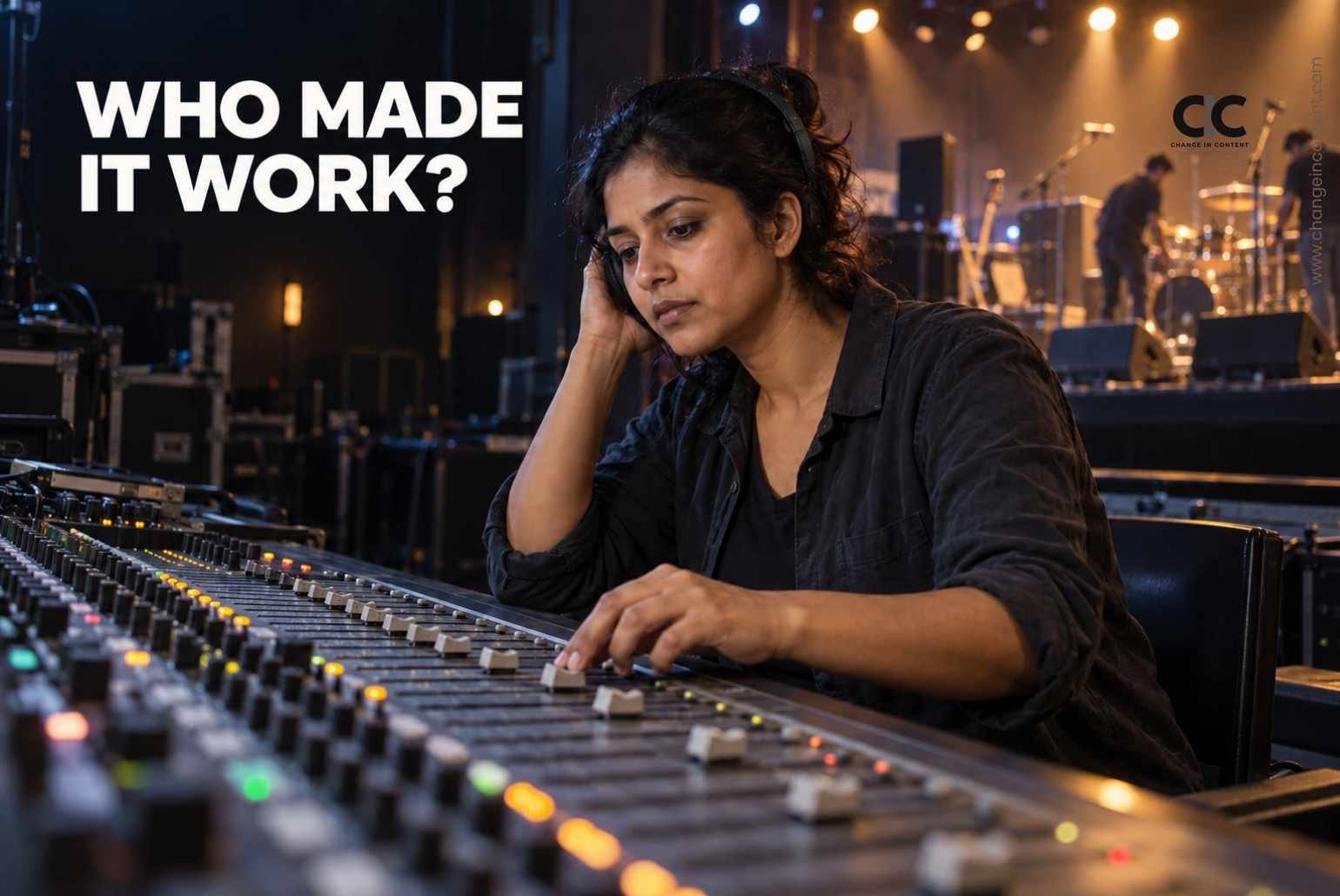
The Brief
- Recognition at work means acknowledging a contribution and explaining its value.
- Women’s perspective brings useful questions about task allocation, shared credit and the language of praise.
- Appreciation, performance feedback and career decisions serve different purposes; they should inform one another.
- Recognition works better when it is specific, timely and suited to the recipient.
- Teams can improve it by documenting contributions, sharing routine work fairly and checking who gets overlooked.
Think of a project that went well this week. You may remember who presented it. Would you also remember who caught the error, resolved the disagreement or made the handover work? Recognition at work begins with that second look.
Consider an illustrative example.
A woman finds a flaw in a proposal and works out a solution before it reaches the client. At the team meeting, she is thanked for always being helpful. The appreciation may be entirely sincere. Yet her colleagues have learned very little about the expertise she brought to the problem.
A more useful acknowledgement would name it: She spotted an inconsistency in the costing, checked the assumptions and helped the team submit an accurate proposal. She receives credit for professional judgement, and the team learns what good work looked like.
That is a worthwhile conversation for a Saturday. Away from the urgency of the next deadline, we can ask what we noticed during the week, and what we allowed to pass without a name.
Recognition at work: What are we recognising?
Recognition is the acknowledgement of a person’s contribution. It can take the form of a private conversation, a message to the team, a customer commendation or an award. The format matters less than whether it accurately connects the person, the work and its value.
- Appreciation can be broader: being glad someone is on the team.
- Feedback helps someone understand and improve performance.
- Pay and promotion recognise a wider record of responsibility and results.
A thoughtful manager makes these conversations consistent, without turning every thank-you into a promise of advancement.
This distinction has practical consequences. If someone is regularly praised for mentoring colleagues, but that work has no place in her objectives or workload, praise alone leaves a problem unresolved. The organisation should decide how to value the contribution and how much time it reasonably requires.
For women, this is one reason the discussion of workplace invisible labour belongs alongside recognition. The question extends from whether work is noticed to what being noticed actually changes.
The women’s perspective starts with the work itself
There is no single way women want to be recognised. Some welcome public acknowledgement; others prefer a considered conversation. A senior engineer, a retail supervisor and a woman returning after a career break may face very different circumstances. Gender should prompt better questions, rather than supply all the answers.
One question is who ends up doing necessary work that carries little weight in career decisions. A 2017 study by Linda Babcock and colleagues found that women were more likely than men to volunteer, be asked and agree to undertake tasks with low promotability. These findings came from the researchers’ study settings; they are not a national estimate of Indian workplaces.
The useful management response is to examine task allocation locally.
- Who inducts new colleagues?
- Who takes meeting notes?
- Who repeatedly organises the team’s activities?
Some of this work may be central to a role. Some may be additional. Its value and distribution deserve an explicit discussion.
Recognition can help, too. Research by Ritwik Banerjee and Priyoma Mustafi, published online in 2025 and included in the May 2026 issue of Management Science, found that positive social recognition reduced the gender gap in volunteering in a laboratory experiment. The earlier working paper describes undergraduate participants at an Indian university. This was an experiment, not a survey of Indian employees.
It suggests a possibility worth testing: When a contribution becomes visibly valued, more people may be willing to share it. Managers can pair acknowledgement with a fair rota, appropriate workload allowances and opportunities for everyone to develop.
Simply celebrating the same woman for always stepping in could leave the original distribution untouched. It also helps with women’s progression into corporate leadership. If an employee has exercised sound judgement, coordinated a difficult delivery or developed others, the evidence should survive beyond the meeting in which someone thanked her.
Name the skill, then share the credit
Useful recognition gives people something concrete to understand. The following examples are illustrative, rather than quotations from employees.
|
A familiar expression |
A more informative acknowledgement |
|
“She is always helpful.” |
“She identified the billing discrepancy and helped us correct it before submission.” |
|
“Great teamwork.” |
“Asha developed the analysis, Meera tested the assumptions and Kabir led the client discussion.” |
|
“She kept everything together.” |
“She coordinated the dependencies across three teams and kept the delivery on schedule.” |
There is nothing wrong with warmth. Specificity makes it more meaningful. It also gives the employee a clearer record of the skills others have seen her use.
A useful check is whether the same kind of work attracts the same kind of language across the team. Do we describe one person’s contribution as leadership and another’s as support? The answer will depend on what each actually did. Looking at examples is more productive than assuming bias or dismissing the possibility.
Shared work needs shared attribution. A project lead can ask contributors how responsibilities were divided before sending the completion note. The person presenting the result can name the people behind it. These are small habits that make a team’s account of its own work more accurate.
A changing workforce needs a wider field of view
A manager can easily remember the contribution discussed in person and miss the one recorded on a different shift or channel. That is a reason to improve how evidence is gathered. Physical presence, frequent messages and confident presentation are incomplete measures of contribution. The conversation about what women need from digital work should include fair visibility as well as flexibility.
Flexible work should also be assessed through evidence. A randomised trial involving 1,612 employees at Trip.com in China found no damage to performance grades from the hybrid arrangement studied and no evidence of a difference in promotions over two years. Published in Nature in 2024, it concerns one company and a particular arrangement, not every role or workplace.
For recognition, the practical implication is to ask who contributed to the outcome, wherever the work happened. A shift handover, resolved complaint, improved process, or colleague’s account may reveal work that a manager did not directly observe.
The same care applies to returners. Ask what a woman achieved during the period she worked and what support she needs next. Avoid making assumptions about ambition from her working arrangement or treating her return as the only thing worth acknowledging.
Technology can help organise evidence, but it needs limits. A tool that searches only chat messages will miss work outside those messages. AI-generated recognition should therefore be checked with the people involved. Message volume, online status and the number of public compliments should never become convenient substitutes for assessing work.
Make it personal enough to mean something
Ask people how they prefer to receive acknowledgement. A public mention can build visibility, while a private conversation can allow more detail. Confidential client work may need discretion. An employee should be able to decline a photograph or company social-media post without losing credit.
Timing matters too. A useful acknowledgement arrives while people can still connect it to the work. It does not need to interrupt everyone’s day or wait for an annual ceremony.
Recognition also has a business dimension. Gallup and Workhuman tracked nearly 3,500 employees between 2022 and 2024 and reported that well-recognised employees were 45% less likely to have changed organisations two years later. This US research shows an association, not proof that praise alone prevents departures, and it should not be presented as an India-specific result.
For employers, the finding supports taking the experience seriously. It does not make recognition a substitute for fair pay, reasonable workloads or opportunities to grow. Those conditions affecting career progression still need their own attention.
Try one better conversation next week
At the next project review, ask each person what contribution from a colleague helped them do their work. Encourage an example, rather than a popularity vote. Check the account with those involved and include contributions from people who are absent.
Then look at what happens afterwards.
- Does the evidence reach the employee’s performance discussion?
- Does repeatedly being the reliable helper lead to more of the same work, or to a chance to build new skills?
- Are routine tasks being shared?
Employees can keep brief notes on their own contributions: what they did, what changed and who else contributed. That makes a development conversation easier. Managers should still take responsibility for noticing; recognition should not depend on someone becoming an expert at self-promotion.
The Change We Need
A good recognition practice helps a person feel valued and helps an organisation understand its own talent. Women gain when the account of their work is precise enough to include technical skill, commercial judgement, leadership and collaboration, wherever those are demonstrated.
Before the next week begins, think of one colleague whose work made your week easier or better. If you thank her, tell her what you noticed. If you manage her, make sure that knowledge finds its way into the decisions you make about her work.
Editorial note
This knowledge piece draws on published research and the People Matters roundtable report that prompted the topic. Research locations, methods and limits are identified; international findings are not treated as Indian prevalence estimates. Examples and suggested wording are illustrative. Recommendations are CIC’s editorial synthesis, not findings from interviews or a proprietary survey. Sources were reviewed on 16 October 2026.
Sources
- Babcock, Recalde, Vesterlund and Weingart — Gender Differences in Accepting and Receiving Requests for Tasks with Low Promotability, American Economic Review, 2017.
- Banerjee and Mustafi — Using Social Recognition to Address the Gender Difference in Volunteering for Low-Promotability Tasks, Management Science, online 2025; May 2026 issue. Earlier IZA working paper, including study setting.
- Bloom, Han and Liang — Hybrid working from home improves retention without damaging performance, Nature, 2024.
- Gallup — Employee Retention Depends on Getting Recognition Right, 2024; research with Workhuman.
