
The Brief
- Women scored higher on average in several emotional abilities in a major new research review.
- The findings varied by skill, measurement and context. They cannot predict an individual’s abilities.
- Expressing emotion does not, by itself, establish poor judgement.
- Being good at supporting people should earn recognition, rather than an endless queue of unpaid favours.
- Emotional skills deserve development across the workforce, with the same behavioural standards for everyone.
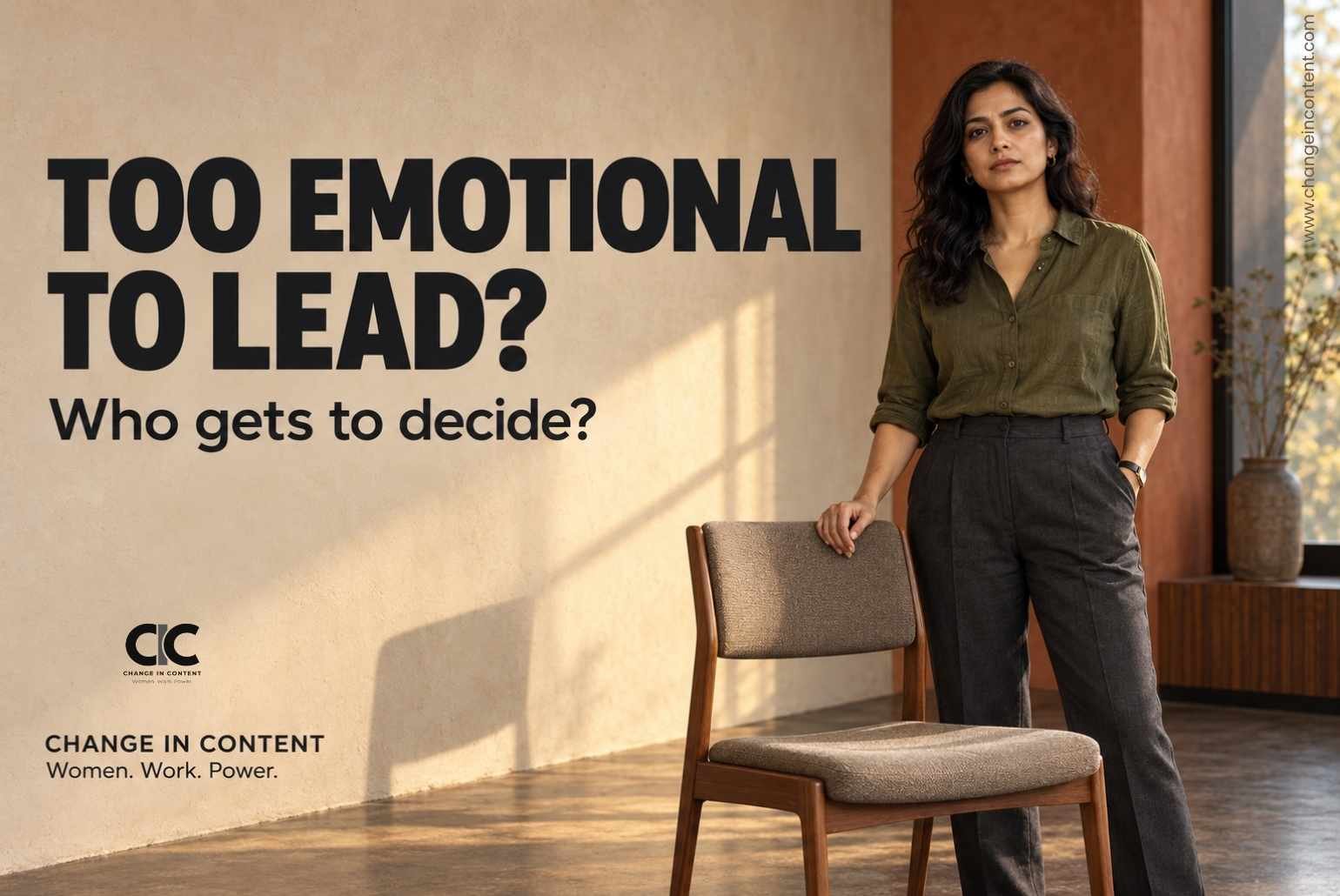
Imagine a colleague described as “too emotional” when she objects to a decision, then asked to smooth things over when the team falls out. In this hypothetical office, her feelings are a management problem; everyone else’s feelings become her assignment. The conversation about gender and emotional intelligence belongs in that room.
There is something remarkably convenient about an employee who is supposedly too sensitive for authority but sensitive enough to handle the difficult client. We should be suspicious of a compliment that arrives carrying somebody else’s workload.
New research gives us a reason to examine these judgements more carefully. It also asks us to resist a tempting shortcut: declaring women the emotionally superior sex and calling the argument settled.
What did the research actually find?
The review led by Dr Mary Hausfeld of the University of Limerick, published online in Emotion on 17 September 2026, combined 1,428 samples involving 609,278 participants. It assessed published and unpublished research available up to the end of 2023; this was no single survey of today’s office workers.
Women had higher average general emotional intelligence. Their advantage was stronger for abilities directed towards other people, and larger in performance-based assessments than subjective ones. Context, including age and geographical region, affected the findings.
UL’s explanation adds the detail a triumphant headline might omit: women and girls did better at recognising and understanding emotions, but men and boys scored slightly higher specifically in regulating their own emotions. The overall difference in emotion regulation was very small.
None of this is a licence to judge the colleague sitting beside you by a group average. Nor does a test of emotional abilities establish who is more practical, morally better or right about a disputed budget. A woman should not have to win an international psychology contest before her argument receives a fair hearing. That belongs in the wider conversation about the authority gap at work.
A feeling is not a failed argument
Emotional intelligence concerns how we recognise, understand and manage emotions. Emotional expression is what other people can see or hear. Confusing the two makes for very lazy judgements.
Consider another hypothetical meeting. Someone says a deadline is impossible, and her voice shakes. The deadline still requires examination. Someone else dismisses the concern in an even tone. His composure has supplied no additional staff, hours or evidence.
Equally, feeling strongly does not make an argument correct. Both people owe the room reasons. A fair discussion can examine the proposal and the behaviour separately, without treating visible feeling as an automatic intellectual disqualification.
There is research on how unevenly that separation happens. In three experiments reported by Victoria Brescoll and Eric Uhlmann in 2008, evaluators awarded lower status to angry female professionals than angry male professionals. They were more likely to explain women’s anger through personal characteristics and men’s through external circumstances.
These experiments concern observers’ judgements, rather than proving how every workplace behaves today. But they offer a useful warning: our impression of someone’s emotional competence may contain our expectations of their gender.
Before writing “too emotional” in feedback, describe what happened. Did the person interrupt, insult somebody, explain a concern or challenge a decision? These are different actions, and they deserve different responses.
The compliment with a job attached
Now consider the apparently kinder label: “You’re so good with people.”
It might be sincere recognition. It might also precede a request to absorb a colleague’s distress, repair a manager’s clumsy announcement or coax two adults into speaking civilly. The question is what happens afterwards. Is that contribution recognised in workload and progression? Can the person decline?
The researchers themselves warn against making emotional and social responsibilities disproportionately women’s work. Our editorial concern follows from that warning: a workplace can praise an ability while refusing to pay attention to the effort it requires.
There is a familiar trap here for anyone rewarded for being endlessly accommodating at work. If patience becomes your defining virtue, setting a boundary can start to look like a disappointing change of personality. Yet understanding a colleague’s frustration does not oblige you to answer their messages throughout Saturday.
Nor should men be given a permanent exemption from learning how to listen. “She handles the people side” is an unsatisfactory arrangement when everyone’s job involves people.
Emotional intelligence and the work of managing feelings are related, but separate. One describes abilities; the other takes time and effort. A skilful listener still needs somebody to listen to her.
Give everyone the work of learning
The new findings do not settle how much these differences arise from biology, upbringing or opportunity. Cambridge Judge Business School’s account notes that some gaps narrowed over time, particularly among children. Changing social norms are one possible explanation, rather than a cause the data conclusively establish. The reported comparisons also should not be stretched into claims about every gender identity.
There is reason to invest in learning. A separate meta-analysis of 24 training studies found moderate improvements in emotional intelligence scores, with gains evident at follow-up. Results varied; a workshop is no guarantee of considerate behaviour.
For employers, a practical start would be to make feedback specific and apply it consistently. Train managers to handle difficult conversations themselves. Include conflict resolution and colleague support when reviewing actual workloads, rather than quietly sending every uncomfortable conversation to the same dependable woman.
For the rest of us, there is a smaller experiment available this weekend. When someone disagrees with you, try describing their argument before describing their temperament. When a person who usually listens says they are tired, take the answer seriously. These are editorial suggestions, not a diagnostic test of anyone’s emotional intelligence.
Gender and emotional intelligence: The change ahead
Women deserve room to be perceptive, mistaken, impatient, thoughtful and occasionally unavailable. So do men. Research can challenge the assumptions through which we judge people; it cannot substitute for getting to know them.
A woman who understands the room should have a chance to lead it. And when she goes home for the weekend, the room should be able to manage without her.
Editorial Note
This research-led commentary draws on the 2026 study’s published abstract, institutional explanations and earlier peer-reviewed research. The full 2026 manuscript was not available for review; its Cambridge repository copy is embargoed. Workplace scenes are explicitly hypothetical, not interviews or reported incidents. Group averages do not diagnose individuals or establish innate differences. Recommendations are Change in Content’s editorial interpretation.
Sources
- Hausfeld, Hampel, Bach and Menges — Putting assumptions to the test: A meta-analytic review of gender differences in emotional intelligence and specific emotion abilities, Emotion, online 17 September 2026. Published abstract; DOI.
- University of Limerick — ‘Are women more emotionally intelligent than men?’, 23 September 2026.
- Cambridge Judge Business School — Are women really more emotionally intelligent than men?, 23 September 2026.
- Brescoll and Uhlmann — Can an Angry Woman Get Ahead?, Psychological Science, 2008. Author institution’s research summary; DOI.
- Hodzic and colleagues — How Efficient Are Emotional Intelligence Trainings: A Meta-Analysis, Emotion Review, 2018 issue; first published online 7 September 2017. Abstract and publication details.
