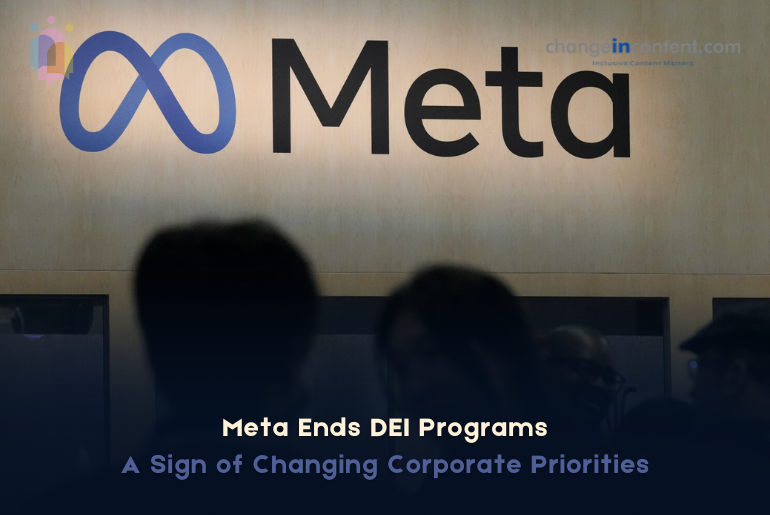
In a move that has ignited discussions across corporate and social spheres, Meta, the parent company of Facebook and Instagram, has announced the end of its diversity, equity, and inclusion (DEI) programs. This decision, aligned with recent trends among major corporations like McDonald’s, Walmart, and Ford, comes at a time when DEI efforts are increasingly under scrutiny. As Meta ends diversity programs, this development raises critical questions about the future of corporate inclusivity.
Meta ends diversity programs: The decision and its rationale
Meta’s announcement follows a memo from Janelle Gale, Vice President of Human Resources, stating that the “legal and policy landscape surrounding diversity, equity, and inclusion efforts in the United States is changing.” Gale referenced recent U.S. Supreme Court rulings and broader political shifts as catalysts for the decision.
In her memo, Gale acknowledged that the term “DEI” has become contentious. Organisations often misunderstand it as promoting preferential treatment for specific groups. Consequently, Meta has opted to discontinue initiatives like its “Diverse Slate Approach” and disband its dedicated DEI team. Maxine Williams, the company’s Chief Diversity Officer, will transition into a new role focused on accessibility and engagement.
A broader trend: Companies retreating from DEI
Meta’s decision is not an isolated case. Over the past year, several prominent companies, including Harley-Davidson, Lowe’s, and John Deere, have scaled back their DEI initiatives. This shift is partly due to the Supreme Court’s 2023 ruling against affirmative action in college admissions and mounting pressure from conservative political factions.
In a statement, Daniel Snell, co-founder of Arrival, remarked, “Many global businesses will be using the second Trump presidency to finally kill off the DEI agenda, if they haven’t done so already.”
While critics of DEI argue that such programs distract from business performance, proponents emphasise their economic and societal value. Companies like Apple, Costco, and Target remain steadfast in defending their DEI policies. These companies are citing benefits such as innovation, market expansion, and economic growth.
The implications of Meta ending diversity programs
As Meta ends diversity programs, the company might also face some repercussions.
Internal challenges
Meta’s decision may lead to significant internal challenges, particularly among employees who viewed DEI as integral to the company’s culture. The absence of structured programs could weaken initiatives aimed at fostering inclusivity, potentially leading to employee dissatisfaction and talent retention issues.
An employee comment on Gale’s memo described the decision as “upsetting to read,” reflecting the sentiment among some team members.
Reputation management
Externally, Meta faces the challenge of maintaining its brand reputation as a forward-thinking, inclusive organisation. As observed in similar cases, companies retreating from DEI often attract criticism for prioritising political alignment or financial considerations over social responsibility.
A global perspective: The role of inclusivity in corporate culture
While Meta ends diversity programs domestically, companies like Costco and Target are doubling down on their DEI initiatives. For example, Costco recently highlighted the role of a diverse workforce in driving creativity and customer engagement.
Target, meanwhile, continues to defend its DEI practices in court, asserting their importance despite conservative criticism. The divergent approaches underscore the complexity of balancing inclusivity with business imperatives in a polarised environment.
Connecting the dots: From MEI to DEI
Meta’s shift also raises questions about the broader corporate approach to diversity. In our article on the MEI vs DEI debate, we explored how companies are navigating evolving priorities. Similarly, our piece on companies turning away from DEI initiatives provides additional context to understand this trend.
Conclusion: The future of DEI in a divided world
As Meta ends diversity programs, the implications extend far beyond its Silicon Valley headquarters. This decision highlights the fragility of corporate DEI initiatives in a shifting legal and political landscape. The challenge for companies lies in striking a balance between addressing legitimate concerns and ensuring that inclusivity remains more than a marketing slogan.
Meta’s move serves as a stark reminder that the path to genuine diversity, equity, and inclusion is fraught with challenges, requiring commitment, innovation, and resilience. The future of DEI will depend on whether organisations can navigate these complexities without losing sight of their broader societal responsibilities.
Disclaimer: The views expressed in this article are based on the writer’s insights, supported by data and resources available both online and offline, as applicable. Changeincontent.com is committed to promoting inclusivity across all forms of content. We broadly define inclusivity as media, policies, law, and history—encompassing all elements that influence the lives of women and gender-queer individuals. Our goal is to promote understanding and advocate for comprehensive inclusivity.