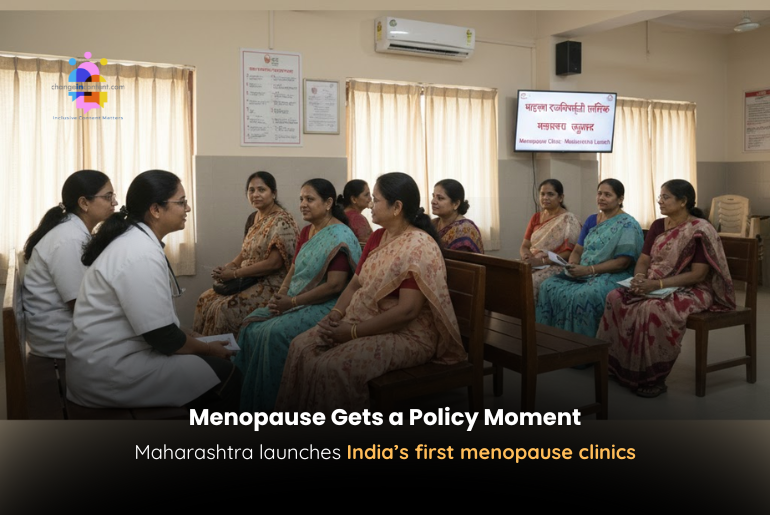
For decades, women’s health conversations in India have largely centred around menstruation, pregnancy, and motherhood. In recent years, policy attention around menstrual health has finally begun to take shape. Yet menopause has remained mostly invisible in healthcare planning. It is a natural life stage that every woman goes through. Many women have quietly managed symptoms without medical guidance, social support, or institutional recognition. That silence is now beginning to break. With the launch of menopause clinics across government hospitals and urban health centres, Maharashtra has become the first state in India to formally recognise menopause as a public health concern deserving structured care and dignity.
Maharashtra launches India’s first Menopause Clinics
Maharashtra has taken a landmark step in women’s healthcare by becoming the first state in India to introduce dedicated menopause clinics. The state has rolled out these clinics across government hospitals and urban health centres, creating a dedicated space for women experiencing menopause to seek support and care.
The menopause clinics aim to support both the physical and emotional needs of women. At these centres, women can access medical consultations, mental health counselling, and health screenings, all under one roof. The clinics also offer assessments of bone strength, heart health, and hormonal changes, along with medications and practical guidance to help women manage symptoms more effectively.
This move brings long-overdue attention to a life stage that often remains ignored in mainstream healthcare, despite millions of women experiencing menopause.
A model for other states
The state launched the initiative on January 14, on the occasion of Makar Sankranti, under the guidance of Meghna Bordikar, Minister of State for Health. Speaking about the importance of the move, she said:
“Menopause is not a disease but a natural phase in a woman’s life. However, women need strong physical and emotional support during this period, and these clinics have been started to ensure they receive proper advice, treatment and dignity.“
State officials said Maharashtra is the first in the country to launch such specialised menopause clinics. They believe this programme can set an example for other states to follow and encourage similar healthcare reforms across India.
Women across Maharashtra have responded positively to the initiative, with many expressing relief and appreciation for a system that finally recognises and addresses their needs during this phase of life.
Why menopause often goes untreated in India
For many women in India, menopause unfolds alongside daily struggles that leave little room to focus on health. Women from lower socioeconomic backgrounds often prioritise basic needs like food, work, and family responsibilities. As a result, they tend to dismiss menopause symptoms and see them as a normal part of ageing, rather than a phase that needs medical attention or support.
Limited access to healthcare, lack of awareness, and social silence around menopause make it even harder for these women to seek help. In many cases, discomfort, fatigue, mood changes, or physical pain simply become something they learn to live with.
Menopause, work, and the invisible health burden
Menopause also affects women in the workforce in significant ways. Nearly eight out of ten women experience menopause while working, yet most workplaces fail to recognise how deeply it can impact their daily professional lives. From hot flashes and sleep issues to anxiety and low energy, symptoms often interfere with productivity and well-being.
Want to know how workplaces can do better? Read our article, How to Make a Menopause-Inclusive Workplace: Menopause Matters.
Why menopause needs a place in public health policy
According to the Third National Revised Consensus Guidelines of the Indian Menopause Society, India will have 103 million menopausal women by the year 2026. Yet while government programmes actively support pregnant women and malnourished children, menopausal women remain outside the focus of most public health policies.
There is an urgent need for more initiatives like Maharashtra’s menopause clinics, not just in hospitals but also in workplaces and national healthcare planning. Without targeted action, a large section of India’s female population will continue to navigate this life stage without support.
The changeincontent perspective
At Changeincontent, we see Maharashtra’s menopause clinics as more than a healthcare announcement. The launch of these clinics is a statement about whose health matters. For too long, women’s healthcare has stopped at fertility. Menopause has been treated as an afterthought, despite affecting millions of women during their most economically active years.
Policy-led recognition is the first step, but it cannot stop at hospitals. Menopause needs to be part of workplace conversations, public health budgets, medical training, and everyday language. Dignity in ageing should not depend on geography or privilege.
The final thoughts on India’s first Menopause Clinics
Maharashtra has opened the door to a more inclusive healthcare model, one that acknowledges women beyond fertility and motherhood. The real test now lies in whether India can scale this idea across states, sectors, and systems. Recognition in hospitals and clinics is a start, but dignity, awareness, and support must extend beyond these settings into homes, workplaces, and everyday conversations.
Disclaimer: The views expressed in this article are based on the writer’s insights, supported by data and resources available both online and offline, as applicable. Changeincontent.com is committed to promoting inclusivity across all forms of content. We broadly define inclusivity as media, policies, law, and history. It encompasses all elements that influence the lives of women and marginalised individuals. Our goal is to promote understanding and advocate for comprehensive inclusivity.