
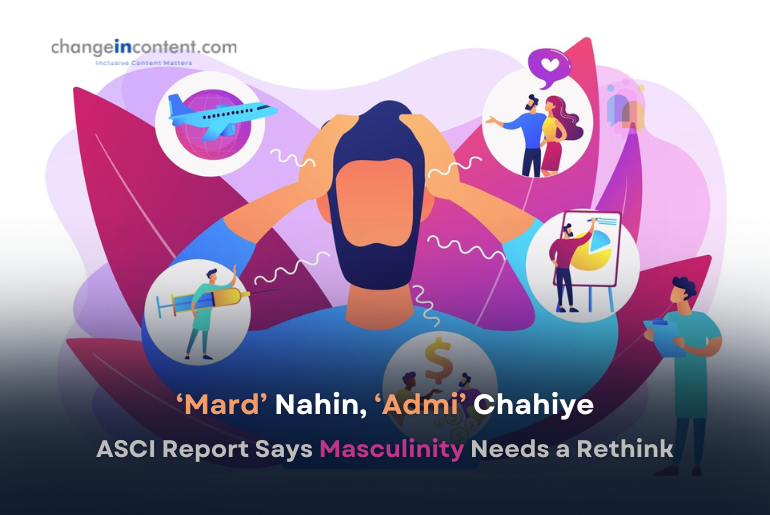
A new report by the Advertising Standards Council of India’s Academy (ASCI) says men are feeling increasingly alienated and insecure despite societal changes and the rise of gender equality. Titled Manifest: Masculinities Beyond the Mask, the ASCI Report on masculinity and its changing face examines the so-called “crisis” of traditional masculinity.
Created in collaboration with the Unstereotype Alliance, a UN Women initiative, and knowledge partner Religious Brands, the report explores how masculinity is changing in society and the media. It offers a detailed review of over 29 literary and academic articles, 170 media pieces, 70 published reports, sociological data, and insights from expert interviews.
This research aims to help advertisers and media companies build narratives that are not only more progressive but also connect with today’s audiences who may no longer relate to the macho man stereotype from decades past.
Key takeaways from the ASCI Report on Masculinity
The findings were presented at ASCI Academy’s Global Adda event during the ICAS Global Dialogues Summit on 19 March. The report calls for fresh, diverse ways to represent men beyond the emotionally stunted, hyper-masculine archetype society has recycled for decades.
Men remain caught between conflicting narratives.
Men juggle traditional roles and modern expectations. However, neither side offers both purpose and progress. Indian masculinity still ties itself to breadwinning and providing. These roles define “success” and allow little room for failure. The report suggests shifting away from glorifying the endless pursuit of success and normalising failure.
Men face pressure for upward mobility.
Many work to move up in life but lack healthy ways to show strength. Society expects them to be tough but not toxic, emotional but not “too soft.” The study urges the creation of healthier, more balanced models for strength.
Masculinity requires a more flexible definition
Identity values like responsibility and courage need context, not rigid rules. Men should feel free to define these on their own terms without fearing judgment.
Time to retire the one-dimensional ‘Mard.’
The report calls for the media to move beyond the limited, stoic, chest-thumping version of masculinity and embrace the more relatable ‘Admi.’,’ a man who is complex, flawed, and real.
Media must lead the shift
Instead of recycling outdated templates, the media should showcase diverse forms of masculinity. Redefining masculinity won’t weaken men. It will finally let them live beyond rigid expectations.
Manisha Kapoor, secretary general and CEO of ASCI, said:
Building on ASCI’s long-standing commitment to fostering progressive representations within advertising, this report delves into the fascinating and often complex world of masculinities, moving beyond superficial portrayals to understand the diverse realities of men today. Our endeavour is to provoke new thoughts and frameworks to create progress in society and for men.
How advertising and media keep masculinity stuck in the past
Explaining the root of the issue, ASCI’s Global Adda summit panel pointed out that advertising, by design, only focuses on neat categories. There is a habit of homogenisation, saying, “All men are like that”. The obsession with treating men as monoliths, especially in advertising, needs to end.
The panellists agreed on another crucial point. Women in advertising now enjoy varied human portrayals. The narrative has moved beyond stereotypes, from the self-sacrificing mother to the all-powerful superwoman, allowing room for imperfections and complexity. Men, however, still appear boxed into outdated templates. Their stories lack similar nuance or growth.
Arvind Mohan, founder and managing partner of Religious Brands, said:
The male revolution isn’t going to begin with detergent ads. It’ll likely start in categories traditionally seen as masculine—alcohol, motorcycles, products where masculinity feels more ‘legitimate.’ These spaces have the freedom to push the narrative forward. That’s where the responsibility lies.
Society has redefined masculinity for many groups, especially in the LGBTQIA+ community. That allows them to break away from old gender norms. But heterosexual men seem stuck in traditional roles. Unlike others, they have not had clear examples or space to explore new ways of being men. As gender roles shift, many feel unsure how to adapt. This lack of progress leaves them behind in the conversation.
It is time for brands, especially in traditionally masculine categories, to rethink how they present men.
The final thoughts on the ASCI report on masculinity
In many ways, the report offers a wake-up call. The study pushes for inclusive storytelling that allows men to show vulnerability, compassion, and complexity. This shift benefits not just men but everyone living under patriarchy’s weight. It opens space for more balanced partnerships at home, at work, and in society. Women also benefit because it removes expectations that they must stay confined to supportive roles. Gender equality is when both men and women can express themselves without being boxed into stereotypes.
Disclaimer: The views expressed in this article are based on the writer’s insights, supported by data and resources available both online and offline, as applicable. Changeincontent.com is committed to promoting inclusivity across all forms of content. We broadly define inclusivity as media, policies, law, and history—encompassing all elements that influence the lives of women and marginalised individuals. Our goal is to promote understanding and advocate for comprehensive inclusivity.
