
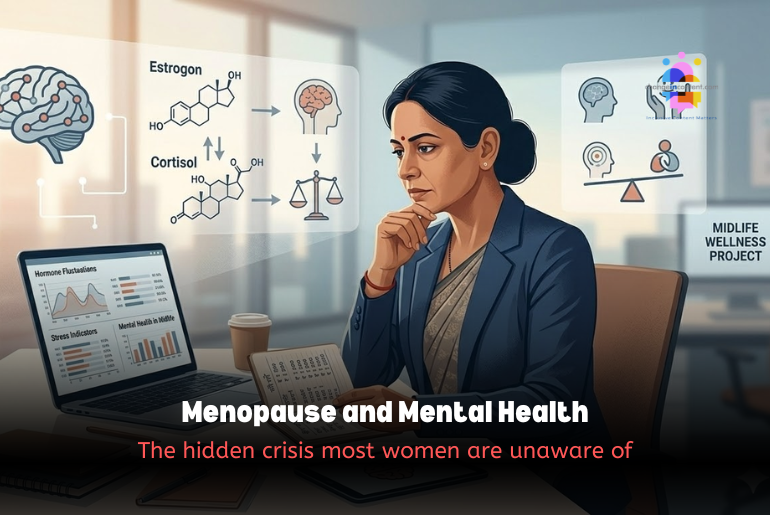
For decades, people have been discussing menopause primarily through a narrow lens. People often see hot flushes, sleep disturbances, and hormonal changes as its defining symptoms. Yet menopause and mental health have a deep connection. Unfortunately, most women do not understand that connection well.
A recent survey commissioned by the Royal College of Psychiatrists (RCPsych) reveals a startling reality. Nearly three in four women are unaware that menopause can trigger a new mental illness. While 93% of women associate menopause with hot flushes and 76% with reduced sex drive, only 28% know that menopause can significantly affect mental health.
This gap in awareness has serious consequences. When women do not recognise the mental health risks associated with menopause, they are less likely to seek support. Consequently, they are less likely to receive the right diagnosis and more likely to struggle in silence.
The report brings renewed urgency to a topic that has long remained under-discussed. It also raises an important question for society, healthcare systems, and workplaces alike. If menopause affects half the population at some point in life, why do we still know so little about its impact on mental health?
The overlooked link between menopause and mental health
Menopause marks a major biological transition. As estrogen and progesterone levels fluctuate and decline, the brain also undergoes changes that can influence mood, cognition, and emotional regulation.
Research increasingly shows that perimenopause, the transitional period leading up to menopause, is particularly sensitive for mental health.
The Royal College of Psychiatrists’ report highlights several striking patterns:
- Women in perimenopause are more than twice as likely to develop bipolar disorder.
- They are around 30% more likely to develop clinical depression.
- Hormonal changes can trigger relapses of existing mental health conditions.
- Suicide rates are higher among women in menopausal age groups.
Anxiety, mood swings, and emotional instability may also intensify during this phase. While some symptoms may appear mild initially, others can develop into severe mental health challenges if left unaddressed.
The science behind these patterns partly lies in hormonal influences on brain chemistry. Estrogen interacts with neurotransmitters such as serotonin and dopamine, both of which regulate mood and emotional stability. As hormone levels fluctuate during menopause, these systems may also shift, making some women more vulnerable to mental health conditions.
Why are so many women unaware?
Despite growing research, awareness around menopause and mental health remains extremely limited.
The YouGov poll commissioned by the Royal College of Psychiatrists found that only 28% of women knew menopause could trigger a new mental illness.
Several factors contribute to this lack of awareness.
A myth about menopause being just a physical health issue
People have been historically framing menopause primarily as a physical health issue. Public conversations often focus on hot flushes, sleep problems, or hormonal therapy rather than psychological effects.
Cultural stigma
Cultural stigma still surrounds both menopause and mental health. In many societies, women hesitate to discuss symptoms openly, especially when those symptoms affect emotional well-being.
Medical training
Third, medical training has not always treated menopause as a multidisciplinary issue. Many healthcare professionals receive limited education about the psychological aspects of menopausal transition.
This lack of knowledge can lead to misdiagnosis. Some women experiencing menopausal mental health symptoms are incorrectly treated for depression or anxiety without recognising menopause as the underlying trigger.
A study from University College London, published in the Post Reproductive Health journal, revealed another troubling pattern. Many women reported feeling psychologically distressed during menopause but received limited information from healthcare providers.
The risk of misdiagnosis and delayed care
One of the most concerning consequences of this knowledge gap is delayed or incorrect treatment.
The UCL research found that 58% of Black women in the UK felt completely uninformed about menopause. More than half reported anxiety symptoms, yet many were diagnosed with anxiety disorders rather than menopause-related changes.
As a result, only 23% received hormone replacement therapy (HRT) to manage symptoms effectively. Misdiagnosis can lead to prolonged suffering. Women may spend years seeking answers while their symptoms worsen.
Davina McCall, television presenter and author of Menopausing, has been vocal about this issue. She supports stronger awareness around menopause and mental health, stating that stigma and lack of knowledge often prevent meaningful conversations between doctors and patients.
Lack of knowledge and ingrained stigma still prevent open conversations between doctors and patients, in the workplace and among friends and family.
Her observation highlights a broader challenge. When we do not openly discuss menopause, women struggle to access the support they need.
What this means for workplaces
Menopause is not only a health issue. It is also a workplace issue.
Millions of women experience menopause during their most professionally active years. The symptoms associated with menopause and mental health can influence concentration, confidence, and productivity. Yet many organisations still treat menopause as a private matter rather than a workplace concern.
According to global workplace studies, many women report feeling uncomfortable discussing menopause at work. Some fear being perceived as less capable or less committed. This silence can have real consequences. Women may leave leadership roles, reduce working hours, or exit the workforce altogether due to unmanaged symptoms.
At changeincontent.com, we have previously examined how organisations can respond to this challenge in our article on building a menopause inclusive workplace.
Creating supportive environments is not only about empathy. It also helps organisations retain experienced employees and maintain diverse leadership pipelines.
What can organisations do?
If menopause affects such a large proportion of the workforce, organisations must begin addressing it systematically.
Several practical steps can make a difference.
- Workplaces can introduce menopause policies that recognise both physical and mental health impacts. Training programs can help managers understand symptoms and respond with empathy.
- Flexible work arrangements may also help employees manage periods of intense symptoms.
- Healthcare benefits should include access to specialists and mental health support. Many women benefit from hormone therapy, counselling, or other medical interventions when symptoms are recognised early.
- Importantly, workplace cultures must encourage open conversations without stigma.
What women and society can learn
While institutional change is important, awareness at the individual level also matters.
Women should feel empowered to learn about menopause well before it begins. Early knowledge helps recognise symptoms and seek timely medical advice.
Family members and communities also play a role in supporting women through this transition. Education campaigns, public health programs, and media conversations can help normalise discussions around menopause and mental health.
When society acknowledges menopause as a major life transition rather than a private struggle, women are far more likely to receive the care they deserve.
The changeincontent perspective on menopause and mental health
At Changeincontent, we believe that conversations around women’s health must evolve beyond awareness toward understanding.
Menopause and mental health represent one of the most significant yet under-discussed intersections in public health. The research shows that this stage of life can influence emotional well-being, workplace experiences, and long-term quality of life. Yet the topic still receives far less attention than it deserves.
If nearly half the population will experience menopause, then the responsibility to understand it does not belong to women alone. Healthcare systems, workplaces, policymakers, and media platforms must all contribute to a more informed conversation.
Knowledge is the first step toward meaningful support. And the more we understand the realities of menopause and mental health, the more effectively society can respond.
Summing up
Menopause is a natural biological transition, but its psychological impact can be profound.
The recent findings from the Royal College of Psychiatrists highlight how deeply the connection between menopause and mental health has been overlooked. When three out of four women remain unaware of the risks, the problem is not only medical in nature. It is educational and cultural.
Improving awareness, strengthening healthcare responses, and creating supportive workplace policies can help ensure that women navigate this stage of life with dignity and confidence.
The conversation around menopause and mental health is only beginning. The real challenge now is making sure it continues.
Disclaimer: The views expressed in this article are based on the writer’s insights, supported by data and resources available both online and offline, as applicable. Changeincontent.com is committed to promoting inclusivity across all forms of content. We broadly define inclusivity as media, policies, law, and history. It encompasses all elements that influence the lives of women and marginalised individuals. Our goal is to promote understanding and advocate for comprehensive inclusivity.
