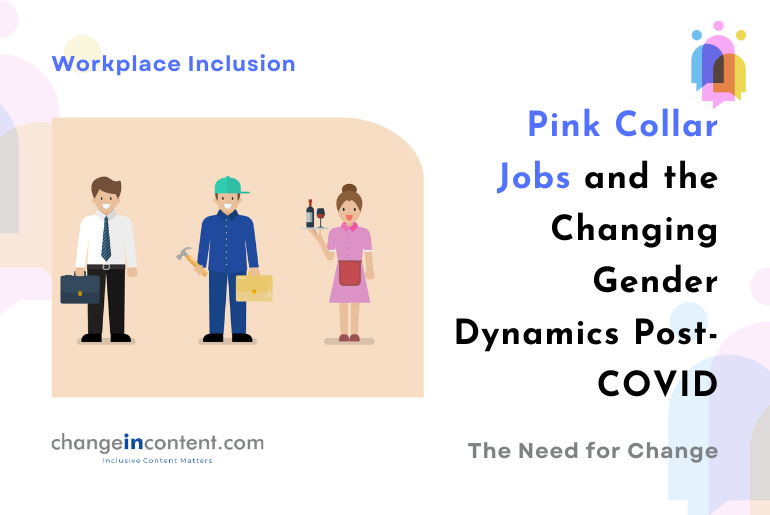
Pink-collar jobs is a term coined during World War II, when women entered the workforce in large numbers. Louise Kapp Howe, an author who focused on social issues, popularised the term while writing about industries dominated by women. These roles predominantly encompass nurses, secretaries, and teachers.
During World War II, women in America took over jobs that did not have enough men. World War II affected the type and volume of work for women. Five million women joined the workforce between 1940 and 1945. Interestingly, World War II led many women to take jobs in industries related to defence. According to the 1940 Census of Population, ninety per cent or more of the nurses, midwives, telephone operators, secretaries, domestic service workers, and boarding housekeepers were women.
Other pink-collar jobs of the 1940s included office machine workers (87% female), housekeepers (78% female), apparel manufacturers (78% female), teachers (75% female), tobacco manufacturers (72% female), social and welfare workers (62% female), and waiters (56% female). However, with the war coming to an end, certain anomalies and peaks in women filling the gaps in understaffed job roles became neutralised, and the ratio tilted towards teaching, nursing, housekeeping and other traditional women-oriented roles. These job roles are known as pink-collar jobs.
Composition of pink collar jobs today
Data shows that the six primary pink-collar jobs are related to childcare and healthcare. They include preschool and kindergarten teachers (99%), dental hygienists (96%), speech-language pathologists (96%), dental assistants (95%), childcare workers (93%), and medical records and health information technicians (93%). The percentage of women secretaries (93%) has remained about the same since World War II. Other popular occupations among women are medical assistants, hair stylists, dieticians, nutritionists, and licensed practical and vocational nurses.
The bitter truth
Unfortunately, pink-collar jobs pay less and offer limited opportunities for advancement, perpetuating the gender pay gap. They are also considered to be less cerebral or technical than the jobs men usually take up. Despite that, as the labour landscape evolved, so did the composition of pink-collar jobs. Factors such as technological advancements, globalisation, and societal attitudes influence these shifts. Notably, while certain occupations, such as secretaries, have maintained a high percentage of women over the years, others have seen significant shifts in gender composition. For instance, the nursing industry, once overwhelmingly female, has seen an increase in male representation due to factors such as increased demand for caregiving roles and efforts to destigmatise nursing as a traditionally “female” profession.
Are women losing their competitive advantage?
As blue-collar industries decline and pink-collar industries expand, more men are transitioning to roles traditionally dominated by women. Several economic factors drive this trend, and sectors like healthcare and personal services are experiencing rapid growth.
Labour market
It is essential to acknowledge that the pandemic has also exacerbated existing inequalities in the labour market, particularly for women in pink-collar occupations. Women, who disproportionately hold roles in sectors such as hospitality, retail, and personal services, have been disproportionately affected by job losses and economic uncertainty. Therefore, post-pandemic women have not only lost jobs but have been economically disadvantaged, too.
Healthcare and childcare
Pink-collar jobs have undergone further transformation in the post-COVID era, as the pandemic has reshaped the way we work and interact. With the widespread adoption of remote and hybrid work models, certain pink-collar professions have seen shifts in demand and job responsibilities. For example, roles in healthcare and childcare have become even more vital in the wake of the pandemic, with increased emphasis on telehealth services, home-based care, and virtual learning.
Healthcare workers, including nurses, medical assistants, and technicians, have adapted to new protocols and technologies to ensure patients’ safety and well-being. Similarly, childcare workers have faced unique challenges in providing essential services while adhering to health and safety guidelines.
Administrative roles
Administrative roles such as secretaries and office assistants have experienced changes in responsibilities as organisations transition to remote work environments. Many administrative tasks have shifted to digital platforms, requiring proficiency in virtual communication tools, document management systems, and online collaboration platforms. As a result, administrative professionals have had to upskill and adapt to new technologies to support remote teams effectively. Also, that’s an area where job cuts have been prevalent.
The growing sectors
The pandemic has accelerated the usage of e-commerce, digital marketing, and online education, leading to increased demand for roles in these sectors. Pink-collar professions such as social media, digital media, and online education have seen growth opportunities as businesses and educational institutions pivot to online platforms.
Pink collar jobs: SWOT analysis
Strength
Pink-collar jobs, historically associated with women, have undergone a significant transformation in recent years. Macroeconomic factors and shifting societal attitudes drive it. Once dominated by female workers in roles such as nurses, teachers, and secretaries, these occupations have seen a notable influx of men, raising concerns about women in the workforce. In the wake of the COVID-19 pandemic, the landscape of pink-collar jobs has evolved further, with remote work models and technological advancements reshaping job roles and responsibilities. Here, if women can keep themselves abreast with technological advancements, there is an inherent advantage as women have historically excelled in these professions.
Weakness
During the 1940s, a pivotal era in the history of pink-collar jobs, women were the backbone of these roles. Nurses, telephone operators, domestic service workers, and shop assistants are some examples. This historical context sets the stage for the subsequent diversification of pink-collar jobs. However, because these jobs do not involve skills that are nuanced or painstaking, men are increasingly entering fields such as healthcare, childcare, and administrative support. Therefore, the playing field is changing from pink and losing its female advantage. While certain occupations, such as nursing, have maintained a high percentage of female workers, others have experienced significant shifts in gender composition.
Opportunities
In the post-COVID era, pink-collar jobs have adapted to new challenges and opportunities, with industries such as healthcare and education witnessing increased demand for services. Roles in healthcare, including nursing and medical assistance, have become even more critical in addressing public health needs. In contrast, administrative roles have transitioned to remote work environments, requiring proficiency in digital tools and communication platforms. Therefore, women who continuously learn and upskill are poised to grow professionally in the new era of evolving pink-collar jobs.
Threat
The advent of artificial intelligence (AI) and automation is not just a change but a disruptor, poised to reshape and shrink pink-collar jobs further. On the other hand, AI, in itself, offers opportunities for increased efficiency and productivity and a chance for women to shine. However, it is essential to ensure that women are equipped with the necessary digital skills and technological literacy to thrive in the digital economy. By prioritising gender equality and investing in the empowerment of women, India can harness the full potential of its workforce and drive sustainable economic growth and development.
Pink collar jobs: India
These data points are all in the American context. However, if we look at them in the Indian context, the time frames are different, but the pattern of women in the workforce follows a similar trajectory. However, the landscape is rapidly changing, driven by economic slowdown, urbanisation, and technological advancements. While women have made strides in emerging fields such as digital marketing and online education, challenges persist in achieving gender equality and empowerment in the workforce.
The challenges for women in pink collar jobs in India
Women in pink-collar jobs face disparities in wages, career advancement opportunities, and workplace discrimination. The COVID-19 pandemic has exacerbated existing inequalities, with women courageously bearing the brunt of job losses and economic hardships. In response, businesses and policymakers must implement strategies to support these women in the workforce. Policies must include flexible work arrangements, access to affordable childcare, and opportunities for skills training and upskilling.
The final thoughts on the pink collar jobs
Pink-collar jobs have followed similar trends worldwide, with women historically dominating roles such as nursing and teaching. Changing the evolution of pink-collar jobs to bring parity and gender equality requires more than a piecemeal approach. It demands a comprehensive strategy. It must address systemic barriers, promote inclusive policies, and foster a culture of education and upskilling women in the workplace. By prioritising retaining a healthy share in pink-collar jobs and moving up the value chain to increase volume share in jobs known as traditionally men’s domains, gender disparity and pay gap can be reduced.
Disclaimer: The views expressed in this article are based on the writer’s insights, supported by data and resources available both online and offline, as applicable. Changeincontent.com is committed to promoting inclusivity across all forms of content, which we define broadly to include media, policies, law, and history—encompassing all elements that influence the lives of women and gender-queer individuals. Our goal is to promote understanding and advocate for comprehensive inclusivity.