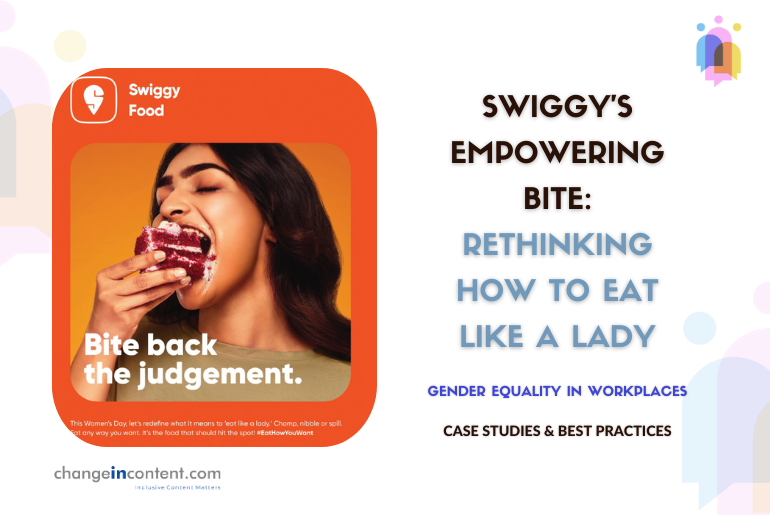
This International Women’s Day, Swiggy’s “How to Eat Like a Lady” campaign isn’t about dainty bites and finishing your meal. It’s a clever and refreshing take, flipping the script on the outdated and frankly ridiculous societal norms that dictate how women should behave, even at the dinner table. As a woman, I applaud this campaign for taking a bite out of the stereotypes women face daily.
Swiggy’s campaign beautifully highlights this absurdity. The visuals show women relishing their food, no matter how messy it gets. They’re laughing, talking, and simply having a good time. It’s a powerful message that women can eat however they want, and it doesn’t diminish their femininity one bit.
Swiggy’s “How to Eat Like a Lady” campaign: Breaking bread with freedom
This campaign is important because it sheds light on a much larger issue. The way women’s lives are policed at the dinner table is just a microcosm of the societal expectations placed on women every single day. We’re told how to dress, how to speak, and how to act, all in the name of being “ladylike.” This constant pressure to conform is exhausting and oppressive.
We can be strong and ambitious yet nurturing and caring. We can love fashion and makeup but also be passionate about sports or video games. There’s no single definition of what it means to be a woman.
Taking a stand, one bite at a time
Swiggy’s “How to Eat Like a Lady” campaign reminds us that it’s okay to break free from these stereotypes. We can eat with enjoyment, laugh out loud, and order that extra slice of cake without worrying about societal approval. It’s about embracing who we are, relishing our individuality, and simply enjoying life.
Change doesn’t happen overnight, but campaigns like this one spark conversations and challenge the status quotient. It’s a small but significant step towards a world where women can be themselves at the dinner table and beyond.
A celebration of diversity
What I find most inspiring about the campaign is its inclusivity. It features women of various ages, backgrounds, and ethnicities, each defying stereotypes in their own way. Also, this reminds us that there’s no single “right” way to be a woman. We are a beautiful tapestry woven from diverse experiences and preferences.
A double standard at the dinner table
It is interesting to note that opinions about men’s eating habits differ. Large portions are viewed as a mark of masculinity, and men are typically encouraged to eat with a hearty appetite. Food left on the plate could even be interpreted as a sign of weakness or insufficient hunger.
Not that men do not experience this either, of course. There may be pressure to maintain a specific level of physical fitness, which may result in diet restrictions. But there is no denying that there are social messages about food that are different for men and women.
The future: A world beyond “Ladylike”
We all know these expectations. The “sit up straight, shoulders back” brigade that makes enjoying a meal feel like a military drill. “Tiny bites only” implies women have bird appetites, a stereotype reinforced in classic films like Breakfast at Tiffany’s (1961), where Holly Golightly daintily nibbles on a croissant, or countless Victorian novels where heroines are described as having delicate appetites. The “leave some on your plate” patrol promotes unhealthy body image and ignores the fact that, hey, maybe the food was just that good!
Women are physically meant to look waif-like and that is a beauty standard. Therefore, food has a negative connotation when it is linked to women. Enjoying food is looked at as anti-feminine. Even today, Korean idols and supermodels from all over the world eat meagre meals that the whole world picks up to conform to the impossible body standards for women. Indian women, known for their curvaceous structures, have started to resort to extreme measures to achieve a figure that almost defies genetics.
A call to action: Beyond this women’s day
While Swiggy’s “How to Eat Like a Lady” campaign is a welcome step, the fight against stereotypes is an ongoing battle. Here’s how we, as women, can continue to break free:
Challenge the narrative: Call out sexist comments and behaviours, both subtle and overt. Don’t let societal norms dictate your actions.
Support Other Women: Uplift and empower each other. Celebrate each other’s successes and be there for each other during challenges.
Embrace your uniqueness: Don’t try to fit into a mould. Celebrate your individuality and the things that make you who you are.
The final thoughts on Swiggy’s “How to Eat Like a Lady” campaign
Swiggy’s campaign might be about food, but the aftertaste is a powerful message of self-acceptance that stays long after the last bite. It’s a call to dismantle the invisible walls built by stereotypes, not just at the dinner table but in every aspect of life. We should celebrate confidence and individuality, not police them with etiquette or disapproving glances. A world where strength and femininity are not opposing forces but complementary aspects of a multifaceted self.
A woman who can conquer a boardroom and devour a plate of messy ribs is not a contradiction; she’s a testament to the richness and complexity of human experience. This campaign is a delicious reminder that true empowerment comes from embracing who you are without apology. It’s about shattering the limiting confines of “ladylike” and rewriting the definition on our terms. It is a great initiative to normalise eating heartily.
The way forward
It’s up to all of us to keep the conversation going and challenge outdated notions that have no place in the modern world. We can be the generation that dismantles the stereotypes brick by brick, bite by delicious bite. Let’s create a world where everyone can take a big, messy bite out of life on their terms. After all, the most delicious experiences are often the ones that leave a little stain as a badge of individuality and a reminder of the joy of simply being ourselves, unrestrained.
This campaign is a spark, a call to action. It’s up to us to turn it into a fire that burns away the limitations and illuminates a path toward a future where everyone can be their authentic selves at the dinner table and beyond.
Disclaimer: The views expressed in this article are based on the writer’s insights, supported by data and resources available both online and offline, as applicable. Changeincontent.com is committed to promoting inclusivity across all forms of content, which we define broadly to include media, policies, law, and history—encompassing all elements that influence the lives of women and gender-queer individuals. Our goal is to promote understanding and advocate for comprehensive inclusivity.