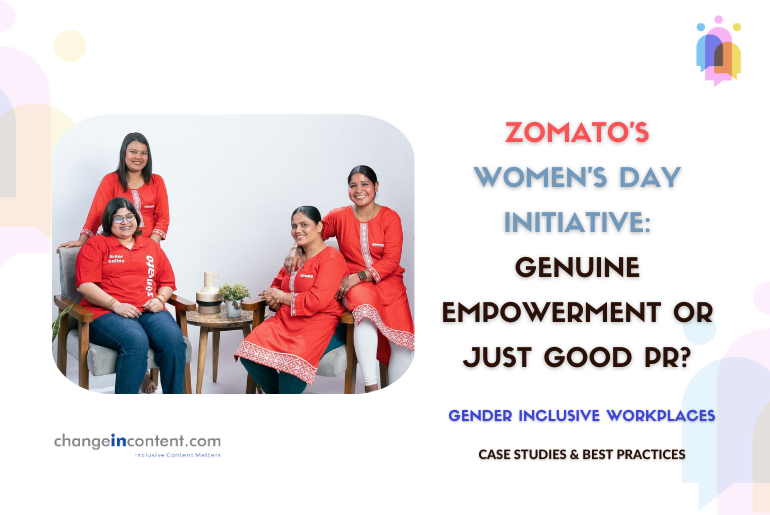
Zomato celebrated Women’s Day by granting its women delivery partners the option to wear kurtas with pockets. The food delivery company states, “Many female delivery partners expressed discomfort with the western-style Zomato t-shirts. So, we gave them a choice.” The company also released a video featuring the female delivery partners in the newly introduced kurtas, expressing their appreciation for the company’s gesture. The Zomato Women’s Day Campaign serves as a beautiful gesture by the brand. However, is it really focused on empowering women or a marketing gimmick? Let’s find out.
While there was widespread appreciation for Zomato’s decision, with many commending the company for its empathetic approach and effective marketing strategy, why did the company choose to address this matter conveniently around Women’s Day? The discomfort with the previous uniform may have persisted for some time among women delivery partners, so why did the brand wait until Women’s Day to take action?
How Women’s Day lost its way
We are in an era where “Women’s” Day gets a lot of attention, not because it celebrates women but because brands heavily market and promote their products. However, International Women’s Day didn’t start as a marketing strategy. It goes back to the socialist and labour movements of the early 20th century. The first official Women’s Day happened in 1911, with over a million people in Europe rallying for women’s rights and an end to discrimination.
Shortly after, a tragic event occurred. The Triangle Shirtwaist Factory fire in New York took the lives of more than 140 female workers, predominantly immigrants. It shifted the focus of International Women’s Day towards the challenges faced by working women. In 1917, Russian women held a significant demonstration on Women’s Day, protesting against war, food shortages, poor living conditions, and autocracy.
In 1975, the United Nations officially recognised International Women’s Day, aiming to draw attention to women’s issues globally, particularly in developing countries. So, while it may now seem commercialised, the day has deep-rooted origins in advocating for women’s rights and social justice.
Pinkwashing Women’s Day
Nowadays, Women’s Day has turned into a checkbox exercise for some brands. Getting buy 1 get 1 offer on food and drinks or cosmetics and clothes, some of the articles perpetuate the “ the other woman syndrome”. There are mandatory videos with inclusion at the heart of the creative, sometimes blatant, almost in-your-face campaigns of photo ops of their female staff, and usage of chosen hashtags increases engagement on the day. The creative or the hashtag is forgotten by the time the annual closing of books happens by the brand on March 31. Therefore, it’s more or less a form of pinkwashing, where the outward show of support may not reflect a genuine commitment to equality.
Pinkwashing is when brands use feminist causes, like International Women’s Day, for marketing without genuinely supporting women’s empowerment. As the day becomes more popular, some companies use it to boost their image or sell products instead of genuinely helping the cause of sexism, patriarchy, or equal opportunity. This practice takes away the focus from meaningful conversations and lessens the day’s significance.
Zomato Women’s Day Campaign: The lack of authenticity over tokenism
Zomato’s performative feminism on International Women’s Day seems more like a surface-level gesture. While creating a comfortable dress code is a positive initiative, it might be seen as just covering up the real problems. Zomato should focus on ensuring fair wages, a positive work environment for women, and adequate facilities for all employees. Many female delivery partners have voiced concerns about unfair wages and working conditions that need attention.
Looking at Zomato’s or many other brands’ social media feeds, it’s noticeable that there aren’t many posts addressing women’s issues or empowerment outside of Women’s Day or Mother’s Day. There might be some content for Valentine’s Day promotions, but is that the extent of the role women play in ads and marketing? Should their representation be confined to Women’s Day and Valentine’s Day alone?
Brands need to be careful not just to use Women’s Day for marketing. They should genuinely support and empower women by making long-term commitments. It includes tackling the gender pay gap, promoting diversity, and helping women in leadership roles. By doing this, brands can have a positive and lasting impact on society rather than just seeing Women’s Day as a marketing opportunity.
Zomato Women’s Day Campaign: The final thoughts
On March 8, while many brands celebrated International Women’s Day with messages and discounts, millions of women faced the usual discrimination and sexist challenges. It’s not just Zomato. No matter how small a brand is, do not wait for Women’s Day to address women’s issues. If crimes and injustice are occurring every day, there’s no need to wait for a specific day to take action. Action and support should be ongoing, not limited to a particular day.
Disclaimer: The views expressed in this article are based on the writer’s insights, supported by data and resources available both online and offline, as applicable. Changeincontent.com is committed to promoting inclusivity across all forms of content, which we define broadly to include media, policies, law, and history—encompassing all elements that influence the lives of women and gender-queer individuals. Our goal is to promote understanding and advocate for comprehensive inclusivity.