
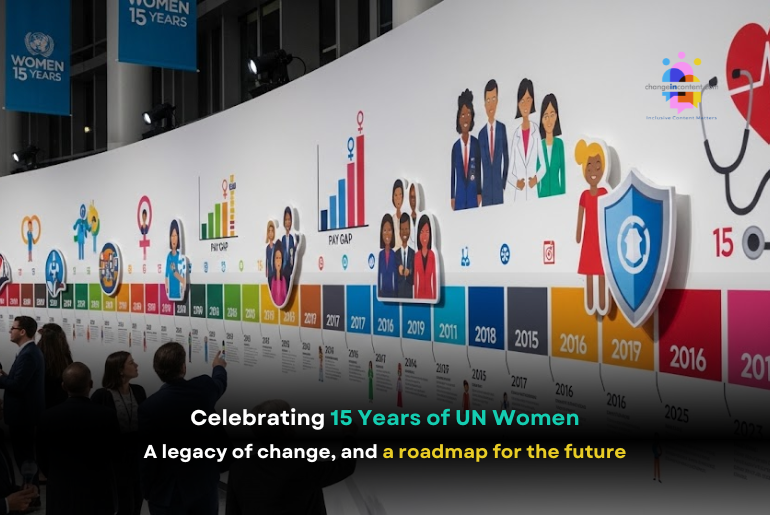
As UN Women marks 15 years of global advocacy, the scale and urgency of its mission have never been more evident. The journey of 15 years of UN Women reflects a world still grappling with persistent gender gaps, be it in health, wages, safety, or leadership. This article takes stock of its impact and calls out what still needs to change.
UN Women began its journey in 2010 with the goal to fight for the rights of women and girls everywhere. In 2025, the organisation is celebrating 15 years of reaching women across 109 countries and has become a trusted partner to governments, local communities, and international organisations. The approach of UN Women has always been that change must come by working with women, for women.
What UN Women has achieved so far
UN Women continue to stand up for the rights, equality, and empowerment of 4 billion women and girls in 109 countries.
- In 83 countries, UN Women helped improve laws and policies that protect women’s rights. These countries are home to 2.9 billion women and girls.
- 325 laws were created, revised, or removed to support women’s rights.
- 68 countries adopted 490 new gender-focused plans on issues like equal pay, safety, care work, climate change, and peace.
- More than $219 million was given to local women-led groups across 95 countries.
- 16,600 organisations improved their ability to provide better services for women during times of crisis and recovery.
Economic empowerment
Women still face many barriers in the workplace and in achieving financial independence. In 2022-2024, UN Women focused on:
- Promoting equal pay for equal work.
- Supporting better care systems so women are not stuck doing all the unpaid care work at home.
- Encouraging fair trade practices that benefit women-run businesses.
- Helping women access decent jobs and social security with the help of partners like the ILO and UNDP.
Gender budgets that make a difference
Most countries still spend too little on women-focused programs. UN Women found that the yearly gap in funding for gender equality is $420 billion. To help close this gap:
- UN Women worked with 20 countries to raise the share of gender-focused spending.
- In India, gender-responsive programs made up 6.8% of the national budget in 2024, which is about $3.8 billion, the highest ever.
- In Tanzania, local governments added specific funds for women into their 2024–2025 budgets.
- Gender financing studies were done in five countries, including Morocco, where budgeting for women was added to the national finance plan.
Health and safety
Despite progress, many women and girls continue to face serious threats to their health and safety. In 2023, girls aged 10 to 19 accounted for 70% of new HIV infections. UN Women supported 45 countries in improving access to HIV services specifically for women and girls. Violence also remains a significant issue. Every 10 minutes, one woman or girl is killed by a partner or close family member. A total of 85,000 women and girls were intentionally killed last year.
In addition, more than 600 million women and girls live close to areas affected by conflict. Still, between 2020 and 2023, women were excluded from 80% of peace talks. Even though research shows that peace lasts longer when women take part, they continue to be left out. UN Women is working with countries and local partners to strengthen legal protections, support survivors, and ensure women are included in the policies/plans to prevent and resolve conflict.
Celebrating 15 Years of UN Women: Their call for 15 urgent actions
As UN Women completes 15 years of work, the organisation has laid out 15 priority actions to speed up progress for women and girls across the world.
1. Address the Backlash Against Women’s Rights
- What’s happening: In 2024, nearly 1 in 4 countries reported a rollback in women’s rights.
- What we need: Governments must show political will to protect existing rights and make sure legal, political, and financial systems support equality.
2. End Conflict
- What’s happening: Around 612 million women and girls lived near conflict zones in 2023, which is over 50% more than a decade ago.
- What we need: Countries must invest more in preventing conflict, mediation, and long-term peace efforts.
3. Promote Women in Peacemaking
- What’s happening: Between 2020 and 2023, women were excluded from 80% of peace talks and 70% of mediation processes.
- What we need: All parties involved in conflict must ensure women are included equally in peace discussions and decisions.
4. Eradicate Poverty
- What’s happening: 1 in 10 women and girls live in extreme poverty, surviving on less than $2.15 a day.
- What we need: Governments should expand social protection, such as cash support, maternity leave, and pension systems.
5. End Food Insecurity
- What’s happening: Women farmers produce one-third of the world’s food, yet 47.8 million more women than men face hunger.
- What we need: Laws must reduce wage gaps and improve farming productivity for women, helping cut food insecurity by 45 million people.
6. End Violence Against Women
- What’s happening: Every 10 minutes, a woman or girl is killed by a partner or relative. In 2023, 85,000 were killed on purpose.
- What we need: Stronger laws, better data, and more funding for women’s groups and survivor support services are urgent.
7. Promote Women’s Access to the Economy
- What’s happening: Women do 2.5 times more unpaid care work than men. Every day, they spend 250 million hours just collecting water.
- What we need: Investing in care jobs like childcare and elderly care could create nearly 300 million jobs by 2035.
8. Erase the Gender Pay Gap
- What’s happening: Women still earn 20% less than men for equal work.
- What we need: Governments and employers must enforce equal pay, allow pay transparency, and open access to higher-paying roles.
9. Protect the Planet
- What’s happening: Climate change could push 158 million more women into poverty by 2050. Only 28% of environment ministers are women.
- What we need: Countries must support women’s leadership in climate policy and fund women-led environmental policies.
10. Increase Women’s Leadership in Politics
- What’s happening: 75% of lawmakers are men, and 103 countries have never had a woman Head of State.
- What we need: Political quotas help, but real progress means ending social bias and political violence against women leaders.
11. Remove Legal Discrimination
- What’s happening: Women have only 64% of the legal rights that men enjoy. In more than half of the countries, at least one job is legally off-limits to women.
- What we need: Governments must repeal discriminatory laws and strengthen protections that promote equal rights.
12. Close the Gender Digital Gap
- What’s happening: In 2024, 277 million more men than women accessed the internet.
- What we need: Countries must expand digital access, stop online abuse, and encourage women’s leadership in science and tech fields.
13. Ensure Equal Access to Education
- What’s happening: Over 119 million girls are out of school, and 39% of young women don’t finish secondary education.
- What we need: Lower schooling costs, provide financial assistance, and create safe and inclusive classrooms for girls.
14. End Maternal Mortality
- What’s happening: Around 800 women die every day from preventable pregnancy-related causes. 61% of these deaths occur in conflict-hit countries.
- What we need: Health systems must improve, and more investment is required in reproductive and maternal care.
15. Increase Gender Financing
- What’s happening: Only 4% of global development aid is spent on programs where gender equality is the primary goal.
- What we need: Both public and private sectors must raise funding for gender equality to ensure long-term, real-world change.
Conclusion: Carrying the mission of 15 years of UN Women forward
UN Women’s 15-year journey is a moment worth recognising. Over the years, the organisation has worked with countries, communities, and local groups to push for better laws, stronger protections, and grassroots-level support for women and girls.
The 15 actions announced for this anniversary show how gender equality will not happen on its own. It needs funding, political will, and everyday action. At ChangeInContent, we believe in keeping this conversation going, not just during milestones, but every day. We join in congratulating UN Women and stand by the call to build a world where women and girls are safe, valued, and given equal chances.
The Changeincontent perspective
At ChangeInContent, we believe that milestones are more than numbers; they are checkpoints for reflection and renewal. The story of 15 years of UN Women is not just a celebration, but a sharp reminder that rights won can be lost without vigilance. As global attention shifts toward economic recovery, climate action, and digital futures, women must not be left behind in policy or participation.
Disclaimer: The views expressed in this article are based on the writer’s insights, supported by data and resources available both online and offline, as applicable. Changeincontent.com is committed to promoting inclusivity across all forms of content. We broadly define inclusivity as media, policies, law, and history. It encompasses all elements that influence the lives of women and marginalised individuals. Our goal is to promote understanding and advocate for comprehensive inclusivity.
