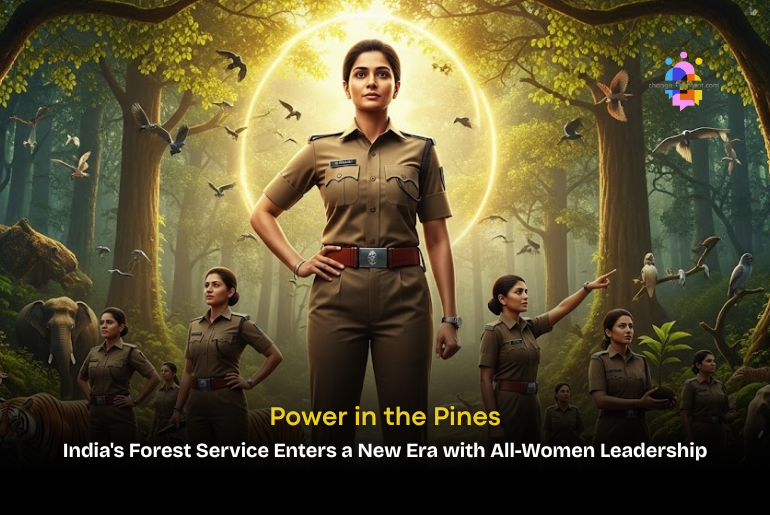
An all-women team takes charge of the Indian Forest Service Association (IFoS). Now, this is not just a headline; it is a statement of progress. This milestone in India’s civil services reflects a growing shift towards inclusive governance, especially in departments traditionally dominated by men. In a system where representation has long lagged, this breakthrough deserves both recognition and reflection.
A milestone in civil services: All-women team takes charge of Indian Forest Service Association
Since its establishment, this is the first time that the Indian Forest Service Association (IFS) has chosen an all-women team to lead its national executive committee. The announcement came on July 20, 2025, during the Association’s general body meeting.
There are currently 36 organised civil services associations in India. Among them, the IFS has become the first to elect an all-women national executive team. It is a significant step forward for fair representation in civil service leadership, especially in roles that have remained male-dominated for decades.
The Indian Forest Service enters a historic phase of leadership
The Indian Forest Service plays a critical role in protecting forests, conserving wildlife, and managing environmental governance across the country. Officers operate in some of the most challenging terrains, dealing not just with the demands of ecological protection but also confronting illegal logging, land and mining mafias, and political interference. In many parts of India, women officers still lack basic workplace infrastructure like separate restrooms or private spaces in field areas.
Despite these challenges, women officers have continued to lead by example, bringing empathy, grit, and innovation to the role. With climate concerns becoming more urgent, this leadership transition comes at a critical moment. The Association’s new structure reflects both the growing contributions of women in the field and the need for more inclusive governance models.
Beyond symbolism: Why this matters for inclusion
The Indian Forest Service (IFoS) began taking women officers in 1980. That year, only three women officers entered the service. In 2021, only 284 women were among the 2,100 officers in the IFoS, which was roughly 13.5%. Now, over 45 years later, even though women still form a small part of the service, their presence is being recognised at the highest level.
Meet the women steering India’s forest governance
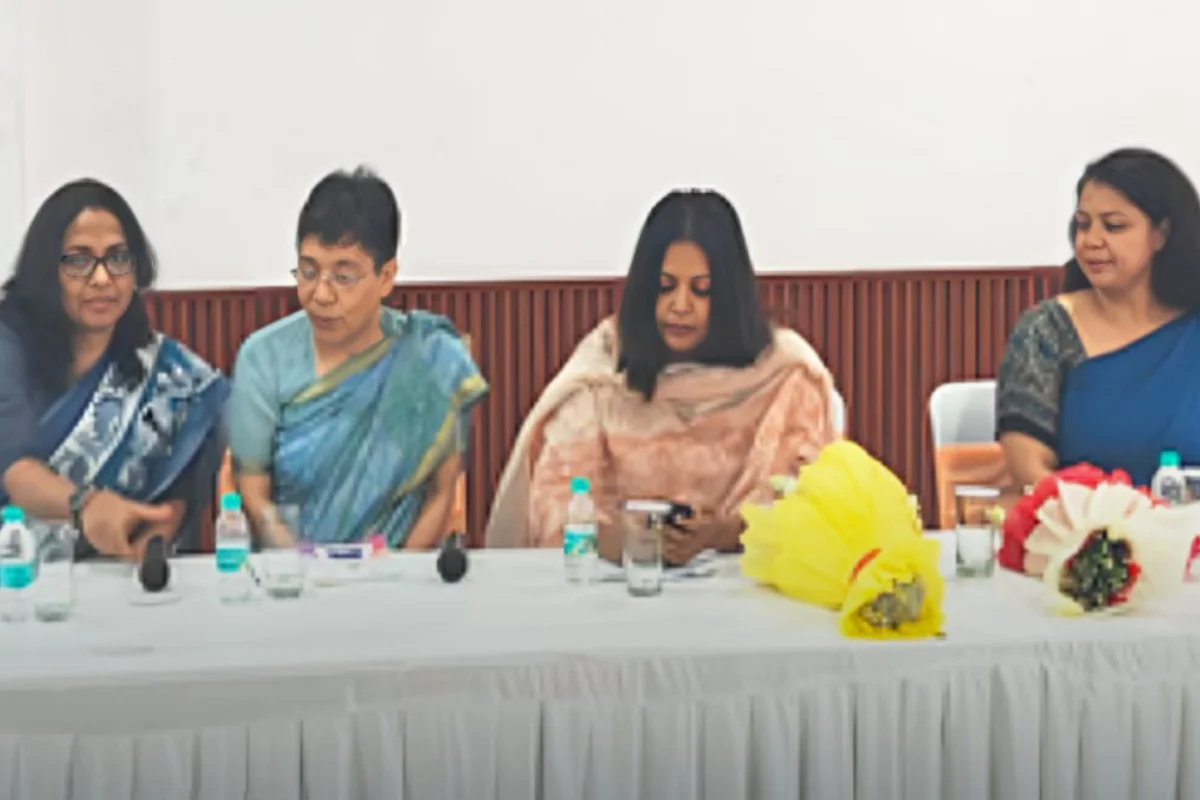
The all-women committee includes officers from different backgrounds and batches. Each brings valuable experience in forest management, conservation, policy-making, and public service.
Jyotsna Sitling – Patron
Jyotsna Sitling became the first tribal woman to join the Indian Forest Service in 1987. During her time as Director of Nanda Devi National Park, she led the clean-up of 44 tonnes of waste from the Valley of Flowers. Her efforts helped the park gain UNESCO World Heritage Site status in 2005. Her work includes improving local livelihoods, watershed protection, and making forest policies more sensitive to women’s needs. She has received the Indira Gandhi Paryavaran Puraskar and the Prime Minister’s Award for Excellence in Public Administration.
Anita Karn – President
From the 1997 batch, Karn serves in the Gujarat cadre and is known for introducing gender-inclusive models in the Gir Sanctuary by deploying women forest guards and foresters. She has held key posts such as Additional Principal Chief Conservator of Forests, focusing on innovations in training and community engagement. As President of the IFSA, she is expected to bring both administrative depth and a progressive vision to the role.
Monalisa Dash – Secretary General
A 2003-batch officer from the Sikkim cadre, Monalisa Dash, has held several central government positions, including in the Ministry of AYUSH and the Ministry of Home Affairs. Her work has supported welfare for central armed police forces, police reform, and regional development in the North-East. She also managed India’s herbal pharmaceutical company IMPCL, showing her ability to manage both policy and enterprise.
Dr. Surabhi Rai – Joint Secretary
Dr. Rai belongs to the 2005 batch and is part of the AGMUT cadre. She currently works in the Ministry of Environment, Forest and Climate Change. Her role focuses on forestry policies, conservation, and managing environmental programs across the country. She also supports the Director General of Forests as Officer on Special Duty.
Suveena Thakur – Treasurer
Suveena Thakur, from the 2014 batch of the Himachal Pradesh cadre, currently serves in the Ministry of Environment in New Delhi. She handles crucial areas like finance, human-wildlife conflict, and forest planning. Her field experience helps shape decisions at the central level, especially in fragile ecosystems.
Chestha Singh – Literary Secretary
Chestha Singh is a 2018-batch officer from the AGMUT cadre and a graduate of IIT Kanpur. She cleared the IFS exam without formal coaching and is the author of Kamlang Tiger Reserve – At a Glance. Her focus on environmental storytelling reflects the energy of a younger generation committed to communication and outreach in forest governance.
Challenging a longstanding norm
Leadership in India’s civil services has long been dominated by men, especially in field-intensive roles like the forest and police services. While the number of women entering the services has grown, senior leadership remains mostly male.
From the margins to the mainstage: Women in the Indian Forest Service
As of October 2024, 16 out of 90 secretaries in the central government are women, close to 18%. Retired IAS officers who joined the service in the early 1980s note that this figure is higher than the proportion of women recruited during their own time, suggesting some progress in central-level representation. At the joint secretary level, women hold 64 out of 236 posts or about 27%. These numbers show a steady, if limited, increase in women’s presence in senior administrative positions at the Centre.
At the state level, however, the picture is different. Out of 36 officers currently serving as chief secretaries across states and Union Territories, only two are women: Alka Tiwari (1988 batch, Jharkhand) and Dr. Shalini Rajneesh (1989 batch, Karnataka). While representation at the Centre has gradually improved, leadership positions in state administrations remain largely male-dominated.
The climate for change is now
The all-women executive council in IFS may serve as a model for other services such as the Indian Administrative Service (IAS), Indian Police Service (IPS), and Indian Revenue Service (IRS), where gender disparity is still prevalent among the higher ranks.
All-women team takes charge of Indian Forest Service Association: This is just the beginning
While women continue to be underrepresented across top civil service roles, especially at the state level, this development shows what is possible when opportunity meets merit. The women leading IFS today come with years of experience, proven track records, and a deep understanding of forest and environmental governance. Their leadership arrives at a time when climate challenges demand fresh thinking and inclusive action. Now, the challenge is to ensure this is not treated as an exception, but as part of a new normal.
The Changeincontent perspective
At Changeincontent, we believe actual progress lies in structural shifts like these. When leadership becomes reflective of society’s diversity, governance transforms from authoritative to inclusive. This all-women leadership team in the Indian Forest Service is not a feel-good headline, but a template. A call to other civil services to introspect, adapt, and lead with balance. Representation is not just a goal; it is a necessity.
Also Read: Gender equity in urban bureaucracy: The missing link in India’s city planning.
Disclaimer: The views expressed in this article are based on the writer’s insights, supported by data and resources available both online and offline, as applicable. Changeincontent.com is committed to promoting inclusivity across all forms of content. We broadly define inclusivity as media, policies, law, and history. It encompasses all elements that influence the lives of women and marginalised individuals. Our goal is to promote understanding and advocate for comprehensive inclusivity.