
The Short Read
- For the first time, more than 10,000 girls have qualified in JEE Advanced 2026.
- Official data shows that 10,107 female candidates qualified this year out of 40,562 women who appeared for both papers.
- The number of women qualifying has grown sharply since 2019, when 5,356 women qualified.
- That is a major moment for women in STEM and engineering education in India.
- But qualifying for IITs is only the beginning.
- IITs must now strengthen safety, mentoring, hostels, leadership opportunities, academic inclusion, mental health support, access to entrepreneurship, and career pipelines for women students.
- Girls have shown they can break through the entrance gate. The next question is whether campuses can help them build power after they enter.
JEE Advanced 2026: Girls just created history
Some numbers deserve a pause before we analyse them.
In JEE Advanced 2026, more than 10,000 girls qualified for the IITs for the first time. Not 2,000; not 5,000; not a symbolic handful sitting at the edge of India’s most competitive engineering race. More than 10,000.
That number should travel beyond coaching centres, education pages and result-season headlines.
- It should reach families who still hesitate to send their daughters away to study.
- It should reach schools that quietly steer girls towards “safer” choices.
- It should reach young girls who like maths but often hear that engineering is too harsh, too competitive, too male, too far from home, too much.
The results of JEE Advanced 2026 have given India excellent news. Girls are not waiting for permission to enter the country’s toughest academic corridors. They are preparing, competing, qualifying and making the point with marksheets.
But this story is not only about cracking an exam.
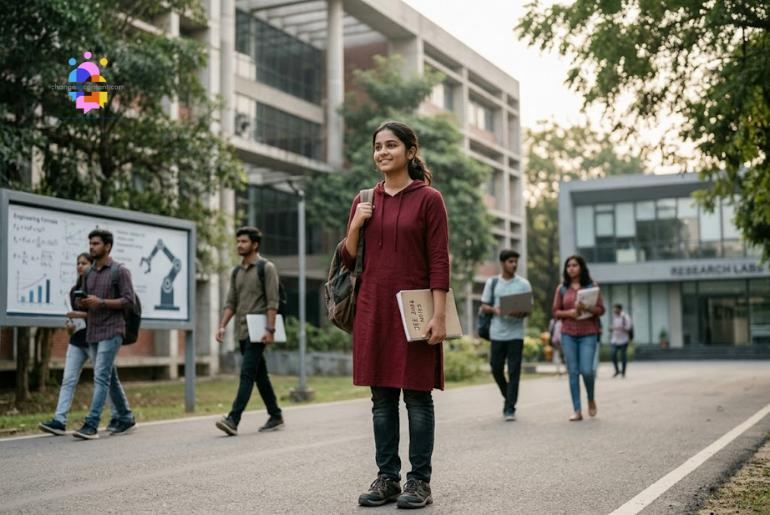
It is about what happens when girls begin to enter elite technical institutions in larger numbers. The question is whether IITs can turn this moment into a leadership pipeline. And it is about whether India’s technology future will include women not as exceptions but as builders, founders, researchers, coders, engineers, scientists and decision-makers.
The girls have done their part. Now campuses must do theirs.
Over 10,000 girls cracked JEE Advanced 2026: Why this number matters
JEE Advanced is not an ordinary examination. It is the final gateway to the Indian Institutes of Technology, and one of the most demanding academic filters in the country.
This year, 10,107 female candidates qualified. Nearly 1 in 4 women who appeared cleared the exam. That is a striking shift for an ecosystem where women’s participation has historically been low.
The rise is not accidental. It follows years of policy intervention, including the introduction of supernumerary seats for women in IITs. The idea was simple but important: if the system had produced a severe gender imbalance for decades, then the system needed correction, not just motivational speeches.
That correction is now showing results.
But we should be clear about what this moment means. Girls did not qualify due to changes in the model. They qualified because more girls entered the pipeline, prepared seriously and performed strongly.
Too often, whenever women enter male-dominated spaces through policy support, someone whispers about the dilution of the standard. JEE Advanced 2026 answers that whisper with data. The system is not carrying girls into engineering. Instead, girls are walking in with rank lists, scores and years of disciplined preparation behind them.
That is exactly why India must take the moment seriously. If the pipeline is changing, institutions cannot remain the same.
From access to belonging
Getting into an IIT is a dream. Staying there with confidence is a different journey.
For many girls, the challenge does not end after clearing JEE Advanced. It changes form. A student may now have to leave home, move into a hostel, adjust to a highly competitive campus, enter male-heavy classrooms, build peer networks, find mentors, handle pressure, claim lab space, join technical clubs, speak in classrooms and imagine herself as more than a “girl who made it”.
Representation can open the door. Belonging decides whether a student walks freely inside.
IITs cannot assume that admission alone creates equality. A girl may be sitting in the same lecture hall as everyone else, but still feel less welcome in study groups, coding clubs, robotics teams, entrepreneurship cells, or informal networks where they build confidence and opportunity.
That is how inequality often survives after access improves. It moves from the entrance gate to the culture inside.
Changeincontent has previously examined the wider gender gap in STEM learning in India and the need to make technical education more welcoming for women. This JEE Advanced 2026 moment gives that conversation a new urgency: if more girls are entering the IIT pipeline, campuses must now become places where they can lead, not just survive.
IITs need to think beyond “safe campus”
Safety matters. There is no debate there.
Girls moving to residential campuses need secure hostels, well-lit routes, reliable transport, responsive wardens, working complaint systems, harassment-free spaces and institutional seriousness around gender-based misconduct.
But safety cannot become the only word used for women students.
A campus can be safe and still not be empowering. It can protect women and still not promote them. It can provide hostels and still fail to include them in the networks that shape careers.
IITs now need a fuller idea of inclusion.
That means strong mentoring systems, women faculty visibility, peer support groups, gender-sensitive counselling, better representation in student bodies, equal access to labs and technical societies, leadership roles in festivals and entrepreneurship cells, alum networks for women, placement support, research exposure and startup encouragement.
A woman student should not only be safe on campus. She should be seen, challenged, supported and prepared for influence.
The future tech leader may be entering the campus this year
Somewhere among these girls may be a future AI researcher, climate-tech founder, semiconductor engineer, robotics specialist, space scientist, biotech innovator, product leader, venture-backed founder, professor, public-policy technologist or deep-tech entrepreneur.
IITs must stop treating gender inclusion as solely a student welfare issue. Why? Because it is a national innovation issue.
India wants to become a technology power. It wants to lead in artificial intelligence, data science, clean energy, advanced manufacturing, biotechnology, defence technology and digital public infrastructure. We cannot build that ambition on half the talent pool.
When girls qualify in larger numbers, the country gains more than diversity. It gains problem-solvers. The question is whether the system will help them convert talent into leadership. That requires active planning.
- Women students need research opportunities early.
- They need access to professors who encourage them into labs, patents, publications and fellowships.
- They need startup cells that do not unconsciously reward only the loudest male confidence in the room.
- They need investors, alumni, and industry mentors who see them as founders in the making.
A young woman should be able to enter an IIT and imagine not only a job, but a future where she builds something important.
The classroom must change, too.
Inclusion does not happen only through formal policy.
- It happens in classrooms, labs, WhatsApp groups, hostels, clubs and casual conversations.
- It happens when professors call on women students with the same seriousness.
- It happens when classmates do not assume a girl is less technical.
- It happens when we do not ask women to take notes while men take charge of the machine.
- It happens when a woman leading a project is not treated as surprising.
- It happens when coding, building, debating, failing and trying again become normal for everyone.
That is the culture shift IITs need.
The old stereotype of the “real engineer” has been too male for too long. JEE Advanced 2026 gives India a chance to update that image.
- The real engineer can be a girl from a small town who studied under pressure.
- A girl whose parents saved for coaching.
- A girl who learned from YouTube.
- A girl who struggled with mock tests and kept going.
- A girl who walked into an exam centre knowing that she was carrying not only her own dream, but the silent hopes of many girls watching from behind.
Now she deserves a campus that does not make her feel like she is shrinking.
What girls should take from this historic moment of JEE Advanced 2026
It is also a message for girls who qualified, girls who almost qualified, and girls who are still preparing.
Do not treat this milestone as proof that the journey is over. Treat it as proof that you can enter rooms that once seemed closed off.
If you are going to an IIT or another engineering institution, do not wait to be perfectly ready before you participate.
- Join the coding club.
- Ask the doubt.
- Apply for the internship.
- Speak to the professor.
- Try for the research project.
- Sit for the hackathon.
- Build the prototype.
- Enter the competition.
- Learn AI tools.
- Improve your communication.
- Understand finance.
- Read beyond your syllabus.
- Find mentors early.
- Help other girls as you rise.
Do not confuse humility with invisibility.
- You can be grateful and ambitious at the same time.
- You can be hardworking and vocal.
- You can be kind and competitive.
- You can ask for help and still be brilliant.
It is your time to claim space without apology.
India needs more than just more women in engineering classrooms. It needs more women who leave those classrooms ready to shape technology, policy, companies, research and public life.
The gap after education still matters.
There is one reason this celebration must not become shallow.
India has seen many moments where girls perform well in education, but women do not receive equal outcomes in employment, leadership or pay later. The journey from education to employment remains uneven. At Changeincontent, we repeatedly discuss how the education-to-employment gap for women in India weakens the promise of progress.
That is why IITs matter so much.
A premier campus is not only a place where students study. It is where networks form, confidence grows, internships begin, founders meet, recruiters notice, alumni intervene, and future careers take shape.
If women are entering this space in larger numbers, the institution has the power to reduce the drop-off that often happens later. IITs should track women’s participation not only at admission, but across the full student journey.
- Who joins technical clubs?
- Who gets research assistantships?
- Who files patents?
- Who receives startup funding?
- Who gets placed in core engineering roles?
- Who goes into doctoral programmes?
- Who becomes a founder?
- Who returns as faculty?
- Who gets invited to speak?
That data will tell the real story.
The record number of girls qualifying in JEE Advanced 2026 is the beginning of a stronger pipeline. But pipelines need maintenance. Otherwise, talent leaks out.
Historic results in JEE Advanced 2026: Families deserve credit too
Behind many girls who qualify for JEE Advanced is a family that made a decision.
- Someone allowed her to study late.
- Someone paid for coaching.
- Someone accepted that she might move away.
- Someone defended her choice of engineering.
- Someone said, “Try.”
- Someone did not stop her when the competition became intense.
In India, that support still matters deeply.
The rise of girls in JEE Advanced 2026 is also a sign that more families are beginning to see daughters as technical talent. Not only as toppers that we celebrate until marriage. Not only as disciplined students. But as future professionals with serious ambitions.
It is time to encourage that cultural shift.
Parents should not see IIT as a bold choice for sons and a risky choice for daughters. They should see it as an opportunity for any child with the interest and ability to pursue it.
Schools should also start earlier. Girls should be encouraged in maths, coding, robotics, physics, problem-solving and experimentation long before Class 11. By the time JEE preparation begins, many girls have already absorbed messages about what is considered “for them”.
The pipeline begins much earlier than the exam.
How IITs can help?
While the IITs are among India’s most reputable institutes, they must also play a part in ensuring that the success is sustainable. Here is what can help.
- Build sufficient safe, high-quality hostel infrastructure for women students.
- Strengthen mentoring systems that connect first-year students with senior students, faculty and alumni.
- Make women visible in labs, research groups, technical clubs, student leadership, entrepreneurship cells and placement networks.
- Treat harassment prevention as a core governance issue, not a compliance formality.
- Track women’s participation across research, internships, placements, patents, startups and leadership roles.
- Offer mental health support that understands the pressure of high-performance campuses.
- Help women students build confidence in emerging fields such as AI, data science, robotics, clean energy, semiconductors, biotechnology and climate technology.
- Connect women students with industry leaders, founders, investors and researchers.
- Make campus culture less dependent on informal male networks.
- Prepare women not only to graduate, but to lead.
Women students are not seeking a favour. They only want a smart institutional strategy.
The next big Indian technology company, research breakthrough or engineering solution may come from one of these students. IITs should want to make that more likely.
The Changeincontent perspective
India must celebrate the historic result of JEE Advanced 2026 with pride.
More than 10,000 girls qualifying is not a footnote. It is a sign that when access improves, ambition responds. It shows that girls are not short of talent, discipline or hunger. They need opportunity, encouragement and institutions that take them seriously.
But this milestone also entails a responsibility for IITs.
The question is no longer whether girls can enter. They have entered. The question is what happens next.
- Do they feel they belong?
- Do they lead projects?
- Do they build companies?
- Do they get mentored into research?
- Do they become visible in emerging technology fields?
- Do they find safe hostels, fair systems and serious academic support?
- Do they graduate with confidence, networks and ambition intact?
India should not celebrate girls only when they crack the exam. It should also back them when they build the future. That is the real meaning of this JEE Advanced 2026 moment.
The girls have crossed the gate. Now the campuses must rise to meet them.
Editorial Note and Disclaimer
This article is an opinion-led editorial feature for Changeincontent’s Mosaic section. It draws on official JEE Advanced 2026 result data and broader public discussion on gender representation in STEM and engineering education. The article celebrates the record rise in the number of women qualifying for JEE Advanced 2026 while arguing that IITs must now strengthen campus inclusion, leadership pathways, and career support for women students.
Sources
JEE Advanced 2026 official results press release.
Ideas for India analysis on the IIT supernumerary seats scheme and female enrolment outcomes.
AISHE portal of the Ministry of Education for official higher education data context.
