The She Shakti Suraksha Survey 2025 was launched on the eve of International Women’s Day. It has brought forward data that challenges surface-level narratives about women’s safety in India. Conducted across 20 Indian cities by CNN-News18 in partnership with Pvalue, the survey offers powerful insights into how women perceive their safety in urban environments—especially on public transportation. The findings? A blend of hope, hesitation, and a loud call for real change.
About the She Shakti Suraksha Survey 2025
The She Shakti Suraksha Survey 2025 is an annual exercise aimed at decoding women’s safety across public spaces, transportation, homes, workplaces, and social settings. With data collected from 8,000 women in 10 Indian languages using Computer-Assisted Telephone Interviewing (CATI), the report provides a nuanced, intersectional look at how variables like age, marital status, education, and income influence women’s lived safety experiences. In its first year, the survey has already flagged critical patterns that cities and policymakers cannot afford to ignore.
Ahmedabad, Indore, and Mumbai: Cities leading the safety narrative
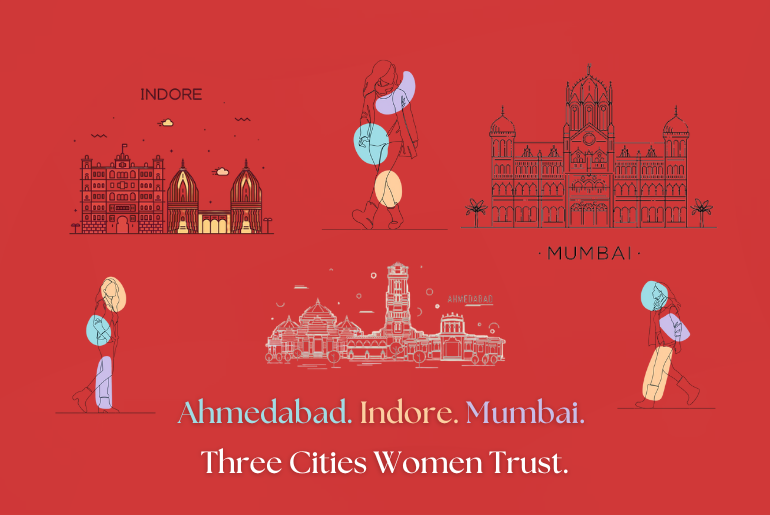
Among all surveyed metros, Ahmedabad, Indore, and Mumbai were rated by respondents as India’s safest cities for women. These rankings are not just a feather in the cap for urban governance but also reflect the lived realities of the women who navigate these streets daily.
82% of urban women across the 20 surveyed cities said they feel safe in their cities during the day. However, the real picture shifts once the sun sets—only 48% report feeling safe at night, while 23% explicitly said they feel unsafe after dark. That day-night disparity is no footnote. It is a critical insight urging urgent changes in urban planning, infrastructure, and public safety systems.
She Shakti Suraksha Survey 2025 highlights fear on public transport
Public transportation remains a grey zone in the safety landscape. Here’s what women had to say:
- Only 44% believe public transportation is women-friendly.
- 70% feel safe using it during the day, but this plunges to 36% at night.
- 31% feel actively unsafe commuting after dark.
- 49% prefer public transport over ride-hailing apps, while 13% feel the opposite.
The insight? Women trust systems over individuals, but only during daylight. Once night falls, systemic gaps begin to show, exposing a lack of confidence in urban safeguards.
Public safety is not one-size-fits-all
The survey reveals that perceptions of safety vary significantly based on education, income, and marital status. A young, unmarried woman living in Mumbai has a vastly different view of safety than a middle-aged homemaker in Indore. This diversity of experience is precisely why intersectionality matters in policy, planning, and infrastructure.
Conclusion: The change must go deeper than the data
At Changeincontent, we believe this survey is more than just numbers. It is a loud reminder that token campaigns once a year are not enough. Safety is not a Women’s Day theme—it is a daily necessity. The She Shakti Suraksha Survey 2025 shows the need for consistent, long-term investment in real safety solutions. It shows the need for change, from better-lit streets and reliable public transport to policies that reflect intersectional realities.
Indore, the cleanest city, ranks among the safest, along with Ahmedabad and Mumbai. And that only strengthens our voice: let us make every town a space where women can breathe freely. Let us say #NoWomensDay until women feel safe, day or night.
Disclaimer: The views expressed in this article are based on the writer’s insights, supported by data and resources available both online and offline, as applicable. Changeincontent.com is committed to promoting inclusivity across all forms of content. We broadly define inclusivity as media, policies, law, and history—encompassing all elements that influence the lives of women and marginalised individuals. Our goal is to promote understanding and advocate for comprehensive inclusivity.