
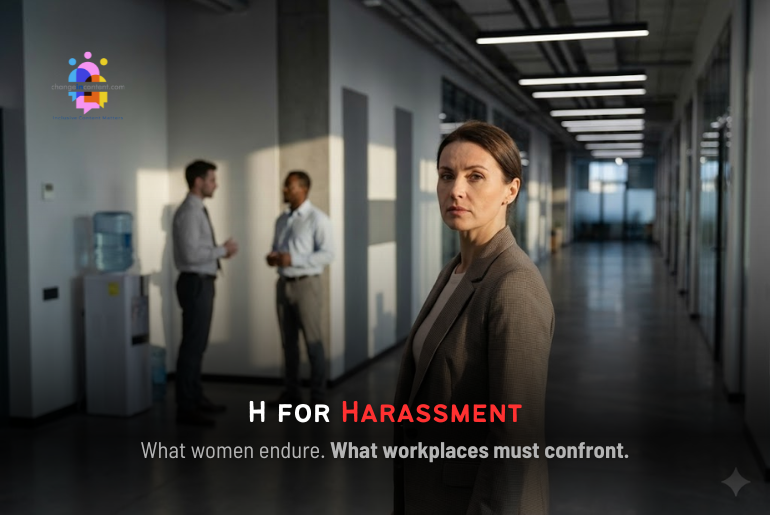
Women continue to face disproportionate levels of adverse social behaviour in the workplace, or in other words, harassment. It can show up as sexism, inappropriate comments, bullying, intimidation, or even retaliation for speaking up. And while it affects all genders, women, especially those in frontline or customer-facing roles, experience it at significantly higher rates.
According to a McKinsey study, 40% of working women report having faced sexual harassment at some point in their careers, and verbal abuse or threats remain the most common form, particularly for women in essential, public-facing jobs.
As we move forward in our A–Z of Women and Work, the next letter, H, will focus on harassment and why addressing it is essential to building safe, truly equitable workplaces.
The many forms of harassment women still face at work
The workplace harassment women face is usually of two primary forms: sexual harassment and gender-based harassment.
1. Sexual harassment
It includes any behaviour of a sexual nature that is unwelcome or makes a woman feel unsafe or uncomfortable. Sometimes, it is direct, like a supervisor hinting that career growth depends on “being friendly.” Another example is a colleague brushing against someone under the pretext of cramped office space.
It can also be verbal, such as persistent flirting, comments about someone’s body or clothing, or sharing sexually suggestive messages in team chats. Even jokes or comments framed as harmless can cross the line when they make someone feel objectified or embarrassed.
Men and women can both face sexual harassment at work, but their experiences are not the same. When men report harassment, people often believe them less and judge them more, which makes it harder for them to speak up. At the same time, research shows that women face sexual harassment much more often, and the most serious cases usually involve male perpetrators. According to the TUC and the Everyday Sexism Project, 52% of women have experienced sexual harassment at work.
2. Gender-based harassment
It includes behaviours that target women specifically because of their gender. Think of a woman constantly being asked to take meeting notes, a team joking that women are too emotional for leadership, or being talked over in meetings until a male colleague repeats the same point and gets credit.
It can also show up as systematic exclusion. For example, not being invited to informal networking spaces, being left out of decision-making groups, or being assigned less challenging work based on assumptions rather than capability.
Both kinds of harassment can heavily impact a woman’s daily experience at work, making her feel watched, doubted, or dismissed. Over time, this affects confidence, career progression, and even the decision to stay in the workforce.
Harassment behind the statistics
Workplace harassment is a global issue that shows up in different forms across industries, roles, and identities.
According to the 2023 Workplace Harassment and Employee Misconduct Insights, 22% of employees reported experiencing or witnessing gender-based harassment at work. This includes behaviours that demean, exclude, or undermine someone purely because of their gender.
The data becomes even more concerning when we look at the experiences of LGBTQ+ employees. Transgender employees, in particular, face disproportionately high levels of hostility, with 83% having experienced or witnessed gender-identity harassment at work. It often includes misgendering, derogatory remarks, intentional exclusion, or threats like aggression that can make the workplace feel unsafe.
A meta-analysis of samples across 24 countries found an average global prevalence of workplace bullying and harassment of 14.6%.
Quid pro quo sexual harassment: Power misused
One of the most damaging forms of harassment is quid pro quo sexual harassment, where someone in a position of authority uses their power to demand sexual favours in exchange for professional benefits. This can look like:
- A supervisor implying that a promotion depends on “being more cooperative.”
- A manager suggested that a raise or better schedule could be “worked out privately.”
- Threats of retaliation, such as demotion, bad ratings, or even termination, may be imposed if a woman does not comply.
Quid pro quo situations often leave the victim feeling cornered or coerced, especially when their job security, income, or reputation is on the line.
Younger women report experiencing more harassment than older women, often because they hold more junior roles and are more vulnerable to power imbalances.
Harassment rates also differ significantly across professions. Among the most women-dominated roles, saleswomen report the highest exposure at 80%, likely due to long hours, customer interaction, and limited oversight. Nurses follow at 45.7%, facing not only internal workplace pressures but also harassment from patients or their families. At the same time, school teachers report 13.3%, and bank employees report 6.1%.
What can workplaces do to reduce harassment?
Workplaces play a significant role in preventing harassment, and the change has to start from the top. Ultimately, harassment is any unwanted behaviour that undermines, humiliates, or intimidates a person, and it should never be dismissed as a misunderstanding or a personality clash. Workplaces have a responsibility to spot it, name it, and stop it.
1. Create clear rules and zero-tolerance policies
Companies need easy-to-read policies that explain what counts as harassment, what employees should do if it happens, and what action the organisation will take. No confusion, no excuses.
2. Build safe reporting channels
Employees should have more than one way to report harassment, like an internal committee, an anonymous reporting form, or a dedicated HR contact. Most importantly, workplaces must protect employees from retaliation when they speak up. The POSH Act (Prevention of Sexual Harassment at Workplace Act, 2013) establishes a clear framework requiring each workplace to establish an Internal Committee to receive and investigate complaints.
3. Train everyone, not just women
Regular training helps employees understand what harassment looks like, how to intervene, and how to support someone who speaks up. This training should also teach managers how to respond quickly and fairly.
4. Encourage a supportive culture
A safe workplace isn’t created by policies alone. Leaders should model respectful behaviour, call out inappropriate comments, and create a work culture where everyone feels valued. Even small acts like addressing sexist jokes can help shift the culture.
The final thoughts
Harassment at work is an everyday challenge that women face, and it won’t end unless organisations take steps to prevent it. Encourage clear policies, safe reporting systems, and visible accountability. Speak up when you see inappropriate behaviour, support colleagues who do the same, and hold leaders to their responsibility to act. Change starts with awareness and consistent action.
ChangeInContent will be back with the next letter in the glossary and another conversation we all need to be having.
Changeincontent perspective
Harassment thrives in silence: the silence of bystanders, the silence of leadership, and the silence forced on women who fear backlash. At Changeincontent, we believe culture shifts when accountability becomes visible and consistent. A safe workplace is not one where nothing bad happens; it is one where the moment something does, the system responds with clarity, urgency, and fairness. Harassment is not inevitable. It is enabled and can therefore be dismantled.
Also Read: 11 years of POSH Act: 5 crucial judgements under the POSH Act.
Disclaimer: The views expressed in this article are based on the writer’s insights, supported by data and resources available both online and offline, as applicable. Changeincontent.com is committed to promoting inclusivity across all forms of content. We broadly define inclusivity as media, policies, law, and history. It encompasses all elements that influence the lives of women and marginalised individuals. Our goal is to promote understanding and advocate for comprehensive inclusivity.
