
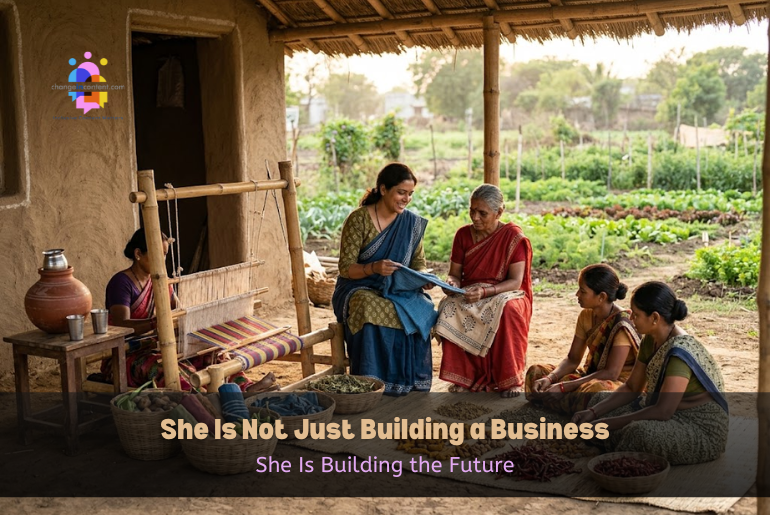
Women entrepreneurship and sustainable development are no longer parallel conversations. They are deeply intertwined forces shaping the future of global economies. A growing body of research between 2002 and 2024 shows that women-led enterprises consistently align with sustainable practices, whether through community-driven models, ethical supply chains, or inclusive employment.
But beyond the data lies a larger story. This article is not just about research findings. It is about understanding what women entrepreneurs bring to the table, why their role in sustainable development is still undervalued, and what must change for them to lead at scale. If you are a founder, policymaker, or corporate leader, this is not theory. It is a roadmap.
What the research really says about women entrepreneurship and sustainable development
A bibliometric analysis published in the Asian Journal of Management (2026) and further supported by research on ScienceDirect highlights a steady rise in global academic interest around women entrepreneurship and sustainability.
Key insights from the research:
- Research publications on this topic have grown significantly post-2015
- Strong thematic links exist between women entrepreneurship, social impact, and environmental sustainability
- Developing economies, including India, are emerging as critical hubs for women-led sustainable enterprises
What stands out is not just the growth in research. It is the consistency of the findings. Across geographies, women entrepreneurs tend to:
- Reinvest in communities
- Prioritise long-term stability over short-term gains
- Build businesses that solve real, local problems
It would be incorrect to see this as a coincidence. It is a pattern.
Why women entrepreneurs are naturally aligned with sustainability
There is a reason why women entrepreneurship and sustainable development intersect so strongly.
Women-led businesses often emerge from lived realities. They are built to solve problems that are immediate, visible, and personal. That changes the decision-making process.
Instead of chasing scale at any cost, many women founders focus on:
- Resource efficiency
- Ethical sourcing
- Community employment
- Financial prudence
In rural India, for instance, women-led enterprises in agriculture and handicrafts often adopt circular economy practices without labelling them as such. They work on minimising waste, reusing resources, and ensuring that value chains remain local. And they do it all without any special mention of sustainability. It is a natural instinctive practice.
Globally, studies also show that women are more likely to invest in education, health, and family welfare, creating a multiplier effect that extends beyond business.
Sustainability, in this context, is not a strategy, but an instinct.
The barriers that continue to hold women entrepreneurs back
Despite clear evidence, the ecosystem does not treat women entrepreneurs equally. The gaps are structural:
Access to capital
Women receive a disproportionately smaller share of venture funding globally. In India, access to formal credit remains a challenge despite improvements.
Lack of networks
Access often drives business growth. But the underrepresentation of women in decision-making and investment circles is concerning.
Societal expectations
Entrepreneurship demands risk. We often expect women to prioritise stability, family roles, and “safe” career paths.
Policy gaps
While schemes exist, awareness and accessibility remain inconsistent. We explored some of these challenges and solutions here.
The reality is simple. Women are not underperforming. They are under-supported.
What women must know before choosing entrepreneurship
If more women are to step into entrepreneurship, the conversation needs to shift from inspiration to preparation.
- Start with problem clarity: The strongest businesses solve clear problems. Women founders often have a natural advantage here. Use it.
- Build financial literacy early: Understanding cash flow, credit, and investment is not optional. It is foundational.
- Leverage community networks: Self-help groups, digital platforms, and local ecosystems can become powerful launchpads.
- Think beyond scale narratives: Not every business needs to be a unicorn. Sustainability and profitability can coexist without hyper-growth.
- Invest in digital skills: From marketing to operations, digital capability is no longer optional.
Remember that entrepreneurship is not just about starting, but about sustaining.
What organisations and policymakers must do now?
If the research on women entrepreneurship and sustainable development is to translate into real impact, systems must evolve.
Organisations should:
- Build supplier diversity programs that include women-led businesses
- Offer mentorship and incubation support
- Create procurement policies that favour inclusive sourcing
Policymakers must:
- Simplify access to credit and reduce collateral barriers
- Invest in skill development at the grassroots level
- Strengthen awareness around existing schemes
Investors should:
- Move beyond bias in funding decisions
- Recognise long-term value over short-term returns
- Back businesses that prioritise impact alongside profit
The ecosystem does not need more intent. It needs better execution.
The future of women entrepreneurship and sustainable development
Technology is not the only factor that will define the next decade. Resilience will play an equally important role in defining the next decade.
Climate change, economic inequality, and social fragmentation are forcing businesses to rethink how they operate. Women entrepreneurs are already building models that respond to these challenges.
From climate-resilient agriculture to ethical fashion, from digital micro-enterprises to community-led services, women are quietly building the blueprint for sustainable economies.
The question is not whether they can lead. It is whether we are ready to follow that model.
The Changeincontent perspective
At Changeincontent, we see women entrepreneurship and sustainable development not as a niche topic, but as a central pillar of economic progress.
The research validates what we have been observing across stories, policies, and grassroots movements.
Women do not just participate in economies. They transform them.
But transformation at scale requires visibility, access, and consistent support.
If organisations, governments, and investors align their actions with this reality, the impact will not be incremental. It will be exponential.
Conclusion: Women entrepreneurship and sustainable development are the future.
The evidence is clear. Stories are real. And the impact is measurable.
Women entrepreneurs are building businesses that are resilient, inclusive, and sustainable by design. And yet, they continue to operate in systems that were not built for them.
Changing that is not just a matter of equity. It is a matter of economic intelligence. Because the future will not belong to the fastest-growing businesses, it will belong to the most sustainable ones. And in that future, women are already leading.
Disclaimer: The views expressed in this article are based on the writer’s insights, supported by data and resources available both online and offline, as applicable. Changeincontent.com is committed to promoting inclusivity across all forms of content. We broadly define inclusivity in terms of media, policies, law, and history. It encompasses all elements that influence the lives of women and marginalised individuals. Our goal is to promote understanding and advocate for comprehensive inclusivity.
