
The Short Read
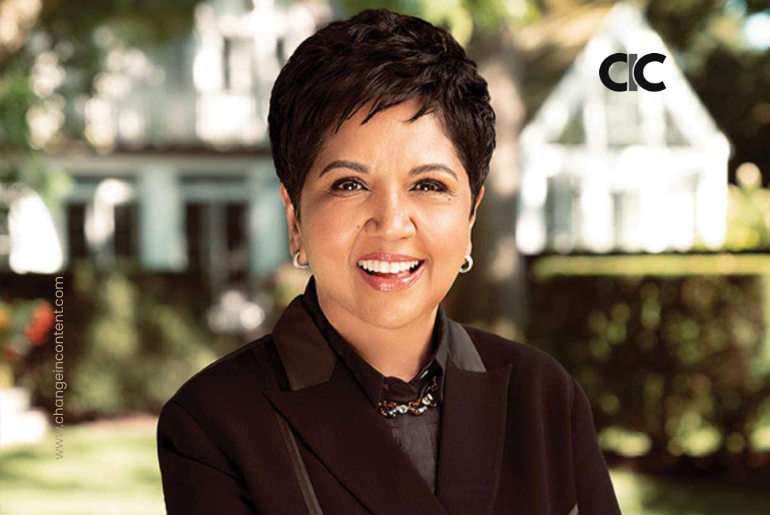
- Indra Nooyi’s recent Hoover Institution conversation with Condoleezza Rice triggered debate after she credited the US system for enabling her rise to PepsiCo’s top job. The Hoover page describes the interview as a conversation on her journey from immigrating to the US to leading PepsiCo.
- Primeinfobase data reported in March 2026 showed that 119 of 2,285 NSE-listed companies, or about 5%, had a woman MD or CEO. Among the 130 women MDs/CEOs, 69% belonged to promoter groups.
- The number is higher than a few years ago, but the rise has not yet created a broad professional pipeline of women CEOs in India.
- India ranked 131st out of 148 countries in the World Economic Forum’s Global Gender Gap Report 2025. The WEF index tracks gender parity across economic participation, education, health and political empowerment.
- The useful question after Nooyi’s comment is not whether Indian women are capable. They have already answered that. The question is whether Indian companies are building enough routes for women to reach the very top without inheritance, exceptional luck or heroic endurance.
Women CEOs in India are rising, but the climb is still too selective
A comment by Indra Nooyi rarely lands quietly. This time, it came with a small storm.
In a Hoover Institution conversation with Condoleezza Rice, the former PepsiCo chair and CEO reflected on her journey from India to the US and the conditions that helped her lead one of the world’s most recognised companies. The Hoover Institution described the interview as a discussion on immigration, business leadership, innovation and Nooyi’s “Only in America” story.
The remark that travelled widely was her view that she could not have become a global company CEO in India in the way she did in the US. Some heard it as honest, while some heard it as unfair to the women who have built careers in India despite difficult odds. Many heard both. That is why this conversation around women CEOs in India feels worth having with a little more calm.
Nooyi’s own story is extraordinary. She studied in India, moved to Yale, built her corporate career in the US, became PepsiCo’s CEO in 2006, and later chaired the company. Hoover’s profile notes that PepsiCo’s net revenue grew by more than 80% during her tenure, with a total shareholder return of 162%.
India also has women leaders who have built powerful companies, institutions and brands. The point is not to flatten either story. In reality, the point is to ask why the Indian CEO pipeline still produces too few women at scale.
The 5% figure says more than it first seems
According to Primeinfobase data reported in March 2026, only 119 of 2,285 NSE-listed companies had a woman MD or CEO. That works out to roughly 5% of listed companies. The report also said there were 130 women MDs/CEOs across those 119 companies, and about 69% of them belonged to promoter groups. That last detail changes the reading.
Promoter-led women CEOs are important. Many of them run serious businesses and carry real accountability. Family business leadership should not be dismissed. But when a large share of women at the top comes from promoter backgrounds, it suggests that the professional corporate ladder is still not producing enough women CEOs.
The question is not whether India has women at the top. It does. The question is how many routes lead there.
One route is family ownership. Another is entrepreneurship. Another is professional corporate progression. A healthy leadership ecosystem needs all three. India’s listed company data suggest the third route still needs a stronger bridge.
This fits with an older concern in corporate India: women enter the workforce, gain qualifications, manage teams, and then the pipeline begins to thin. A previous Change in Content article on Women CEOs in India and the Primeinfobase report looked at this “leaky bucket” problem, where women’s representation falls sharply between the workforce and the top executive role.
The boardroom has opened faster than the CEO’s office
There has been visible progress in women’s board representation in India, partly because regulations have pushed companies to appoint women directors. Primeinfobase’s 2025 tables showed that women held 27.97% of independent directorships as of 6 March 2025, up from 21.69% in 2020.
That is a meaningful shift. But board presence and executive power are different. Independent directors oversee, question and guide. CEOs run the business. They own performance, people, capital allocation, strategy, investor confidence and crisis decisions.
The same Primeinfobase table showed that women held only 9.94% of executive directorships as of 6 March 2025. Women MD/CEO positions stood at 103 companies, or 4.83% of NSE main-board listed companies at that time.
The 2026 figure of 119 companies shows progress. It also shows how slow the executive climb remains.
That is where India’s leadership debate needs more precision. Appointing women to boards is valuable. Moving more women into operating, P&L and CEO-track roles is the harder assignment.
Why Indra Nooyi’s comment touched a nerve
Nooyi’s remark touched a nerve because Indian working women live with two truths at the same time. They know India can produce world-class women leaders. They also know how often women are asked to prove seriousness in ways men rarely have to.
- A man travelling late for work may be seen as committed. But a woman doing the same may have to negotiate safety, family anxiety and reputation.
- A man becoming a father may be read as a sign of stability. But a woman becoming a mother may be quietly moved away from high-growth assignments.
- A man taking a tough posting may be viewed as ambitious. A woman may be asked how she will “manage”.
These small filters become large career outcomes.
The CEO pipeline is rarely built at the time of the CEO appointment. It begins much earlier: first management role, first profit centre, first international assignment, first crisis mandate, first board exposure, first sponsor who will argue for the woman when she is not in the room.
Our earlier piece on more women in managerial roles and the leadership gap explored this gap between managerial representation and senior decision-making power. The same issue shows up in the CEO conversation. Women cannot reach the top in large numbers if they are not given enough line, risk, and revenue roles, as well as succession visibility.
India’s global gender rank keeps the debate grounded
India’s wider gender parity numbers also explain why Nooyi’s remark travelled so quickly.
The World Economic Forum’s Global Gender Gap Report 2025 benchmarks gender parity across four areas: Economic Participation and Opportunity, Educational Attainment, Health and Survival, and Political Empowerment. India ranked 131st out of 148 countries in the 2025 index, with only a modest absolute improvement despite slipping in rank.
That does not mean nothing is improving. India has seen progress in women’s labour force participation, entrepreneurship, education, and corporate representation. But leadership outcomes remain narrow.
The US comparison is imperfect, but useful. Women led 55 Fortune 500 companies in 2025, or about 11% of the list. That is still a small number for the world’s largest economy, yet it is about twice India’s current share of listed-company CEOs.
So, the Indian question should not be defensive. It should be practical. What would it take for India to move from a few celebrated women CEOs to a wider, repeatable leadership system?
The promoter-led pattern deserves a mature reading
The promoter-led pattern is easy to misread.
Some may say promoter women have an easier path. That can be true in terms of access. But many promoter women also face scepticism, family politics, inheritance expectations and public scrutiny. Their leadership is not automatically symbolic.
The real issue lies elsewhere: if most women CEOs come from promoter families, what happens to the brilliant professional woman who starts as a trainee, analyst, engineer, brand manager, plant head, lawyer, banker, or product lead?
- Does she get the same sponsorship as her male peer?
- Does she get a P&L role early enough?
- Is she considered for business-critical assignments?
- Does the organisation protect her career during motherhood or caregiving phases?
- Does the board ask for diverse succession slates?
- Are search firms pushed to look harder?
- Are women being developed for CEO jobs or placed mainly in support functions?
The leadership gap for women at work rarely appears suddenly. It gathers quietly across years of missed assignments, cautious managers and narrow definitions of executive presence.
What companies can do beyond celebrating women CEOs
Let us not limit the answer to more panels, awards and annual lists. Those have their place, but companies need more stubborn systems.
- First, boards should ask for gender-diverse succession plans for CEO-track and business-head roles. A succession slate with no women should require explanation, not quiet acceptance.
- Second, companies should move more women into profit-and-loss leadership. CEOs often come from roles that own revenue, operations and business risk. If women are clustered in HR, communications, legal or support functions, the CEO path remains thin.
- Third, senior leaders should sponsor women, not simply mentor them. Mentorship gives advice. Sponsorship opens rooms, backs decisions and attaches a senior person’s credibility to a woman’s rise.
- Fourth, organisations should protect career momentum around childbirth and caregiving. A strong leadership pipeline cannot afford to lose women in their thirties and forties, when many are ready for deeper responsibility.
- Fifth, boards should track exits of senior women. When women leave before executive roles, the reason is rarely captured honestly enough.
- Sixth, companies should stop treating women’s leadership as a DEI side project. It belongs in talent strategy, risk strategy and growth planning.
That is also where global evidence on women CEOs becomes useful. Our earlier piece on the CWDI report and women CEOs looked at how companies led by women can influence representation across boards and senior teams. Leadership at the top changes what organisations normalise below.
The Change in Content view
It would be unfair and incorrect to treat Indra Nooyi’s comment as an insult to Indian women. We should rather treat it as a mirror that made people uncomfortable.
India has women who can run global businesses. We also have women already doing difficult leadership work. India also has a corporate pipeline that still asks too much from too few women before allowing them to reach the corner office.
The progress is visible, but the pace is not good enough.
The next phase has to move beyond admiration. We need more women in CEO-feeder roles, more women with P&L authority, stronger succession planning, better sponsor networks, fairer support for motherhood, and boards that ask sharper questions about who gets groomed for power.
A country that wants to lead the global economy cannot afford to leave women’s leadership to chance, family ownership or exceptional individual grit.
Indra Nooyi’s story became possible in one system. India now has to build a system where many more women can say the same about themselves.
FAQs
Q: How many women CEOs are there in India’s listed companies?
A: Primeinfobase data reported in March 2026 said 119 of 2,285 NSE-listed companies had a woman MD or CEO, representing about 5% of listed companies. There were 130 women MDs/CEOs across those companies.
Q: Why are many women CEOs in India promoter-led?
A: A large share of women MDs/CEOs in India’s listed companies belong to promoter groups. This suggests that family ownership remains an important route to the top, while the professional corporate pipeline for women CEOs is still limited.
Q: What did Indra Nooyi say that triggered the debate?
A: In a Hoover Institution conversation with Condoleezza Rice, Nooyi reflected on the US system and her journey from India to leading PepsiCo. Reports of her remarks about not becoming a CEO in India triggered debate about gender, meritocracy and leadership opportunity.
Q: Why does India’s gender parity rank matter in this debate?
A: India ranked 131st out of 148 countries in the World Economic Forum’s Global Gender Gap Report 2025. The index tracks gender parity across economic participation, education, health and political empowerment, making it relevant to leadership access.
Editorial Note and Sources
This DEI Insights article by Change in Content uses publicly available information from the Hoover Institution, Primeinfobase/PRIME Database reporting, the World Economic Forum and Fortune-linked leadership data. The Forbes India article was used only as topic inspiration and has not been cited. The article does not assess individual CEOs or companies; it focuses on the broader leadership pipeline for women in India.
Sources used:
- Hoover Institution interview page on Indra Nooyi and Condoleezza Rice.
- Primeinfobase / PRIME Database reporting on women MDs and CEOs in Indian listed companies.
- Primeinfobase 2025 tables on women directors, executive directorships and MD/CEO representation.
- World Economic Forum, Global Gender Gap Report 2025 overview.
- Fortune 500 women CEO data for comparison.
