
The Short Read
- From 1 July 2026, Anda Filip of Romania becomes the 10th Secretary General of the Inter-Parliamentary Union, the first woman and first Eastern European to hold the post in the IPU’s 137-year history.
- She was elected at the 152nd IPU Assembly in Istanbul in April 2026 and succeeds Martin Chungong of Cameroon, whose final term ended on 30 June 2026.
- The IPU was founded in 1889 and describes itself as the global organisation of national parliaments, working on peace, democracy and sustainable development.
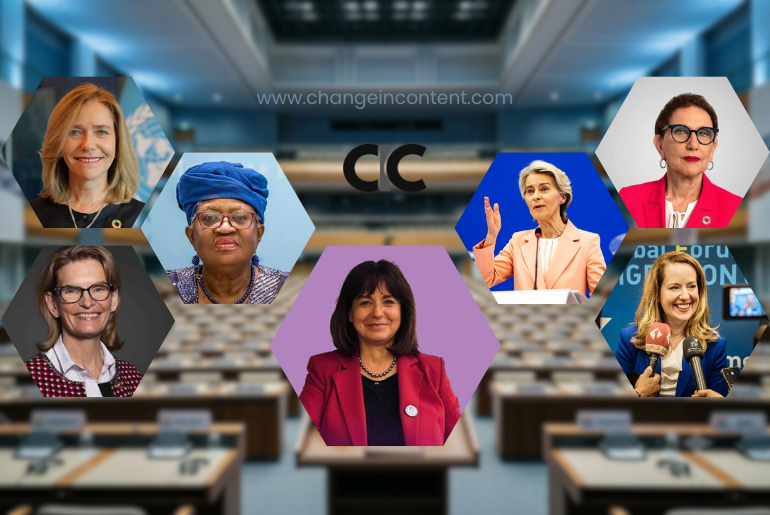
- Filip’s election comes as women are leading several global institutions for the first time, including the WTO, European Commission, ITU, IOM, WMO and UN Trade and Development.
- The bigger story is no longer only representation. It is about women shaping the rules, negotiations, technology, trade, migration and climate systems that affect public life across countries.
Women’s leadership in global institutions: A door opens in Geneva
On 1 July 2026, a door opens inside a 137-year-old institution.
Anda Filip, a Romanian diplomat and long-serving IPU leader, takes office as Secretary General of the Inter-Parliamentary Union. She is the first woman to lead the IPU Secretariat since the organisation was founded in 1889. She is also the first Eastern European to hold the post.
For any institution, a first appointment carries symbolic weight. For the IPU, the symbolism is unusually direct. This is an organisation built around parliaments, democracy and representation. It works with national parliaments, tracks women’s participation in politics, supports stronger democratic institutions and advocates for gender-balanced public life.
Filip’s election, therefore, lands with a certain neatness. The institution that has long asked parliaments to become more representative now has a woman managing its own Secretariat for the first time.
The moment is historic. It is also practical.
She takes charge as the IPU prepares its 2027–2031 strategy, developed after months of consultation amid geopolitical tension and pressure on multilateral cooperation. That makes this appointment more than just a leadership announcement. It raises a broader question: Who gets to guide global institutions as the world renegotiates trust, rules, and cooperation?
Women’s leadership in global institutions is moving from exception to evidence
The story of women’s leadership in global institutions is often told through isolated firsts. First woman here, first woman there. First woman after 100 years, first woman after 150 years.
Those firsts still matter. They tell us how long the power stayed narrow. Yet something more interesting is now visible. Women are leading institutions that shape the everyday architecture of global life.
Dr Ngozi Okonjo-Iweala is the first woman and first African to serve as Director-General of the World Trade Organisation. She took office in 2021 and began a second four-year term in September 2025 after reappointment. The WTO sits at the centre of global trade rules and economic cooperation.
Ursula von der Leyen became the first woman President of the European Commission in 2019 and was elected for a second mandate in 2024. The Commission’s work spans regulation, competitiveness, climate, digital policy, security, and the European Union’s global role.
Doreen Bogdan-Martin became the first woman to head the International Telecommunication Union, taking office as Secretary-General in January 2023. ITU’s work on connectivity and digital inclusion now sits close to education, work, health access and public participation.
Amy Pope became the first woman Director General of the International Organisation for Migration in its 72-year history. Her mandate sits at the heart of one of the defining questions of this century: How countries manage migration with dignity, safety and cooperation.
Celeste Saulo became the first female and first South American Secretary-General of the World Meteorological Organisation, with her term beginning in January 2024. WMO sits at the centre of climate, weather, water and early warning systems.
Rebeca Grynspan became the first woman to lead UN Trade and Development (formerly UNCTAD) in its 60-year history. That role brings trade, development, finance and inequality into the same room.
Anda Filip now joins that wider pattern through the IPU.
These are not ceremonial spaces. These institutions set standards, convene governments, influence treaties, negotiate rules, shape development priorities and decide how urgent problems are framed.
The presence of women at the top changes who carries authority in those rooms.
Why this moment feels different
Women have been visible in global public life for decades. Some have led governments, courts, ministries, corporations and civil society movements. The current shift feels different because it is happening inside institutions that translate power into systems.
Trade rules. Migration frameworks. Digital access. Climate monitoring. Parliamentary cooperation. Development priorities. Regional regulation. These are areas where leadership is often technical, diplomatic and slow-moving. They rarely produce viral moments. Yet they shape how countries behave.
That is why the IPU announcement deserves more than a congratulatory paragraph.
Filip’s election tells us that women’s leadership is entering institutions where influence is built through negotiation, member-state trust, long institutional memory and the ability to hold complex coalitions together.
The same is true for Okonjo-Iweala at the WTO, von der Leyen at the European Commission, Bogdan-Martin at the ITU, Pope at the IOM, Saulo at the WMO, and Grynspan at the UN Trade and Development. Their roles involve more than visibility. They involve agenda-setting.
For Change in Content readers, this connects with a wider leadership conversation. Our earlier piece on women leaders in 2026 redefining leadership explored how women leaders are increasingly judged on performance in difficult environments rather than on novelty. This global institutional moment strengthens that point.
Representation is the beginning, power is the test
The IPU has long argued that women’s political participation should go beyond entry into institutions. Its own article on Filip’s election says that equal participation must include power, safe participation, leadership roles, and the ability to shape the rules, priorities, and culture of public life. That sentence is important because it shifts the debate.
Women entering the room is one measure. Women chairing the room, negotiating the agenda and designing the next institutional strategy is another.
It is also relevant to workplaces beyond diplomacy. Organisations often celebrate women’s representation while decision-making remains concentrated elsewhere. The language changes faster than the power map.
Our article on workplace experience and leadership in 2026 made a related point: leadership today is being tested by trust, culture and everyday systems. The global version of that test is playing out inside institutions that need legitimacy at a time of public scepticism.
Women at the top of global institutions will not automatically make those institutions fairer, faster or more trusted. No individual appointment can carry that promise. The point is more grounded: when institutions diversify their leadership, they widen the experience and judgement brought into decisions that affect millions.
The Change in Content view on women’s leadership in global institutions
Anda Filip’s election to lead the IPU Secretariat is a historic first. The larger story is that she is not alone.
Across trade, migration, digital governance, climate, development, and parliamentary cooperation, women are now leading institutions that once operated under long stretches of male-only authority.
It does not mean the work is over. Firsts can become trophies if institutions stop at the announcement. The real progress will show up when women’s leadership becomes normal enough to stop being surprising, and strong enough to change who is prepared, selected, trusted and followed.
For now, this is a moment worth marking. A woman will lead the Secretariat of the world’s oldest multilateral political organisation. Other women are already leading institutions that shape trade, technology, migration, climate and development.
The old photograph of global power is being updated. Slowly, unevenly, but visibly.
Editorial Note and Sources
This DEI Leaders article by Change in Content is based on official public information from the Inter-Parliamentary Union, World Trade Organisation, European Commission, International Telecommunication Union, International Organisation for Migration, World Meteorological Organisation, and UN Trade and Development. The article uses the IPU news item as the primary trigger, but expands the analysis to the wider pattern of women leading major global institutions for the first time.
Sources used:
- IPU on Anda Filip’s election and the wider shift in women’s leadership.
- IPU on Anda Filip taking office and the 2027–2031 strategy.
- IPU background on its role and founding.
- WTO profile of Dr Ngozi Okonjo-Iweala.
- European Commission profile of Ursula von der Leyen.
- ITU profile of Doreen Bogdan-Martin. IOM official announcement on Amy Pope.
- WMO profile of Celeste Saulo.
- UN Trade and Development profile of Rebeca Grynspan.
