
The Short Read
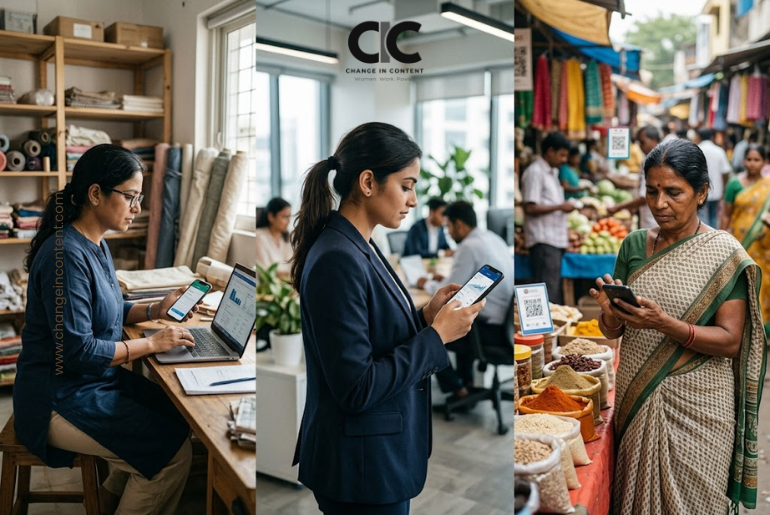
- The DBS Bank India Women and Finance Study is the second report in the bank’s Women and Finance series, with Deloitte Touche Tohmatsu India LLP as research partner. It surveyed 1,342 women across North, South, East and West India. The sample included female entrepreneurs, HNW women and rural women earners.
- 84% of female entrepreneurs surveyed use digital payment tools. UPI usage stands at 72% among female entrepreneurs, 77% among HNW women and 54% among rural women earners.
- Among female entrepreneurs, 38% use loan and credit platforms and 29% use brokerage platforms. Among HNW women surveyed, 28% use brokerage platforms for investments.
- Credit card usage is also strong in urban cohorts. 50% of female entrepreneurs surveyed use personal credit cards frequently, while 53% of HNW women do, making credit cards the second-most-used payment method after UPI for that segment.
- The study says trust, convenience and accessibility are key drivers of digital adoption.
DBS Bank India Women and Finance Study puts the spotlight on digital behaviour
The new DBS Bank India Women and Finance Study clearly shows that women across different income groups and life contexts are using digital financial tools with growing confidence. The study, titled The Digital Opportunity: Access, Adoption and Trust, was released ahead of MSME Day 2026 and builds on the bank’s earlier Women and Finance report. It draws from 1,342 women across India, with respondents spread across North (23%), South (36%), East (14%) and West (27%) India.
The interesting part about the sample is that it does not focus on only one type of woman user. It brings together female entrepreneurs, high-net-worth women and rural women earners. That gives the findings a broader social spread and helps show how digital finance is being used across very different financial realities.
The headline number is the one likely to travel the fastest: 84% of female entrepreneurs surveyed use digital payment tools. UPI has become deeply familiar too, with usage at 72% among female entrepreneurs, 77% among HNW women, and 54% among rural women earners in the study sample.
That is a strong sign of how digital finance has entered women’s daily money behaviour. It also shows the gap that still remains. Rural women earners are clearly part of the digital payments story, but they are still behind the two urban cohorts in this sample.
The entrepreneurs in the Women and Finance study look especially active
The most interesting finding in the DBS Bank India Women and Finance Study may be the depth of usage among female entrepreneurs.
The report says female entrepreneurs are the most active users of digital financial tools among all cohorts surveyed. Beyond payments, 38% use loan and credit platforms, while 29% use brokerage platforms. That points to the fact that women are not merely receiving and making payments. Many women are also borrowing, investing and using digital tools to run and grow businesses.
DBS Bank India’s own comment on the study also frames digital tools as part of business management, spanning payments, credit, payroll, customer acquisition and future planning.
This connects neatly with some of the issues we have been following on Change in Content. Women’s financial participation becomes more meaningful when it moves beyond basic access and enters business capability. That is where questions about complex business loans for women entrepreneurs and the quality of financial support become important.
A woman using a digital payment tool is one sign of access. A woman using digital finance to run a business, seek credit and manage growth is a stronger sign of financial agency.
Investment behaviour is becoming more visible, too
The study also gives a useful glimpse into digital investing behaviour.
Among HNW women surveyed, 28% use brokerage platforms for their investments. The report says this reflects a growing comfort with digital investment tools, supported by convenience and accessibility.
It is an important shift. People often treat women as cautious financial participants in public narratives. The findings suggest something more layered. Women are using digital tools for payments, but they are also entering credit and investment spaces with greater familiarity.
That said, there is still space for deeper reporting and more public awareness here. Using a platform is one step. Understanding fees, risk, suitability, fraud, product complexity and grievance redressal is another. India’s broader financial inclusion journey will be strengthened when women’s use is supported by education and clearer consumer protection pathways.
Credit cards are seeing solid traction in urban groups
Another useful section in the DBS Bank India Women and Finance Study is on credit card usage.
Among female entrepreneurs surveyed, 50% report frequently using personal credit cards. That includes 19% who use a credit card daily and 31% who use it a few times a week. Among HNW women, 53% use credit cards, making them the second most-used payment method after UPI.
The study also says travel-related rewards are the most preferred credit card benefit among both female entrepreneurs and HNW women, with 65% of respondents citing them as their top choice. This preference rises to 70% among HNW women aged 25–30 and 68% among female entrepreneurs aged 26–35.
This tells us something beyond consumer preference. Younger women in the study appear comfortable navigating products that bundle finance with lifestyle benefits. That suggests a financial user who is informed, aspirational and used to comparing value.
Spending patterns show three different financial worlds
One of the more readable parts of the study is its breakdown of spending patterns across the three groups.
Among female entrepreneurs, the biggest spending areas are staff salaries and contractor payments (65%). Marketing, branding, content creation and customer acquisition (53%) follow it. Then comes software, technology tools and platforms (37%). That gives us a clear picture of women building businesses with both people and growth in mind.
Among rural women earners, the spending pattern is more rooted in day-to-day business operations: 82% spend on raw materials, 47% on rent and 35% on transportation to market. That is where digital adoption must be read alongside the practical economy of work. For many rural women, finance is tied directly to business survival and mobility.
Among HNW women, spending is more diversified, with groceries and daily essentials (50%), utility bills (32%), healthcare and medical expenses (28%), and travel and vacations (27%) leading the list.
Taken together, these three patterns show that women are not one financial category. The digital finance conversation has to account for different levels of wealth, business exposure, geography and daily responsibility.
That broader lens also complements our earlier reporting on women-led banking in India and financial access, where the central concern was not only access but also how financial services actually meet women where they are.
What deserves attention beyond the positive headline
The findings deserve to be welcomed. They show progress and behaviour that is active, practical and increasingly digital. Still, this is not the point where the conversation should slow down.
The study itself says it explores awareness of safe digital banking practices across segments. That is a reminder of what the next phase should include: more education, more training, and stronger awareness of safe use. India’s digital finance story is growing quickly. The pressure now is to make that growth more secure and more confident for women across locations and income groups.
That includes:
- clearer digital safety education
- better reporting channels for fraud or misuse
- stronger financial literacy around investing and credit
- products designed for women’s real financial journeys, not generic assumptions
- more visibility into what holds back the groups that are still under-adopting
When credit expands, the quality of borrowing also has to be watched carefully. That is where our reporting on the exploitation of women through microfinance debt traps remains relevant. More access should lead to more confidence and better options, not new pressure points.
Women and Finance study: The Change in Content view
The study gives us a useful and optimistic snapshot of women’s engagement with digital finance in India.
The numbers are especially strong among female entrepreneurs. HNW women show clear confidence in UPI, cards and digital investing. Rural women earners are participating too, with digital usage that deserves more policy and product attention.
That is good news. It is also a reminder that growth in adoption should be matched by growth in support. Financial inclusion strengthens when women can use tools safely, understand products fully, report problems easily, and move from access to real financial control.
The study gives us a promising picture. The next chapter depends on how banks, platforms, policymakers and educators respond to it.
Editorial Note and Sources
This DEI Insights article by Change in Content is an editorial analysis of a study released by DBS Bank India, conducted in partnership with Deloitte Touche Tohmatsu India LLP. The article does not present independent survey findings. All numerical findings cited in the article are drawn from DBS Bank India’s official newsroom release on the second report in its Women and Finance series, The Digital Opportunity: Access, Adoption and Trust. Our role here is to interpret the published findings, place them within the wider women-and-work conversation, and highlight areas where greater awareness, education, and safer use can support stronger financial participation.
Source used: DBS Bank India newsroom release, DBS Bank India’s ‘Women and Finance’ study: The Digital Opportunity.
