
The Brief
- The 30% goal covers admissions at JIM Uncha Majra, Manesar, by academic year 2028–29.
- Eligible women students can receive tuition and stipend support, subject to scheme conditions.
- A dedicated women’s hostel is planned.
- Earlier initiatives have brought women into assembly and quality-control roles.
- Training intake and subsequent employment are separate outcomes.
Maruti Suzuki’s latest JIM announcement
Manufacturing careers begin well before someone steps onto a production line. For a young woman considering technical training, the immediate questions can be more practical: what will the course cost, where will she stay, and can she afford the time spent learning? Maruti Suzuki’s latest JIM announcement addresses some of those questions alongside a larger enrolment target.
The company wants women to account for 30% of admissions at its Japan-India Institute for Manufacturing in Uncha Majra, Manesar, by academic year 2028–29. Its stated baseline is approximately 5% in 2025–26. The announcement, dated 21 September 2026, sets a direction for access to training; it does not promise that women will hold 30% of Maruti Suzuki’s factory jobs.
Under the scheme, eligible women students receive a full tuition-fee waiver and ₹3,000 a month during training at JIM, subject to applicable conditions. A separate applicable stipend continues during on-the-job training. The company also plans a dedicated women’s hostel and greater representation of women among faculty and support staff.
For a prospective trainee, those provisions deserve as much attention as the percentage. Removing tuition costs can make a course easier to consider. Accommodation, when available, can widen the range of places from which students can realistically attend. Neither measure settles every family’s circumstances, but both give an invitation to study something tangible behind it.
Learning the work, then entering the workplace
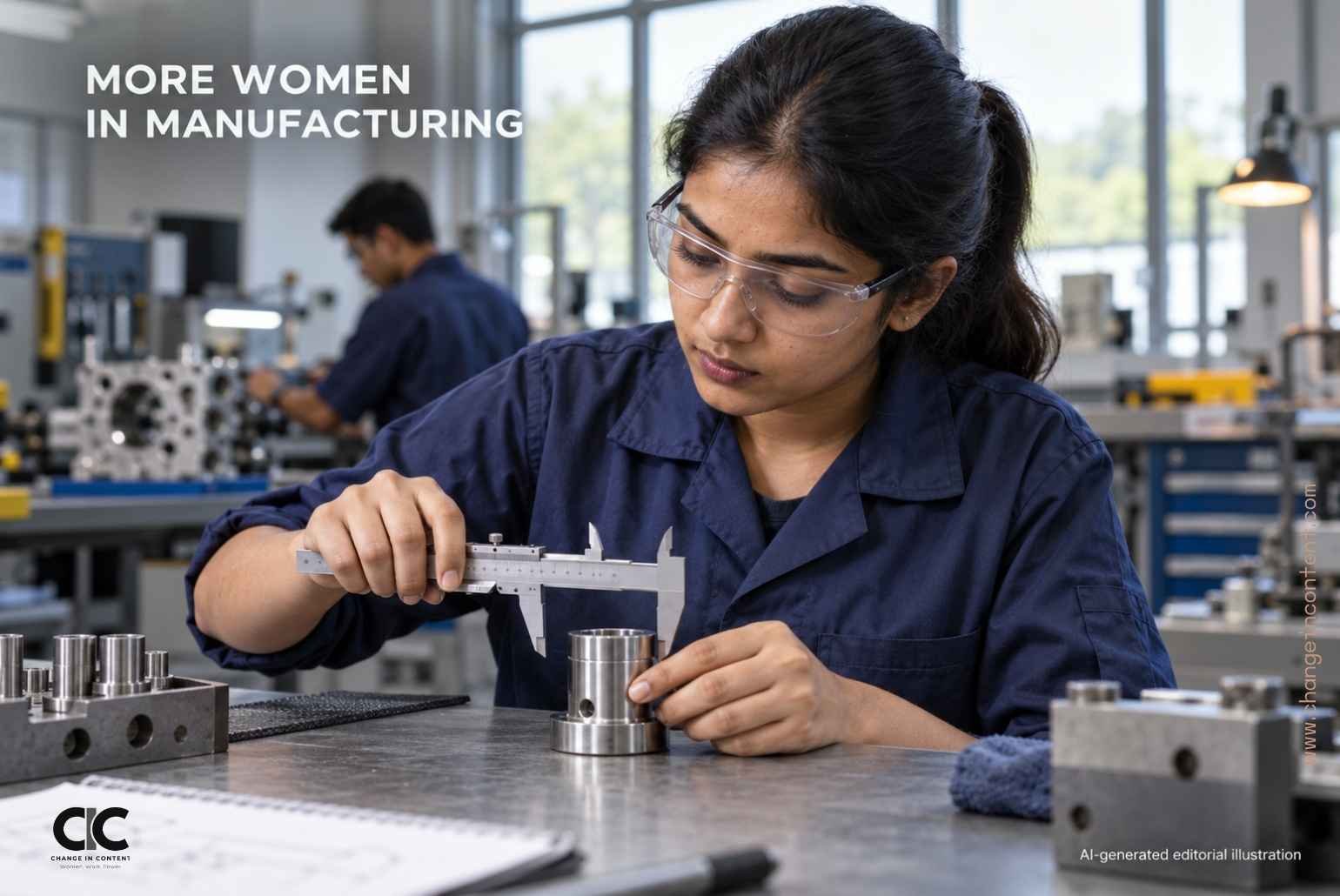
JIM’s training covers the technical processes behind making and maintaining vehicles. Maruti Suzuki’s programme description lists trades including fitting, electrical work, welding and mechatronics. Training facilities include miniature vehicle and engine assembly lines, a safety laboratory, and welding and painting simulators. Classroom learning is combined with paid industrial experience.
That practical grounding is worth emphasising. A manufacturing opportunity should give a trainee access to equipment, instruction and recognised skills she can use. Encouragement alone cannot teach someone to diagnose a fault or carry out a quality check.
The latest announcement follows Maruti Suzuki’s earlier shop-floor inclusion measures. In April 2026, the company reported expanding women’s recruitment in vehicle manufacturing and engine and transmission roles at Gurugram and Manesar over the previous two years. It said women in these roles received the same on-the-job training and skill-development opportunities as men.
Its April update also described restrooms, changing facilities, a crèche, evening-shift security arrangements and staff sensitisation. These are company-reported measures, rather than findings from an independent workplace assessment. They nevertheless show the range of practical arrangements that must accompany recruitment.
There is a longer training history behind this effort. Maruti Suzuki announced its first JIM in Mehsana in November 2016, with an opening planned for August 2017. The original curriculum combined technical trades with Japanese manufacturing practices, including continuous improvement and quality circles. Today’s women’s enrolment goal adds a specific participation commitment to that broader skills programme.
The Change Ahead
Maruti Suzuki’s approach offers other manufacturers a useful starting point: examine the decisions a woman must make before she can accept an opportunity. Fees, accommodation and the learning environment belong in that conversation alongside recruitment outreach.
The next useful account of this initiative would follow trainees through completion, placement and their first year of employment. Publishing those outcomes, including the kinds of roles and earnings involved, would help prospective students judge the programme and help employers improve it. This is also central to helping women stay in work: support needs to continue as education becomes employment.
A larger intake would be a welcome beginning. The lasting achievement would be women using that training to build careers they have reason, and the means, to continue.
Editorial Note
This report draws on Maruti Suzuki’s official announcements and programme information. Operational measures are attributed to the company; Change in Content has not independently assessed campus or workplace conditions. The enrolment figure is a future target, hostel provision is planned, and financial assistance is subject to eligibility and applicable terms. Editorial observations concern access to training and subsequent career outcomes.
Sources
- Maruti Suzuki: Manesar JIM female intake target, 21 September 2026 — official release, including financial-support conditions
- Maruti Suzuki: Women’s participation at manufacturing facilities, 15 April 2026
- Maruti Suzuki: Japan-India Institute for Manufacturing programme and facilities
- Maruti Suzuki: First JIM announcement, November 2016
