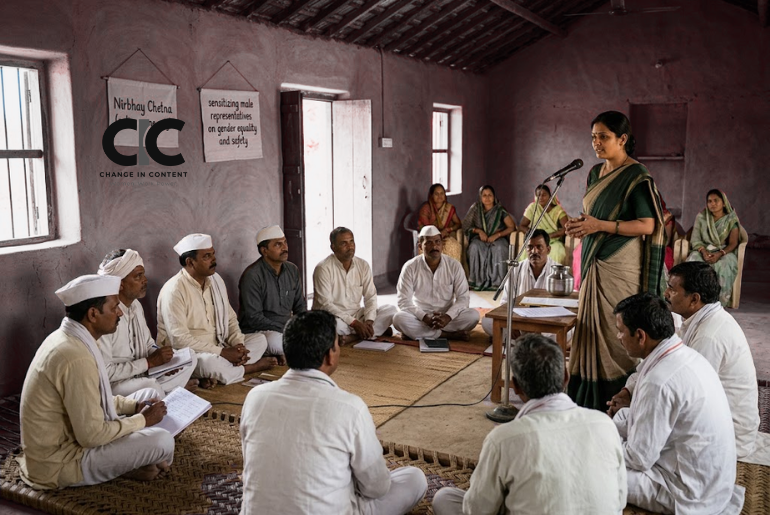
The Short Read
- Nirbhay Chetna is a national gender-sensitisation initiative launched by the Ministry of Panchayati Raj.
- It is part of the larger Nirbhay Raho programme under the Nirbhaya Fund.
- The programme aims to train more than 17.5 lakh male elected representatives of Panchayati Raj Institutions.
- It will build a cadre of 28,500 Master Trainers at the state, district and block levels.
- A pilot Training of Trainers programme began with around 40 master trainers from six states.
- The larger goal is to promote gender-responsive governance, women’s safety, dignity, and leadership at the grassroots level.
- The initiative matters because it shifts part of the safety conversation from women’s behaviour to men’s responsibility and community leadership.
Nirbhay Chetna: A safety programme that begins with men
For years, conversations about women’s safety in India have often focused on what women should do.
Do not go out late. Do not travel alone. Share your location. Dress carefully. Stay alert. Avoid certain roads. Adjust your routine.
Nirbhay Chetna asks a different question. What if men in positions of local power were trained differently?
The Ministry of Panchayati Raj has launched Nirbhay Chetna, a national initiative for the sensitisation of men towards women-related issues, including women’s safety and security.
The programme is part of Nirbhay Raho, the Ministry’s wider gender-equality initiative under the Nirbhaya Fund. Its scale is significant. More than 17.5 lakh male elected representatives of Panchayati Raj Institutions are expected to be trained on gender equality, women’s rights, safety, dignity and their responsibilities as elected representatives.
The aim is to take the conversation on women’s safety into India’s local governance system.
What is Nirbhay Chetna?
Nirbhay Chetna is the flagship component of Nirbhay Raho. It focuses on sensitising male elected representatives in Panchayati Raj Institutions to enable them to become active participants in creating safer, more gender-responsive communities.
The official Government document describes it as a national programme titled “Sensitisation of Men towards Women-related Issues, including the Safety and Security of Women”.
- This programme will cover all Panchayats across India.
- To deliver the training at scale, the Ministry will build a dedicated cadre of 28,500 Master Trainers at the State, district and block levels. These trainers will take the programme forward within their jurisdictions.
- Training material will be available in Hindi, English and regional languages.
- The programme will also be independently evaluated to measure outcomes and ensure accountability.
Who is it for?
Nirbhay Chetna is designed primarily for male elected representatives in Panchayati Raj Institutions. That makes the target group important.
Panchayat representatives are often among the most visible and accessible leaders in rural India. They influence local priorities, village discussions, public behaviour, community norms and local decision-making.
When male elected representatives are sensitised on gender equality and women’s safety, the expectation is that their influence will travel beyond the training room. They can shape how villages discuss harassment, public spaces, girls’ mobility, women’s participation, safety infrastructure, local complaints, dignity and leadership.
That is why the programme is focused on Panchayats. It treats grassroots governance as a place where attitudes can be changed, not only services delivered.
What does it aim to achieve?
Nirbhay Chetna aims to create gender-sensitive leadership at the village level. The programme wants male elected representatives to understand women’s safety as a governance responsibility, not a private issue or a women-only concern.
Its broad goals include:
- sensitising men on women’s safety and dignity
- promoting gender equality in local governance
- encouraging positive behavioural change
- strengthening women-friendly Panchayats
- helping elected men understand their role in creating safe public environments
- supporting women’s participation and leadership in rural public life
It is important because violence against women is not only a criminal justice issue. Everyday attitudes, language, silence, local power and social permission also shape it.
Change in Content has earlier examined how rape culture in India is sustained by normalised behaviour, victim-blaming and social tolerance. Nirbhay Chetna enters that wider conversation by focusing on men who hold public responsibility at the local level.
How the training will work
According to official information, the Ministry has organised a Training of Trainers programme on Nirbhay Chetna in New Delhi.
- The pilot batch included around 40 master trainers from six states: Assam, Chhattisgarh, Himachal Pradesh, Maharashtra, Odisha and Uttarakhand.
- This pilot will form the basis for a cascading training model.
- The idea is simple: train master trainers first, then use them to train male elected representatives across States and Union Territories.
- The official document says 28,500 Master Trainers will be developed at the state, district and block levels.
It matters because training more than 17.5 lakh elected representatives cannot be done through a single central workshop. It needs a distributed system that can reach districts, blocks, and villages.
Where does Nirbhay Raho fit in?

Nirbhay Chetna is one part of the broader Nirbhay Raho programme. And Nirbhay Raho has 3 components:
- Nirbhay Chetna: Sensitisation of male elected representatives on women’s safety, dignity, rights and gender equality.
- Nirbhay Netri: Legal literacy and capacity-building training for more than 14.5 lakh women elected representatives.
- Nirbhay Drishti: Installation of CCTV cameras in villages across States and Union Territories as part of safety infrastructure.
Together, these 3 components are meant to combine awareness, women’s governance capacity and physical safety infrastructure. That combination is important because awareness without systems can become symbolic. Infrastructure without attitude change can remain incomplete. Women’s leadership without community support can become harder to sustain.
Nirbhay Raho attempts to bring these strands together at the Panchayat level.
Why this policy direction matters
Nirbhay Chetna is significant because it changes the direction of the safety conversation.
Women’s safety cannot continue depending mainly on women’s caution. A society cannot keep telling women how to avoid harm while leaving attitudes, behaviour and local power structures untouched.
Training male Panchayat representatives does not solve everything. But it recognises that men in public roles must be part of the solution. That is also where legal awareness becomes important. Women need to know their rights, and local representatives need to understand the laws, protections, and responsibilities related to women’s dignity and safety.
Change in Content has previously published a guide on laws for women in India, and Nirbhay Chetna can help make such rights part of local governance conversations.
The initiative is especially relevant because Panchayats are close to everyday life. They are not distant institutions. They are where village-level choices are discussed, disputes are heard, spaces are managed, and community behaviour is shaped.
If the programme works well, it can help shift women’s safety from a reactive issue to a governance priority.
The language shift matters too
Women’s safety cannot only mean restricting women’s movement in the name of protection. A safer society should expand women’s freedom, not shrink it. That is where language matters deeply.
When communities speak of women’s safety only through fear, control and honour, women end up carrying the burden of everyone’s morality. When communities speak of women’s safety through rights, dignity, participation and shared responsibility, the conversation becomes healthier.
Change in Content has previously written about the words we throw at women and how language shapes the limits placed around women’s lives. Nirbhay Chetna’s success will depend partly on whether it changes local vocabulary around women’s safety.
- From “protect women” to “respect women”.
- From “control movement” to “enable participation”.
- From “women must be careful” to “men must be responsible”.
- From “family honour” to “women’s dignity”.
That’s a meaningful shift.
What to watch next
The scale of Nirbhay Chetna is ambitious. But the next questions will be about implementation.
- Will the training be practical enough for Panchayat-level realities?
- Will it address everyday sexism, harassment, mobility, public-space safety and victim-blaming?
- Will men be trained to listen to women’s experiences in their own communities?
- Will women elected representatives be given equal authority in shaping local safety priorities?
- Will the independent evaluation track behavioural and governance outcomes, not only attendance?
These questions matter because gender-sensitisation programmes often succeed or fail in the details. A well-designed training can open difficult conversations. Weak training can become another certificate exercise.
The difference will lie in how seriously the programme is delivered, monitored and locally owned.
Change in Content View
Nirbhay Chetna is an important policy signal. It says women’s safety is not only a women’s issue. It is a governance issue, a community issue and a man’s responsibility. That alone is worth noting.
For too long, safety conversations have trained women to adjust. This initiative begins by training men who hold local public office.
The idea is powerful because Panchayat representatives shape what villages discuss, permit, ignore and protect. If they understand women’s safety, dignity, and leadership better, they can help shift everyday behaviour at the grassroots level.
The promise of Nirbhay Chetna will depend on how deeply it changes attitudes, not how neatly it completes training targets.
India does need safer women. But more importantly, India needs safer communities. And that begins when men are taught that women’s dignity is not an optional concern. It is central to governance.
FAQs
Q: What is Nirbhay Chetna?
A: Nirbhay Chetna is a national initiative launched by the Ministry of Panchayati Raj to sensitise male elected representatives of Panchayati Raj Institutions on women’s safety, dignity, rights and gender equality. It is part of the Nirbhay Raho programme under the Nirbhaya Fund.
Q: Who will be trained under Nirbhay Chetna?
A: More than 17.5 lakh male elected representatives of Panchayati Raj Institutions are expected to be trained under Nirbhay Chetna. The programme will cover Panchayats across all States and Union Territories.
Q: What is the aim of Nirbhay Chetna?
A: Nirbhay Chetna aims to promote gender-responsive governance at the grassroots by sensitising male Panchayat representatives on women’s safety, rights, dignity, equality and their own responsibilities as elected leaders.
Q: How will Nirbhay Chetna be implemented?
A: The programme will use a cascading training model. A cadre of 28,500 Master Trainers will be developed at the State, district, and block levels, and these trainers will advance the programme within their jurisdictions.
Q: What is Nirbhay Raho?
A: Nirbhay Raho is the broader Ministry of Panchayati Raj programme under the Nirbhaya Fund. It includes Nirbhay Chetna for sensitising men, Nirbhay Netri for training women elected representatives, and Nirbhay Drishti for strengthening village-level safety infrastructure.
Q: What is Nirbhay Netri?
A: Nirbhay Netri is the component of Nirbhay Raho that will provide legal literacy and capacity-building training to more than 14.5 lakh women elected representatives across India.
Q: What is Nirbhay Drishti?
A: Nirbhay Drishti is the component of Nirbhay Raho that involves the installation of CCTV cameras in villages across States and Union Territories to strengthen safety infrastructure for women.
Editorial Note and Sources
This article is based on the official Government of India document on Nirbhay Chetna and the launch update reported by Akashvani News. We have written a Policy Pulse explainer for Change in Content to help readers understand what the initiative means, who it is for, and why it matters.
Sources:
- Government of India / Ministry of Panchayati Raj: Nirbhay Chetna official document
- Akashvani News: Govt launches Nirbhay Chetna training module in New Delhi