
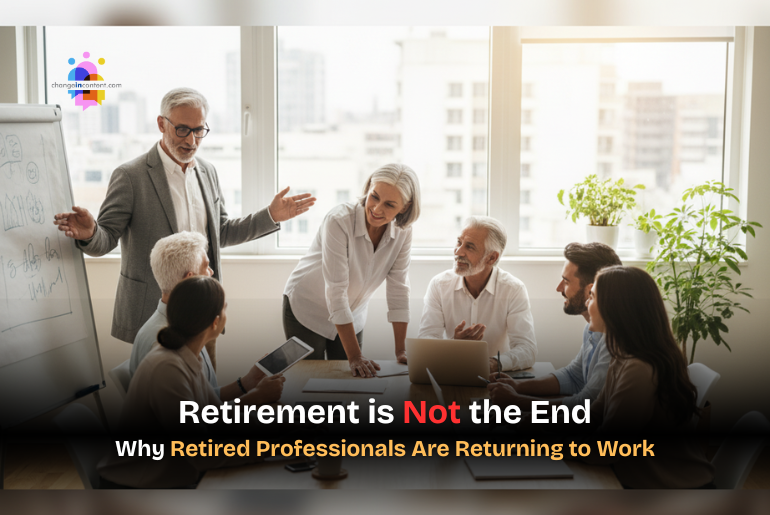
One of the root causes of ageism in the workplace is the stereotype that people in their 50s or 60s are no longer a valuable part of the workforce. There’s a stereotype that older workers are less adaptable, less tech-savvy, or not as productive as younger ones. However, that thinking doesn’t really fit today’s reality. Across India and globally, retired professionals returning to work are rewriting what it means to grow older. Whether for financial stability, the joy of staying active, or simply to pursue a new purpose, seniors are embracing second careers, part-time opportunities, and even entrepreneurship.
Sometimes they enter fields completely unrelated to their past careers, while others return to their old roles part-time, and some even launch their own ventures. “Unretiring” has become the new retirement plan, whether for financial reasons or simply because sitting at home feels boring.
Retired professionals returning to work: A new chapter in retirement
Retirement is no longer the final curtain it once was. Across India and beyond, an increasing number of seniors are re-entering the workforce, transforming what used to be a quiet phase of life into an active, purpose-driven chapter. Multiple surveys and studies now point to this rise.
With 11.2% of its residents aged 60 and above, higher than the national average of 8.6%, the state of Goa has one of the most visible elderly populations in India. Researchers surveyed 400 seniors to understand how they view work, retirement, and what comes after. About 20.5% continued to work after retirement and received monetary remuneration. Others engaged in volunteer activities, such as working with NGOs like the Goa Heritage Group. Most of these seniors spent four to six hours daily in either paid or unpaid work that kept them active.
Another 2021 study also showed a gender difference in post-retirement work. While 50% of retired men chose to return to work, only 19% of women did so.
Post-COVID shifts
The pandemic played a significant role in encouraging seniors to return to work. An Agewell Foundation survey of 5,000 older adults found that more than 61% of retirees were seeking employment. Within the 60–75 age group, the number was even higher, with 81.5% wanting to return to some form of work.
A survey by Antara, a subsidiary of Max India Ltd, showed that many seniors want to keep working as long as possible. Covering over 2,000 people aged 50 and above across metros in North, West, and South India, the survey revealed that 27% wanted to work until the age of 70–75. Another 37% said they would prefer working for as long as they can.
1 in 8 retirees plan to go back to work
The rise in seniors returning to work is not limited to India. In the United States, an increasing number of seniors are “unretiring.” By 2025, one in eight retired seniors is expected to return to work, while 4 in 10 working seniors already have. Among those considering a comeback, 13% plan to work full-time, 79% prefer part-time roles, and 8% remain undecided.
When it comes to employers, 13% plan to rejoin their previous workplace, 30% want a new employer in the same field, and 57% intend to switch industries entirely.
All this shows that work after retirement is more than just about money. For the ageing population, it is also about a new purpose, flexibility, and staying connected to society.
Connecting retired professionals with opportunities
Today, specialised platforms exist to help retired professionals find meaningful work. These platforms focus on engagement, purpose, and opportunities that match the skills and experience of seniors. One notable example is WisdomCircle, a platform designed for retired professionals to explore all their cognitive, social, and professional needs. It helps retirees worldwide find engaging and fulfilling activities after retirement.
Founded in India, WisdomCircle serves senior professionals, typically those aged 50 and above. The platform connects these individuals with organisations seeking part-time, project-based, mentoring, or advisory support.
Many retirees have spent years, sometimes decades, developing deep knowledge and skills in areas such as leadership, finance, education, healthcare, and more. This experience represents a valuable resource, but without proper opportunities, it often goes unused after retirement. WisdomCircle turns retirement into an opportunity for continued contribution in the economy, keeping seniors mentally active and ensuring their expertise continues to make an impact.
Promoting entrepreneurship among seniors
When experienced professionals choose to return to the workforce, they require robust support systems, particularly when exploring entrepreneurship, where their skills and knowledge can have a meaningful impact. The idea is that helping seniors return to work shouldn’t just be limited to giving them jobs. Many older professionals possess the experience, skills, and vision to launch their own businesses or mentor others in entrepreneurial ventures. Supporting them in entrepreneurship allows them to remain active, contribute to the economy, and share their expertise.
Recognising this broader need, Kerala has introduced a state project specifically for seniors. The project goes beyond traditional employment support by creating opportunities for older citizens to become entrepreneurs or mentors in startups.
Launch of ‘New Innings’
The state government formally launched New Innings, an initiative designed to help retired professionals transition into entrepreneurial and mentorship roles. Finance Minister K. N. Balagopal announced it in the 2025–26 budget as part of Kerala’s efforts to make the state more old-age friendly. Alongside New Innings, the budget also introduced Healthy Ageing, another program for senior welfare.
New Innings is open to citizens aged 50 and above who hold professional or technical expertise. The project runs under the Kerala Startup Mission (KSUM), the state’s nodal agency for startups. It aims to create opportunities where seniors can channel their skills into entrepreneurship or advisory roles within the startup ecosystem.
The government has allocated ₹5 crore for the first phase of the project. This funding will provide seniors with financial assistance, technical guidance, and marketing support to start or grow their ventures. With KSUM’s help, seniors can take up roles as professional consultants, advisors, board members, or mentors.
KSUM estimates that more than 1,000 retired professionals could take part as advisors to startups. The initiative also has the potential to create at least 100 enterprises, either founded by seniors or jointly led with younger entrepreneurs.
Retired professionals returning to work: The final thoughts
Imagine someone who has spent decades working in leadership, finance, education, or healthcare. They’ve seen it all, solved challenging problems, and built skills that take years to gain. Now, they’ve retired, but they’re not ready to stop. They want to stay active, share their knowledge, and feel useful again. It is happening everywhere: more seniors are returning to work, starting new ventures, or mentoring younger teams.
For companies, this is a huge opportunity. Open up roles, projects, and mentorship opportunities. Let seniors bring their ideas and experience to the table. Don’t ignore older talent, because they are now not just retirees, but a new generation of the workforce.
Changeincontent perspective
At Changeincontent, we see this as more than just a trend; it is a wake-up call. When retirees come back to work, they bring skills, wisdom, and stability that younger teams can learn from. Yet, too many companies still overlook older professionals in favour of “fresh” talent. Age should not be a barrier to opportunity. As more initiatives, such as Kerala’s New Innings, and platforms like WisdomCircle take shape, it is clear that seniors are not done contributing. The real question is: Are organisations ready to value them?
Related Read: Ageism, women and how to get back to work after a hiatus.
Disclaimer: The views expressed in this article are based on the writer’s insights, supported by data and resources available both online and offline, as applicable. Changeincontent.com is committed to promoting inclusivity across all forms of content. We broadly define inclusivity as media, policies, law, and history. It encompasses all elements that influence the lives of women and marginalised individuals. Our goal is to promote understanding and advocate for comprehensive inclusivity.
