
The Short Read
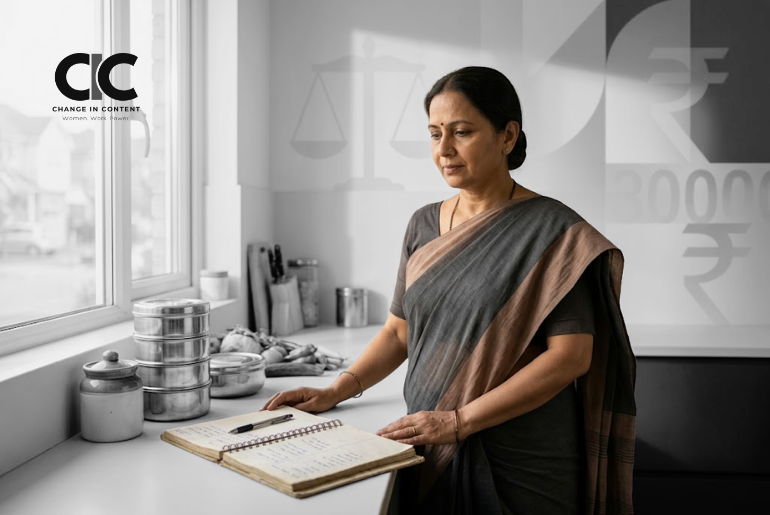
- On 11 June 2026, the Supreme Court recognised the economic value of unpaid domestic work by homemakers in a motor accident compensation case.
- The Court created an additional compensatory head called “loss of domestic care”.
- It fixed ₹30,000 per month as the composite amount under this head, where the required conditions are met.
- The amount is to be revised by 10% every three years.
- The Court clarified that if the homemaker also had paid work, the “loss of domestic care” component would be added to her proven income.
- The ruling is important, but the public conversation should not stop at the number.
- The deeper question is whether women’s domestic work will now be recognised inside homes, families, workplaces and policy conversations.
20 days later, the number is still sitting in the room
The news went viral for a reason. ₹30,000 a month.
That is the number many people carried from the Supreme Court’s 11 June 2026 ruling on the value of homemakers’ domestic care.
- For some, it felt like recognition.
- For some, it felt too little.
- For some, it triggered jokes.
- For many women, it probably triggered a quieter thought: “So they finally put a number on it.”
The Supreme Court’s ruling on unpaid domestic work has given India a legal moment worth careful discussion. The judgment came in a motor accident compensation case. It does not mean that every homemaker will now receive ₹30,000 a month from the State or from her family. Neither does it create a salary system for housework. And it is not a universal rule for household payments.
What it does is recognise that domestic care has economic value when compensation is being calculated after the death of a homemaker.
That is an important distinction. But so does the emotion behind the viral reaction. Because when a court says domestic care has value, millions of women hear something larger than compensation law. They hear a public system acknowledging what their families often describe as “nothing much”.
That is where Change in Content enters the conversation, 20 days later. We did not want to publish this only because it was trending. We wanted to ask what women should actually take from it.
What did the Supreme Court say?
In Shishupal @ Shish Ram vs Surjeet, the Supreme Court considered compensation after the death of a homemaker in a motor accident.
The Court noted that the contribution of a homemaker is often invisible or only partially visible, even though it supports the functioning of families and, through them, the wider economy. It created an additional head of compensation called “loss of domestic care”.
Under this head, the Court said that a composite sum of ₹30,000 per month should be added where the relevant conditions are met. This amount is meant to account for the homemaker’s contribution to the smooth functioning of the household, the loss of maternal support for children, and the loss of spousal support or support to parents in the given case.
The Court also said this amount should be revised by 10% every three years. Importantly, the Court clarified that if the homemaker was also part of the workforce, this component would be added to her proved income.
Now, this is a significant point. It recognises that many women do two forms of work at once: paid work and domestic work. A woman may earn an income outside the home and still bear the primary responsibility for cooking, cleaning, caregiving, emotional labour, household planning, children’s needs, elder care, and the day-to-day running of family life.
The law, in this case, recognised that one does not erase the other.
The number is not the whole story
The easiest way to talk about this ruling is to keep repeating the ₹30,000 figure. However, the more important way is to ask what the figure represents.
- It represents work that is usually noticed only when it stops
- The meals that appear
- The medicines remembered
- The child’s school form filled
- The elderly parent taken to the doctor
- The clothes washed
- The groceries tracked
- The emotional weather of the home managed
- The rituals, repairs, appointments and small emergencies absorbed before anyone else sees them
In many homes, this is not called work. It is called love, duty, nature, adjustment, “what women do”, or simply “ghar ka kaam”. But unpaid does not mean valueless. That is the central shift the ruling brings into public language.
Change in Content has earlier examined the cost of unpaid work, and this judgment adds a legal reference point to the same issue: women’s labour is often economically real even when no salary slip proves it.
Why women should care about this judgment
This ruling matters for women because recognition changes the language of value.
When a homemaker says, “I don’t earn”, most of us often treat the sentence as if she does not contribute economically. That is inaccurate.
A household that runs smoothly allows others to earn, study, rest, recover, travel, build careers and participate in the economy. Domestic work is not outside economic life. It is one of the foundations on which economic life rests.
The judgment gives women one more way to say: “My work has value.”
That sentence matters in daily life.
- It matters when family members dismiss housework as easy.
- It matters when women are told they are “dependent”.
- It matters when a woman’s time is treated as endlessly available.
- It matters when a daughter-in-law is expected to absorb unpaid labour without discussion.
- It matters when working women are still expected to return home and run the second shift.
- It matters when women themselves say, “I am just a homemaker.”
The word “just” has carried too much weight for too long.
But recognition should not become romance
There is one caution. We should recognise domestic work without romanticising women’s exhaustion.
Calling homemakers “nation builders” is powerful. But the next conversation must ask how much invisible labour women should be expected to carry without rest, choice or redistribution. Recognition cannot become another way of praising women for doing everything.
Many Indian women already live under a double or triple burden. They may work in paid jobs, help with family enterprises, care for children and elders, handle household labour, and still be expected to remain emotionally available.
Change in Content recently wrote about women moving from unpaid family work to self-employment. That shift is promising, but it also shows how often women add income-generating work on top of domestic responsibilities rather than in place of them.
That is why the Supreme Court’s ruling should not be used to trap women inside a glorified version of unpaid work.
The better reading is different: if domestic care has economic value, it deserves respect, redistribution and structural support.
The home is also a workplace
One reason this conversation feels uncomfortable is that we rarely treat the home as a workplace. But for many women, the home is where the longest shift happens.
- There is no fixed start time.
- No formal closing hour.
- No weekly off.
- No paid leave.
- No appraisal.
- No pension.
- No formal recognition.
- No resignation letter.
A homemaker may not have an employer in the usual sense, but she performs labour that others rely on every day.
That does not mean every family relationship should become transactional. Care is emotional. Families are not factories. Love cannot be reduced to a payroll sheet. But refusing to talk about value has also harmed women. For years:
- It has made their time negotiable only for others.
- It has made their sacrifices look natural.
- It has made daughters watch mothers disappear into service.
- It has made homemakers feel financially small, even when the entire household depends on them.
The Delhi High Court had also recently recognised that non-earning does not mean idle, while discussing the value of a homemaker’s contribution in a maintenance context. Change in Content covered a broader recognition of unpaid labour and homemakers’ work earlier.
The courts are increasingly naming what homes have long taken for granted.
What should families do with this conversation?
This is where the article is not only about the law. It is about dinner-table honesty.
If you are a woman reading this, ask yourself:
- Who knows what I do every day?
- Who shares the work without being asked?
- Who controls the money in the household?
- Do I have savings in my own name?
- Do I get rest without guilt?
- Do my children see domestic work as everyone’s responsibility?
- Does my family treat my time as valuable?
If you are a husband, son, daughter, parent or in-law reading this, ask something simpler:
When was the last time you treated the woman running the home as someone whose time has economic value?
Not with a social media post. Not with a Mother’s Day caption. And not with a joke about ₹30,000. But with actual redistribution.
Cook. Clean. Track medicines. Attend parent-teacher meetings. Remember birthdays. Order groceries. Book appointments. Share care work. Discuss money. Build her savings. Encourage her rest. Make sure her work does not become visible only when she falls ill.
That is where recognition becomes real, and that is the change in content we need.
What should policy do next?
The judgment is important, but it sits inside compensation law. We still need a larger policy conversation.
- India needs better data on unpaid work.
- Time-use surveys must become part of mainstream economic discussion.
- Women’s unpaid labour should inform social security design, pension thinking, caregiving support, childcare infrastructure and welfare delivery.
Women who spend years in unpaid domestic work also need financial security. This could include stronger pension access, greater insurance awareness, individual bank accounts, digital financial literacy, easier access to government schemes, and better recognition of household asset ownership.
There is also a need to discuss respite and support. Childcare centres, eldercare services, community kitchens, safe transport, health insurance and women’s collectives all affect the burden of domestic labour.
The point is not to turn every act of care into a bill. The point is to stop building the economy on women’s unpaid time while pretending that time is free.
The phrase India needs to retire
“Tum karti hi kya ho?” What do you even do?
Many women (homemakers) are subject to this question. They receive such questions during too many arguments, across too many generations. The Supreme Court’s ruling gives one answer. She builds the day.
That may sound poetic, but it is also practical. Without her labour, someone would have to be paid to cook, clean, care for, supervise, organise, provide emotional support, and keep the household functioning. And even that replacement would not capture the full value of what many homemakers do.
So maybe this is the moment to stop asking what she does. Start asking what would stop working if she did not do it.
Change in Content View on Supreme Court Ruling on Unpaid Domestic Work
The ₹30,000 figure matters, but it should not become the ceiling of our imagination.
The Supreme Court has given unpaid domestic work a stronger legal language in one context. Society must now give women stronger everyday respect in every context.
- A woman should not have to die in an accident for her domestic labour to be valued.
- A homemaker should not need a court paragraph to prove she contributes.
- A working woman should not have to perform paid work and unpaid care as if both are naturally hers.
- A daughter should not grow up learning that love means unpaid exhaustion.
- A family should not treat domestic work as invisible simply because it is done inside the home.
This conversation is not only about compensation. It is about the content of our homes, the words we use, and the work we notice. At the same time, it is about the money we share, the rest we allow, the dignity we give, and the labour we redistribute.
Supreme Court’s ruling on the unpaid domestic work is a legal headline. For women, it is also a mirror. The question is what homes, families, and policymakers choose to see in it.
FAQs
Q: What did the Supreme Court say about unpaid domestic work?
A: On 11 June 2026, the Supreme Court recognised the economic value of unpaid domestic work by homemakers while deciding compensation in a motor accident case. It created an additional compensatory head called “loss of domestic care” and fixed a composite amount of ₹30,000 per month, subject to the relevant conditions being met.
Q: Does the Supreme Court ruling mean homemakers will receive ₹30,000 every month?
A: No. The ruling does not create a monthly salary for all homemakers. The ₹30,000 figure applies as a notional amount under the head of “loss of domestic care” while calculating compensation in relevant motor accident death cases involving homemakers.
Q: What is “loss of domestic care”?
A: “Loss of domestic care” is the additional compensation head recognised by the Supreme Court for the value of a homemaker’s contribution to the household, including domestic management, maternal support and family care, depending on the facts of the case.
Q: What happens if a homemaker also has paid work?
A: The Supreme Court clarified that if the homemaker were also part of the workforce, the “loss of domestic care” amount would be added to her proven income. This recognises that paid work and domestic care can both exist in a woman’s life.
Q: Why is the ruling important for women?
A: The ruling is important because it publicly recognises that unpaid domestic work has economic value. It gives women, families and policymakers a stronger language to discuss housework, caregiving, domestic responsibility and financial recognition.
Q: Does this judgment apply outside motor accident compensation cases?
A: The judgment directly applies to the context before the Court: compensation in motor accident claims involving the death of a homemaker. Its wider social importance lies in its recognition of the economic value of domestic care, but readers should not treat it as a general salary rule for homemakers.
Editorial Note, Disclaimer and Sources
This article is based on the Supreme Court judgment in Shishupal @ Shish Ram vs Surjeet, delivered on 11 June 2026, and related public discussion around the recognition of unpaid domestic work. It is written as an opinion-led Policy Pulse analysis for Change in Content, focusing on women’s lived realities.
Disclaimer: This article is for information and public discussion only. It is not legal advice. Readers should consult a qualified legal professional for advice on any specific case, compensation claim or legal interpretation.
Sources:
- Supreme Court of India judgment: Shishupal @ Shish Ram vs Surjeet, 11 June 2026
- Indian Kanoon judgment text: Shishupal @ Shish Ram vs Surjeet
- Supreme Court Observer: Compensation for Homemaker’s Death
