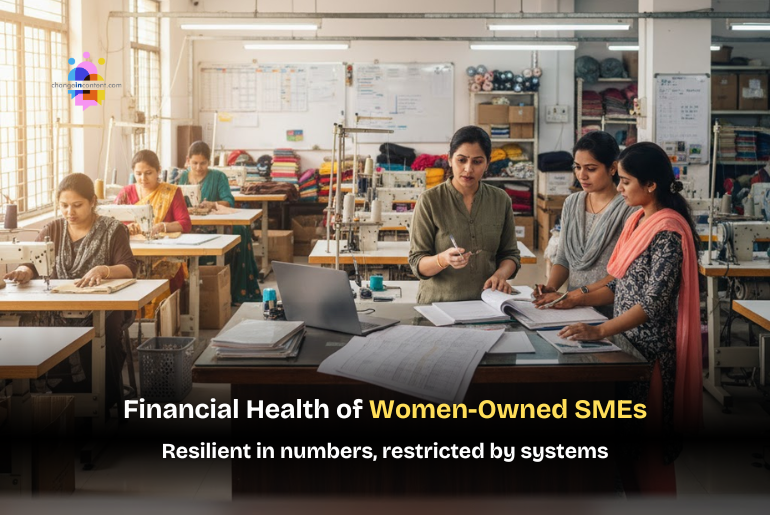
In India’s entrepreneurial ecosystem, small and medium enterprises (SMEs) are the silent growth engines. They are creating jobs, driving innovation, and building community resilience. Yet, within this ecosystem, a critical group remains underserved. This article discusses the financial health of women-owned SMEs.
According to data from the Udyam Registration Portal (URP) under the Ministry of MSME, women-owned enterprises account for 20.5% of all MSMEs registered since the portal’s launch on July 1, 2020. NITI Aayog’s Women Entrepreneurship Platform (WEP) also reports that India has about 63 million micro, small, and medium enterprises, with nearly 20% owned by women. These businesses employ between 22 and 27 million people.
Estimates further indicate that increasing women’s participation in entrepreneurship could result in over 30 million women-owned enterprises, generating around 150 to 170 million jobs. However, access to finance and gender-based barriers continue to be a significant challenge, particularly for women-owned and women-led MSMEs, limiting their growth and contribution to the economy.
Women-led SMEs show financial resilience but face gendered barriers
The Financial Resilience Institute, a recognised authority on financial resilience and well-being in Canada and globally, released its report titled “The Business Financial Health and Resilience of SMEs and Women-Owned SMEs in India.” Supported by Standard Chartered, the report presents data and insights on the financial health and resilience of Indian SMEs through a detailed gender-based analysis. The online study, conducted by the Institute in June 2025, covered 409 SMEs with annual revenues ranging from USD 100,000 to USD 2 million. Key insights from the survey include the following.
Underutilisation of business social capital by women entrepreneurs
Findings from the study indicate that Women-Owned SMEs show greater financial resilience than Men-Owned SMEs on certain parameters, such as business liquid savings. For example, they are better at keeping money aside for emergencies or short-term needs. However, women entrepreneurs still face challenges in other aspects of running their businesses.
The gender-based financial resilience analysis reveals distinct differences in the experiences of Women-Owned SMEs. For instance, access to business social capital, defined as having trusted mentors and advisors for guidance during critical decisions, is almost equal between Women-Owned and Men-Owned SMEs (64% vs. 65%). Yet, women entrepreneurs report being less likely to seek advice from their networks compared to men.
While Women-Owned SMEs exhibit financial discipline and resilience, there is a need for better support systems that encourage greater use of professional networks, mentorship opportunities, and advisory resources to enhance their business decision-making and growth potential.
More banking challenges for women-owned SMEs and the financial stress
Women-owned SMEs encounter greater difficulties in accessing business banking products and services. Nearly 3 out of 4 women-led SMEs (76%) reported facing three or more challenges in obtaining business banking support over the past 12 to 24 months, compared to 68% of men-owned SMEs. Given their potential, supporting Women-Owned SMEs effectively can yield long-term benefits for financial institutions. For example, 57% of women-led SMEs stated they would recommend their primary financial institution if they received adequate support focused on business financial resilience, compared to 48% of men-led SMEs.
Despite their financial resilience, many SMEs experience high levels of financial stress. Over half of SMEs (55%) report significant stress regarding current and future financial obligations, and only 45% pay themselves a regular salary. Women-Owned SMEs face even greater challenges, with just 36% paying themselves consistently, compared to 55% of Men-Owned SMEs.
This study measured, for the first time, the personal financial well-being of Indian SME owners using a model developed by the Financial Resilience Institute. The results show that women entrepreneurs are significantly less likely than their male counterparts to be in the “Thriving” category, indicating that they are not experiencing strong financial health and stability personally. These findings suggest that women-led businesses could benefit from support that addresses both their business finances and their personal financial well-being. Such support would also help men-led SMEs, but it is especially important for women entrepreneurs.
The financial impact of the climate crisis on women-owned SMEs
The study also offers a detailed examination of how extreme weather is impacting small and medium-sized enterprises (SMEs) across India, with a particular focus on women-led businesses. As of June 2025, about 42% of all SMEs reported financial losses due to heatwaves, floods, and fires over the past one to two years. However, the effect on women-owned SMEs is even more concerning. More than one in three women entrepreneurs said that such weather events had harmed their business finances, disrupting operations, reducing income, and increasing recovery costs.
Women-owned SMEs often operate with limited access to financial resources and credit compared to their male counterparts. That makes it harder for them to recover from unexpected losses caused by the climate crisis. Many of these businesses also lack adequate insurance coverage, leaving them vulnerable to high repair and replacement costs in the event of disasters.
Another challenge is the lack of information and guidance on managing climate-related risks. Women entrepreneurs, especially in rural and semi-urban areas, often rely on informal networks or personal savings to cope with losses. Without structured support, these disruptions can lead to long-term financial strain and even force some businesses to close.
Supporting women-owned SMEs in building financial health
While small and medium enterprises (SMEs) in India show potential, women-owned and women-led businesses continue to face financial barriers. These include limited access to credit, fewer tailored financial products, and a lack of professional advice or institutional backing.
What financial institutions and partners can do
- Make finance more accessible: Simplify loan procedures and reduce collateral demands so that women entrepreneurs can borrow more easily. Smaller, flexible credit products can support those running early-stage or informal businesses.
- Design products that cater to women’s business realities: Financial solutions should reflect how women manage both their business and household finances. This includes offering longer repayment periods or low-interest working capital loans.
- Support financial and business education: Regular training on budgeting, record-keeping, and investment planning can help women handle financial risks and plan for expansion.
- Provide mentorship and advisory support: Connecting women with experienced business owners, bankers, and professionals can help them make informed financial and operational decisions.
- Encourage local business networks: Peer groups help women share ideas, market information, and contacts, which can lead to better opportunities and collective growth.
- Introduce regular financial check-ups: Simple assessments through banks or business associations can help women track their financial status and respond early to challenges.
- Address climate-related risks: Affordable insurance and recovery finance can help women entrepreneurs recover faster from losses caused by floods, heatwaves, or other extreme weather events.
Financial health of women-owned SMEs: A measure of India’s inclusive growth
Women-owned and women-led SMEs play a critical role in India’s economy, contributing significantly to employment, innovation, and local communities. When women-owned SMEs receive the right financial and institutional support, they create jobs, expand local supply chains, and strengthen community-level growth.
Investing in these enterprises helps improve household incomes, builds confidence among new women entrepreneurs, and increases women’s participation in formal economic activity. However, addressing the financial gap is the first and most important step toward helping women entrepreneurs expand their businesses and contribute fully to India’s economic growth.
Changeincontent perspective
At Changeincontent, we have always believed that inclusion is not an emotional argument. Instead, it is an economic one. The financial health of women-owned SMEs is a direct reflection of how gender bias quietly limits India’s growth potential.
This report shows that women entrepreneurs are not struggling because they are financially unwise. Instead, they are struggling because financial systems were never designed with their realities in mind. Access to formal credit, collateral requirements, insurance gaps, and the absence of mentorship networks are not personal failures; they are institutional oversights.
Empowering women entrepreneurs is not just about bridging a gender gap, but about correcting a structural imbalance that has restricted our collective economic output for decades. Every rupee invested in a woman-owned SME multiplies into community employment, financial literacy, and resilience.
If India is serious about inclusive growth, the question is no longer “Can women-led SMEs perform?” It is “When will we start giving them the ecosystem they deserve?”
Also Read: Women-owned MSMEs: Why India’s most promising sector still shuts out women entrepreneurs.
Disclaimer: The views expressed in this article are based on the writer’s insights, supported by data and resources available both online and offline, as applicable. Changeincontent.com is committed to promoting inclusivity across all forms of content. We broadly define inclusivity as media, policies, law, and history. It encompasses all elements that influence the lives of women and marginalised individuals. Our goal is to promote understanding and advocate for comprehensive inclusivity.