
The Short Read
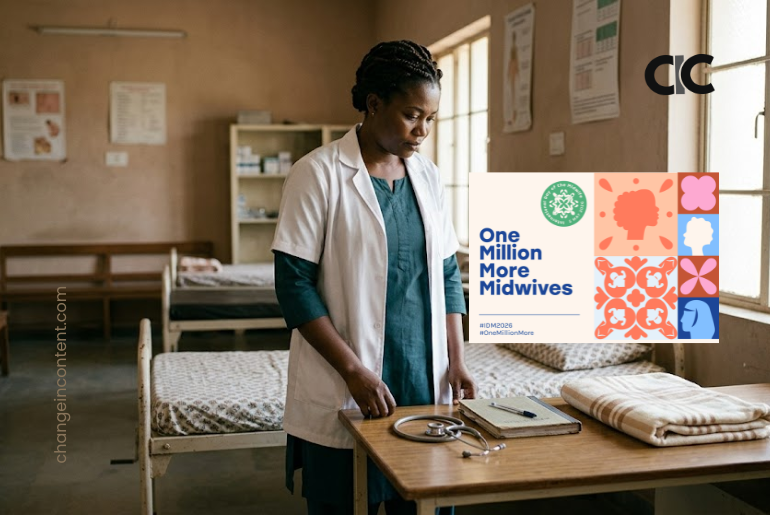
- The 34th ICM Triennial Congress took place in Lisbon from 14 to 18 June 2026, under the theme One Million More Midwives.
- More than 3,000 midwives, researchers, students and advocates from 129 countries attended the Congress.
- ICM says the world needs at least one million additional midwives to meet sexual, reproductive, maternal, newborn and adolescent health needs.
- WHO’s latest maternal mortality estimates found that over 700 women died every day in 2023 from preventable causes linked to pregnancy and childbirth.
- The State of the World’s Midwifery 2021 report estimated a global shortage of 900,000 midwives, the largest shortage within the SRMNAH workforce.
One million more midwives is a workforce story with life-or-death consequences
In Lisbon, the call for One million more midwives did not arrive as a slogan built for conference banners. It came from a far harder reality. Pregnancy and childbirth remain dangerous for too many women, especially where skilled care is thin, overworked or out of reach.
The 34th International Confederation of Midwives Triennial Congress brought more than 3,000 participants from 129 countries to Portugal in June 2026. The gathering included midwives, policymakers, researchers, educators, students and advocates. Its theme placed a simple demand before global health leaders: build, support and retain the midwifery workforce.
The numbers behind that demand are stark. WHO’s 2025 maternal mortality publication estimated that, in 2023, more than 700 women died every day from preventable causes linked to pregnancy and childbirth. That is roughly one woman every two minutes. UNICEF’s maternal mortality data also recorded 260,000 pregnancy-related deaths in 2023, with sub-Saharan Africa accounting for nearly 70% of all maternal deaths.
Newborns face their own fragile beginning. The ICM Congress site notes that 2.3 million newborns die within their first 28 days of life each year. Many of these deaths are preventable.
Behind every figure is a familiar public health failure: care arrives late, or does not arrive at all.
Why midwives sit at the heart of this crisis
Midwives do far more than assist delivery. They support contraception, antenatal care, safe birth, breastfeeding, postnatal care, adolescent health and reproductive decision-making. In many communities, they become the most trusted link between women and the health system.
The State of the World’s Midwifery 2021 report, developed by UNFPA, ICM, WHO and Novametrics, found a shortage of 1.1 million sexual, reproductive, maternal, newborn and adolescent health workers. Midwives made up the largest gap, at 900,000. The same report said fully educated, licensed and integrated midwives, supported by interdisciplinary teams, can deliver around 90% of essential SRMNAH interventions across the life course.
ICM’s 2026 Congress framing goes further. It says one million more midwives could help prevent 67% of maternal deaths, 64% of newborn deaths and 65% of stillbirths, saving up to 4.3 million lives by 2035.
Those figures should change how governments discuss women’s health. Midwifery investment cannot sit quietly inside a health ministry budget line. It belongs in conversations on labour rights, education, rural access, gender equity, public finance and economic planning.
India’s own work on maternal and child health shows how strongly the care journey depends on continuity. The recently launched JANANI platform aims to track pregnancy, childbirth, newborn care, immunisation, reproductive health and family planning through a digital system. That kind of tracking can help, but digital records still need trained people at the last mile.
The missing midwife is also a missing woman worker
People often discuss midwifery through the lens of patients. That lens is essential, but incomplete. Midwives themselves are workers, and the profession is overwhelmingly female in many parts of the world.
The ICM press kit for the Lisbon Congress highlighted workforce gaps, retention challenges, underinvestment, and situations in which midwives are trained but cannot practise to their full scope of practice. It also identified a predominantly female workforce facing limited leadership opportunities as a media and policy angle for the Congress.
That is where the story fits squarely into Change in Content’s worldview. Women’s health systems often depend on women workers whose own work remains underpaid, under-recognised and stretched beyond safe limits.
A country can train midwives and still fail mothers if it does not hire them, pay them fairly, protect them from burnout, allow them to practise fully, and give them a voice in policy. A midwife cannot carry the weight of a broken health system through personal dedication alone.
The leadership gap also deserves attention. Policies on pregnancy, childbirth and newborn care are too often shaped far away from the women who deliver that care every day. Midwives see where referrals fail, where families hesitate, where transport breaks down, where women delay treatment, and where disrespectful care keeps patients away from facilities. Their knowledge belongs inside decision-making rooms.
What governments and health systems need to do next
The Lisbon Congress put pressure on governments and global health leaders to grow, support and sustain the midwifery workforce. That needs practical follow-through.
Countries need more training seats, stronger faculty, safer clinical placements and clear licensing standards. They also need public hiring plans that absorb qualified midwives into the health system. Training without employment only shifts the failure from education to workforce planning.
Retention will decide how far this campaign goes. Midwives need fair pay, manageable workloads, safe working conditions, respect from other health professionals and career pathways that do not force them to leave frontline care to gain status.
Rural and underserved areas need special attention. Maternal deaths concentrate where poverty, distance, poor infrastructure and weak referral systems overlap. A midwife posted in such an area needs more than courage. She needs transport support, supplies, supervision, emergency referral links and a health system that responds when complications arise.
Climate and humanitarian crises will make this work harder. Heat, floods, conflict, and displacement disrupt antenatal care and access to facilities. A previous Change in Content piece on the gendered impact of rising temperatures in India looked at how extreme heat affects women’s health, work and pregnancies. Maternal care cannot be planned as though climate risk sits outside the health system.
The Change in Content view
The call for one million more midwives asks the world to value care before crisis.
Every safe birth requires a chain of decisions that begins long before labour starts.
- A girl needs nutrition and health information. A pregnant woman needs antenatal check-ups.
- A family needs trust in the health system.
- A newborn needs skilled attention in the first minutes and days of life.
- A midwife often holds that chain together.
The global shortage tells us something uncomfortable about priorities. Women’s lives are still too often protected after danger arrives, instead of being supported through systems that reduce danger in the first place.
Lisbon gave the campaign a global stage. The real test now sits with governments, donors, hospitals, universities and professional bodies. They can treat midwifery as a care profession deserving serious investment, leadership and protection. Or they can continue asking too few midwives to cover too much risk.
One million more midwives is a demand for safer births. It is also a demand for stronger women-led health systems.
Editorial Note and Sources
This Mosaic article by Change in Content is based on publicly available information from the International Confederation of Midwives, the ICM 2026 Congress platform, WHO, UNICEF and UNFPA. It focuses on the global workforce, women’s health and gender equity implications of the midwifery shortage. It does not provide medical advice.
Sources used:
- International Confederation of Midwives event page for the 34th ICM Triennial Congress.
- ICM 2026 Congress platform.
- ICM Congress press kit.
- ICM Day 1 recap from Lisbon.
- WHO, Trends in Maternal Mortality 2000 to 2023. UNFPA, The State of the World’s Midwifery 2021.
- UNICEF maternal mortality data blog.
