
The Quick Read
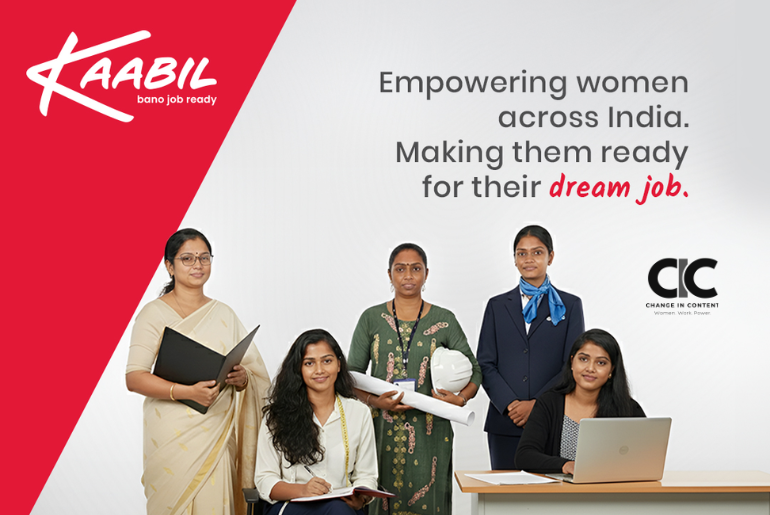
- Kaabil by Mahindra Group is the Group’s flagship women’s empowerment initiative, focused on improving women’s workforce participation through skilling, livelihood support, and job readiness.
- K. C. Mahindra Education Trust says Kaabil is on a mission to empower 1 million women by 2027 by bridging the gap between education and employment.
- Mahindra & Mahindra’s Integrated Annual Report 2025-26 says that Kaabil has empowered more than 1.4 million women since its inception and trained 4,62,704 women in FY26 across employability, vocational domains, and agri-skilling.
- The programme uses a “phygital” model: physical skilling and placements are combined with a digital job-matching platform that connects women to hyperlocal opportunities.
- Kaabil works across employability skills, vocational training, agriculture-oriented skilling, digital and financial literacy, career guidance and job placement support.
- The larger lesson is that women’s empowerment becomes stronger when skilling is linked to actual jobs, families are counselled, employers participate, and women receive support beyond the classroom.
Kaabil by Mahindra Group: Why it matters
India has spoken about women’s employment for years. The harder task is turning intent into working pathways. That is where Kaabil by the Mahindra Group becomes worth studying.
The programme does not treat women’s economic empowerment as a motivational slogan. Its design starts with a practical problem. Many women are educated enough to work, willing enough to earn and capable enough to grow. Yet they may remain outside formal employment because the bridge from learning to livelihood is weak.
That bridge has many missing planks.
Skills. Confidence. Family support. Safe access to jobs. Local opportunities. Employer readiness. Interview preparation. Digital literacy. Financial awareness. Workplace etiquette. Placement support.
Kaabil tries to connect these pieces.
K. C. Mahindra Education Trust describes Kaabil as one of the first CSR-led collaborative initiatives to support women with improved income and agency through skilling and livelihood opportunities. Its stated mission is to empower 1 million women by 2027 by bridging the gap between education and employment.
Mahindra & Mahindra’s Integrated Annual Report 2025-26 now states that the programme has exceeded that ambition in scale. It says that the program has empowered more than 1.4 million women since its inception.
For Change in Content, this is exactly the kind of company-led inclusion story that deserves attention. It sits at the intersection of skilling, jobs, women’s agency and employer participation.
What Kaabil is trying to solve
No single factor shapes women’s workforce participation.
A woman may want to work, but her family may hesitate. She may be qualified, but not job-ready. She may have a basic education, but not interview confidence. Sometimes, she may learn a skill but not know where to apply for a job. She may find a job but be unable to travel safely. And she may be employable, but employers may not be looking in her location.
KCMET’s Kaabil page points to several barriers: socio-cultural norms, caregiving responsibilities, employer bias, geographic hurdles, migration challenges, weak job linkages, limited education and inadequate training. It also states that counselling families, gender-intentional workplace practices and easier access to jobs can support women’s economic empowerment.
Many skilling efforts stop at training. Kaabil’s model appears to recognise that training alone is not enough. Women also need placement pathways, employer connections and support systems that make work possible.
That is also why this story connects to broader hiring shifts. When diversity hiring rises, companies still need a ready, confident and reachable talent pool. Programmes like Kaabil can help build that pool.
The phygital model: Why the design matters
Kaabil uses what it calls a “phygital” approach.
That means the programme combines physical skilling and placements with a digital platform. The physical pathway brings training, counselling and placement support closer to women on the ground. The digital pathway expands reach through job matching, career guidance and learning resources.
That is useful because women’s access to work is often local.
- A young woman entering her first job may not be able to relocate.
- A woman from a small town may need work close to home.
- A family may support employment more easily if the opportunity is nearby and trusted.
- A first-time worker may need help with applications, interviews and workplace expectations.
The Kaabil platform says it connects women jobseekers, especially first-timers, to local jobs, skill development resources and opportunities across sectors such as retail, hospitality, manufacturing, IT services, BFSI, BPO, education, healthcare and logistics. It also shows over 9,000 beginner-friendly jobs for women on the platform.
That makes the initiative more than a training programme. It becomes a job interface. That distinction matters because economic empowerment is finally tested at the point of income.
What women learn through Kaabil by the Mahindra Group
Kaabil’s physical skilling pathways include employability skills, domain training and agricultural skilling.
The employability route includes life skills and soft skills to help women navigate formal employment. Domain training supports certifications and vocational skills in areas such as hospitality, healthcare, IT, apparel and auto. Agricultural skilling supports women farmers through sustainable practices, gender-friendly tools and biodiversity training.
The digital side adds job search, career counselling, mentorship, digital learning and short courses in areas such as 21st-century skills, vocational training and digital literacy.
The Kaabil platform also highlights 21st-century skills, career readiness, interview preparation, business communication, digital and financial literacy, and job opportunities through partner companies. That is where the programme becomes realistic.
A first job is rarely only about technical skill. It also requires confidence, communication, punctuality, workplace behaviour, digital comfort, financial understanding and the ability to handle interviews and rejection.
For many first-generation women workers, that support can decide whether they enter the workforce or step back.
The scale so far
Mahindra & Mahindra’s Integrated Annual Report 2025-26 gives the clearest recent numbers.
It says Kaabil has empowered more than 1.4 million women since its inception. In FY26, 4,62,704 women were trained across employability, vocational domains and agri-skilling. The report also says 3,29,423 women were trained across 22 states under employability skilling in FY26.
The agriculture skilling component is also significant. Mahindra Group’s Annual Report says that this program supported 1,01,212 women farmers in FY26 across Andhra Pradesh, Punjab, Uttar Pradesh, Maharashtra and Rajasthan. It included training in regenerative agriculture, biodiversity, sustainable farming practices, Good Food Corners, small-scale nurseries and digital literacy in agriculture-linked decision-making.
That rural component should not be treated as secondary. Women’s work in agriculture is often under-recognised. Training women farmers in sustainable practices, productivity, biodiversity and market linkages can improve income, food security and financial agency within households.
Kaabil’s strength lies in recognising that women’s livelihoods are not limited to office jobs. They are also found on farms, in factories, on retail floors, in hospitals, in classrooms, in service centres, and in small local economies.
What makes this an inclusive company story
We often discuss corporate inclusion inside offices. Hiring targets. Policies. Culture decks. Representation dashboards. Those are important. But inclusion also has an external dimension.
Companies can influence who becomes employable, who gets access to skills and who enters the labour market with confidence. They can build partnerships with NGOs, education institutions, employers and communities. At the same time, they can support pathways for women who are not already inside formal corporate systems.
Kaabil’s collaborative model includes NGOs, government institutions and corporates for training, mobilisation and job placements. Its grants come from the Mahindra Group, other corporates and philanthropic institutions. That makes it a useful example under the Inclusive Companies section.
It is not just about hiring women into one company. It is about strengthening the ecosystem that allows women to work.
This also connects to the spirit of inclusivity initiatives by Titan: when companies take inclusion seriously, they can influence hiring, training, dignity, access and opportunity beyond one HR policy.
The questions Kaabil should keep answering
A programme of this scale deserves appreciation. It also deserves serious questions because that is how good initiatives become stronger.
- How many trained women enter paid work?
- How many stay in work after six months or one year?
- What sectors absorb them best?
- How many families change their view on women’s employment?
- Do employers adapt workplaces for first-time women workers?
- Are women getting local jobs that pay enough?
- Does digital job matching work equally well for women with low digital access?
- How many women move from entry-level work to growth roles?
These questions do not weaken the story. They make the story more useful.
Women’s empowerment must be measured not only by how many women are trained, but by how many gain income, agency, mobility, confidence and choice.
The Change in Content View
Kaabil by Mahindra Group is important because it treats women’s employment as a pathway rather than a switch.
A woman does not move from “not working” to “working” simply because a job exists. She may need counselling, skills, confidence, local opportunities, family acceptance, employer trust, safe access, digital tools and continued support.
Kaabil’s model tries to bring these parts together.
The numbers are large. More than 1.4 million women have been empowered since inception. More than 4.6 lakh women were trained in FY26. Over one lakh women farmers were supported in the same year. Those figures show scale. The real value will lie in how deeply the programme changes women’s income and agency.
For India, this is the larger lesson.
Women’s workforce participation cannot improve through aspiration alone. It needs bridges.
Kaabil is one such bridge.
And if more companies build such bridges with seriousness, India’s inclusion conversation can move from “why are fewer women working?” to “what are we doing to make work reachable, dignified and worth staying in?”
FAQs
Q: What is Kaabil by Mahindra Group?
A: Kaabil by Mahindra Group is a women empowerment initiative focused on skilling, job-readiness, livelihood support and connecting women to employment opportunities. It aims to bridge the gap between education and employment for women.
Q: How many women has Kaabil empowered?
A: Mahindra & Mahindra’s Integrated Annual Report 2025-26 says Kaabil has empowered more than 1.4 million women since inception.
Q: What kind of training does Kaabil by Mahindra Group offer?
A: Kaabil offers employability skills, life skills, communication, digital fluency, vocational training, domain training, agricultural skilling, financial literacy, career guidance and job placement support.
Q: What is Kaabil’s phygital approach?
A: Kaabil’s phygital approach combines on-ground skilling and placement support with a digital job-matching platform. This helps women access training, counselling, mentorship and hyperlocal job opportunities.
Q: Which sectors does the Kaabil platform cover?
A: The Kaabil platform lists opportunities across sectors such as retail, hospitality, manufacturing, IT services, BFSI, BPO, education, healthcare and logistics.
Editorial Note and Sources
This article is based on publicly available information from K. C. Mahindra Education Trust, the Kaabil programme website and Mahindra & Mahindra’s Integrated Annual Report 2025-26. It interprets the programme through the Change in Content lens of women, work, skilling, livelihood and inclusive enterprise action. The article is intended for editorial and informational purposes only and should not be read as employment, CSR, investment, funding, education or career advisory guidance. Programme numbers and scope may change over time; readers should refer to official Mahindra and Kaabil sources for the latest details.
Sources used:
- K. C. Mahindra Education Trust: Women Empowerment – Kaabil.
- Kaabil Programme website: home and about pages.
- Mahindra & Mahindra Limited: Integrated Annual Report 2025-26, Project Kaabil pages.
