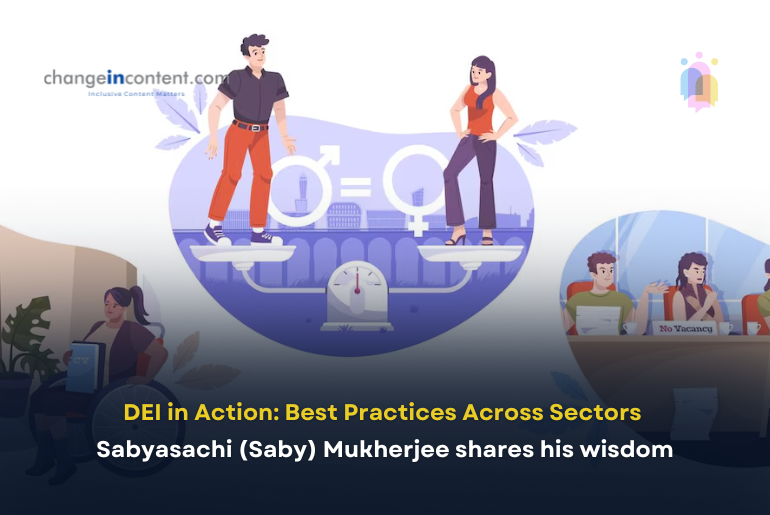
Diversity, Equity, and Inclusion (DEI) are essential pillars of organisational success. Companies and institutions across industries are beginning to realise that an inclusive workplace is a lot more than just ethical. It also drives productivity, innovation, and long-term sustainability. However, the journey toward true inclusion varies significantly across sectors. In this special feature, Sabyasachi (Saby) Mukherjee shares his insights into sector-wise best DEI practices, highlighting how different industries are implementing meaningful change.
From corporate diversity hiring strategies to inclusive healthcare policies, this comprehensive review of industry-specific DEI efforts offers a roadmap for businesses seeking to create authentic and equitable workplaces.
Introduction
Diversity, Equity, and Inclusion (DEI) have gained significant importance in India, with organisations recognising the value of diverse workforces and equitable workplaces. Implementing DEI practices across various sectors has proven to enhance innovation, productivity, and societal progress.
Corporate sector
In the corporate sector, companies are increasingly focused on fostering inclusive work environments. Leading organisations such as TATA, Godrej, Axis, Lemontree, Lalit Suri Group, Accenture and many others have incorporated DEI into their core values. Best practices in this sector include:
Diversity recruitment initiatives
Corporates are proactively focusing on diversifying their workforce by recruiting from marginalised communities, including women, people with disabilities (PWDs), and LGBTQ+ individuals. They set specific diversity targets and implement recruitment processes that minimise bias. Work is underway to create all-inclusive job descriptions and sensitise employees to remove unconscious bias.
Leadership development for underrepresented groups
Companies invest in training programs and mentorship initiatives to groom women, people of colour, and individuals from marginalised backgrounds for leadership roles. Clear mandates state that wherever talent choices are equal, it is better to bet on marginalised representation.
Employee Resource Groups (ERGs)
These groups play a crucial role in providing employees with a platform to discuss issues related to their specific identity groups. Companies like Accenture and IBM have successfully launched ERGs to offer community and networking opportunities for employees. We cannot undermine their importance in improving belongingness.
Flexible work policies
Extending Employee Care To support work-life balance and inclusivity, flexible working hours, work-from-home options, and elderly and child care facilities have been introduced to cater to diverse needs.
Education sector
The education sector in India is gradually integrating DEI policies to create inclusive learning environments. Universities, schools, and ed-tech companies have embraced inclusive teaching practices.
Affirmative action
The reservation system in India’s higher education institutions is a key DEI practice aimed at promoting the inclusion of underrepresented groups, including Scheduled Castes (SC), Scheduled Tribes (ST), and Other Backward Classes (OBC).
Inclusive curriculum design
Universities are adapting curricula to represent diverse perspectives, histories, and experiences, with a special focus on gender studies, minority rights, and accessibility. It is also vital to consider acceptable behaviour, and supporting other cohorts should be a part of moral and character-building science.
Campus accessibility
Many universities and schools are focusing on creating physically accessible campuses, such as by introducing ramps, elevators, and sign-language interpreters for students with disabilities.
Awareness programs and workshops
Schools and colleges conduct workshops to raise awareness on issues like mental health, gender equality, and inclusivity, promoting dialogue among students from diverse backgrounds.
Government sector
The Indian government has enacted several policies to foster DEI within public services and administration. Key best practices include:
Reservation Policies
The government’s reservation system ensures that Scheduled Castes, Scheduled Tribes, and Other Backward Classes are provided with access to public sector jobs, contributing to greater representation and participation.
Gender-sensitive policies
Programs such as the Beti Bachao Beti Padhao, Kanyashree or Ladki Behen Yojan scheme and initiatives promoting women’s support have been pivotal in improving gender equity.
Public awareness campaigns
The government runs campaigns to educate the public on the importance of DEI, mainly focusing on combating caste-based discrimination, promoting gender equality, and ensuring equal access to opportunities for all.
Skill development programs
Initiatives like Skill India and PMKVY focus on providing equitable access to vocational training for underprivileged and marginalised groups.
Healthcare sector
The Indian healthcare sector has recognised the need for DEI to ensure quality healthcare for all citizens, regardless of their socio-economic status or background.
Inclusive healthcare delivery
Hospitals and healthcare providers are focusing on accessibility for marginalised communities, including women, LGBTQ+ individuals, and people with disabilities. Special care units are being developed to meet the needs of these groups.
Workforce diversity in healthcare
Hospitals are implementing policies to ensure diversity in their workforce by hiring women doctors, nurses, and staff from underrepresented communities.
Training and sensitisation
Healthcare professionals are being trained on issues such as cultural competency, gender sensitivity, and mental health awareness to ensure they can meet diverse patient needs.
Sector-wise best DEI practices: The need for more
While we have made significant progress, challenges remain, particularly in sectors where traditional biases persist. More work is needed in male-dominated manufacturing or facility management industry in areas like:
Gender inclusion
Many companies are introducing policies to hire more women in blue-collar roles, where women’s participation has traditionally been low. Training programs are designed to equip women with the skills necessary to succeed in this sector.
Workplace safety and equality
A priority is ensuring that women and marginalised groups feel safe and supported in manufacturing plants. Several organisations have established anti-harassment policies, created women-only spaces, and established grievance redress mechanisms.
Skill development for marginalised communities
Manufacturing companies are implementing programs to upskill workers from underprivileged backgrounds. They are providing them with opportunities to advance their careers within the industry.
The final thoughts
Inclusive growth is only possible with a proper strategy, a focus on all aspects of society, and equity for all cohorts, not just some. We must also recognise that all this effort should not be tokenism; the actual representation should be present at all levels and grades of the organisation. Moreover, the belongingness of the employee should be considered as important as representation.
Sector-wise best DEI practices: The changeincontent perspective
The conversation around sector-wise best DEI practices often focuses on policies, quotas, and surface-level representation. But real DEI goes beyond numbers. It is about systemic change that establishes belonging at every level of an organisation. As Sabyasachi (Saby) Mukherjee highlights, different industries face unique challenges in building equitable workplaces.
However, the common thread is intentional action—whether it is expanding leadership pipelines for women, making education more accessible for marginalised communities, or ensuring fair representation in blue-collar jobs. The challenge now is to ensure that DEI does not become a box-ticking exercise. It should be a core business strategy that reflects in daily operations, policies, and leadership decisions.
At Changeincontent, we believe that true inclusion is about removing systemic barriers, not just creating opportunities. Tokenism is not progress, and representation without belonging is meaningless. The real measure of success will be when DEI is not an initiative but an ingrained part of organisational culture across every sector.
Disclaimer: The views expressed in this article are based on the writer’s insights, supported by data and resources available both online and offline, as applicable. Changeincontent.com is committed to promoting inclusivity across all forms of content. We broadly define inclusivity as media, policies, law, and history—encompassing all elements that influence the lives of women and gender-queer individuals. Our goal is to promote understanding and advocate for comprehensive inclusivity.