
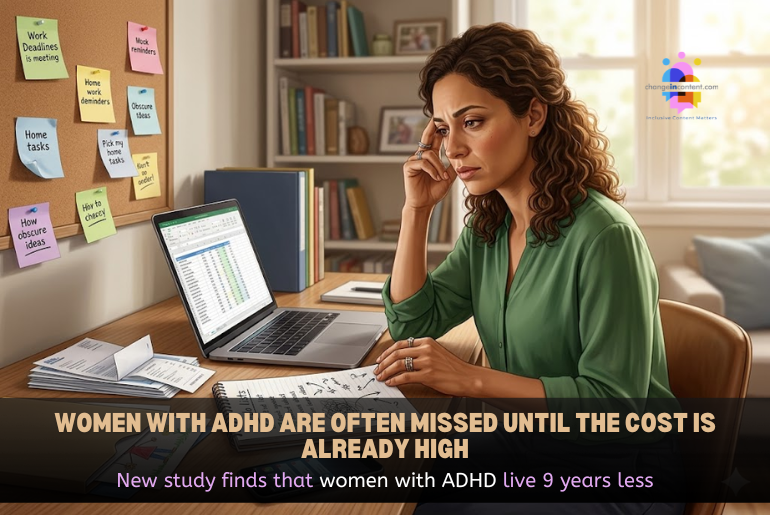
For many women, ADHD does not begin with a diagnosis. It begins with being called careless, too emotional, inconsistent, distracted, lazy, difficult, or simply bad at coping with ordinary life. That is what makes the conversation around Women with ADHD so much bigger than one new study.
When a condition is missed, misread, or delayed for years, the damage does not stay confined to school or work performance. It can shape mental health, self-worth, relationships, physical health, and eventually long-term survival.
That is why recent life-expectancy findings deserve attention, but also context. A UK-based study has found that adults with diagnosed ADHD may live significantly fewer years than the general population, with the gap appearing larger for women than for men.
But the story does not begin there. It begins much earlier, in the ways women’s symptoms are often overlooked, how ADHD still gets recognised through a male-centred lens, and how support too often arrives late or in fragments.
What is ADHD?
Attention-deficit hyperactivity disorder, or ADHD, is a neurodevelopmental condition marked by persistent patterns of inattention, hyperactivity, and impulsivity. These conditions interfere with daily functioning or development. Not everyone experiences it the same way.
Some people mainly struggle with attention, organisation, memory, and follow-through. Others show more visible restlessness or impulsivity. Many live with a mix of both. Symptoms have to be present across settings and begin in childhood, even if the diagnosis comes much later.
ADHD is not rare, and it is not only a childhood condition. Global estimates vary by study design, but reviews commonly report a prevalence of about 5% to 7% in children and around 2% to 3% in adults. What changes over time is not whether ADHD exists in adulthood, but how it is expressed and whether the person was ever correctly identified in the first place.
Women with ADHD live about 9 years less, study finds
A study published in the British Journal of Psychiatry points to a concerning gap in life expectancy for people with ADHD. Men with a diagnosis die about seven years earlier than men without ADHD. For women, it is around 9 years. When researchers compared diagnosed adults with the general population, they found a 6.78-year reduction in life expectancy for men and an 8.64-year reduction for women.
Many adults with ADHD face health risks that proper care could reduce. However, delayed diagnosis, irregular treatment, and limited long-term support make everyday management harder. Along with ADHD, many deal with anxiety, depression, and other health issues at the same time. These conditions affect both mental and physical well-being.
At the same time, the case is very different for women. A large number of women still do not receive a diagnosis, which means the data only includes those who have already been diagnosed and received some level of care. Many others continue without support, which raises questions about how much wider the gap could be. Therefore, the actual impact on women’s life expectancy could be much higher than current estimates.
Why women with ADHD are so often diagnosed late
Girls and women with ADHD often receive a diagnosis much later than boys and men. Doctors miss or misread symptoms in women, and gender stereotypes still affect how people understand the condition. Many women also develop coping methods early on, which can hide their struggles during assessments. Limited awareness among clinicians and the presence of other mental health conditions add to the delay.
Studies show that women receive an ADHD diagnosis between 16.3 and 28.6 years of age, while men usually get diagnosed between 11.2 and 22.7 years. In childhood and adolescence, boys receive diagnoses far more often, with ratios ranging from 2:1 to as high as 10:1. This early gap carries forward into adulthood and leaves many women without support during crucial years.
How diagnostic systems still miss women with ADHD
Most diagnostic rules for ADHD come from studies that did not include enough girls. When experts created manuals like DSM-5 and ICD-11, only about 21% of participants in key trials were female. This means the symptoms doctors look for mostly match how ADHD shows up in boys, not girls.
Because of this gap, doctors may miss how ADHD appears in women. Many women show less visible hyperactivity and more inattention, emotional stress, or internal struggles. These signs often get mistaken for anxiety, depression, or personality traits instead of ADHD.
The lower diagnosis rates in women do not necessarily mean fewer women have ADHD. Instead, a mix of biased diagnostic practices and social factors leads to underdiagnosis, while biological differences are supported by less evidence.
The long-term costs that women with ADHD continue to carry
Over time, women with ADHD face heavier consequences than men with the same condition. Many spend years without a diagnosis, managing school, work, and relationships without the support they need. Even after diagnosis, gaps in care, late intervention, and co-existing mental health issues continue to affect their daily lives and long-term health.
Research now shows that women with ADHD lose more years of life than men with the condition, even when they have been diagnosed and receive some level of care. This raises concerns about how effective and consistent that support really is over time, and whether women receive the same quality of care as men.
At the same time, a large number of women still do not know they have ADHD. They continue without answers, medical gaslighting, often blaming themselves for struggles linked to an untreated condition. Without diagnosis or support, these challenges build over the years and affect long-term health.
The gap, then, is not just about diagnosis. It extends to how women live, how they cope, and how long they can stay healthy. Until systems recognise and respond to these differences, women with ADHD will continue to carry a heavier burden.
Read next: Autism Awareness Month: Why the gender gap in diagnosis can no longer be ignored.
The Changeincontent perspective
The most important lesson here is not only that women with ADHD may face worse long-term outcomes. It is that those outcomes do not emerge from biology alone. They emerge from systems that still fail to recognise women early, take women’s symptoms seriously, and provide care that is consistent across adulthood. A condition that goes unnoticed for years does not simply sit in the background. It shapes education, confidence, finances, burnout, relationships, and mental health before formal care ever begins.
That is why the solutions need to start earlier and stay longer. Clinicians need better training in how ADHD presents in girls and women. Diagnostic frameworks need to reflect inattentive and masked presentations more honestly. Schools, colleges, and workplaces need pathways for support that do not depend on a crisis first. And healthcare has to stop treating women’s explanations of their own minds as less reliable than the stereotypes it already knows.
A knowledge-based conversation on ADHD becomes useful only when it changes recognition, care, and lived support.
The final thoughts
This story is not just about ADHD. It reflects a larger problem in how women’s health gets handled across conditions. Many women still face dismissal, doubt, or delay when they seek help. Their symptoms get minimised, explained away, or labelled as something else. This kind of medical gaslighting pushes diagnosis and care further out of reach.
Changing this means listening to women the first time they speak up. It means taking their symptoms seriously, asking better questions, and not forcing them to prove their own experiences. Awareness has to move beyond labels and into everyday practice, in clinics, in training, and in how care gets delivered.
Disclaimer: The views expressed in this article are based on the writer’s insights, supported by data and resources available both online and offline, as applicable. Changeincontent.com is committed to promoting inclusivity across all forms of content. We broadly define inclusivity in terms of media, policies, law, and history. It encompasses all elements that influence the lives of women and marginalised individuals. Our goal is to promote understanding and advocate for comprehensive inclusivity.
