The Brief
- The 40% figure measures labour-force participation among women aged 15 and above in 2025.
- It includes women working and those seeking or available for work.
- The corresponding employment measure was 38.8%.
- September 2026’s newer monthly figure uses a different measurement window.
- Earnings, security and control over income must accompany participation in judging empowerment.
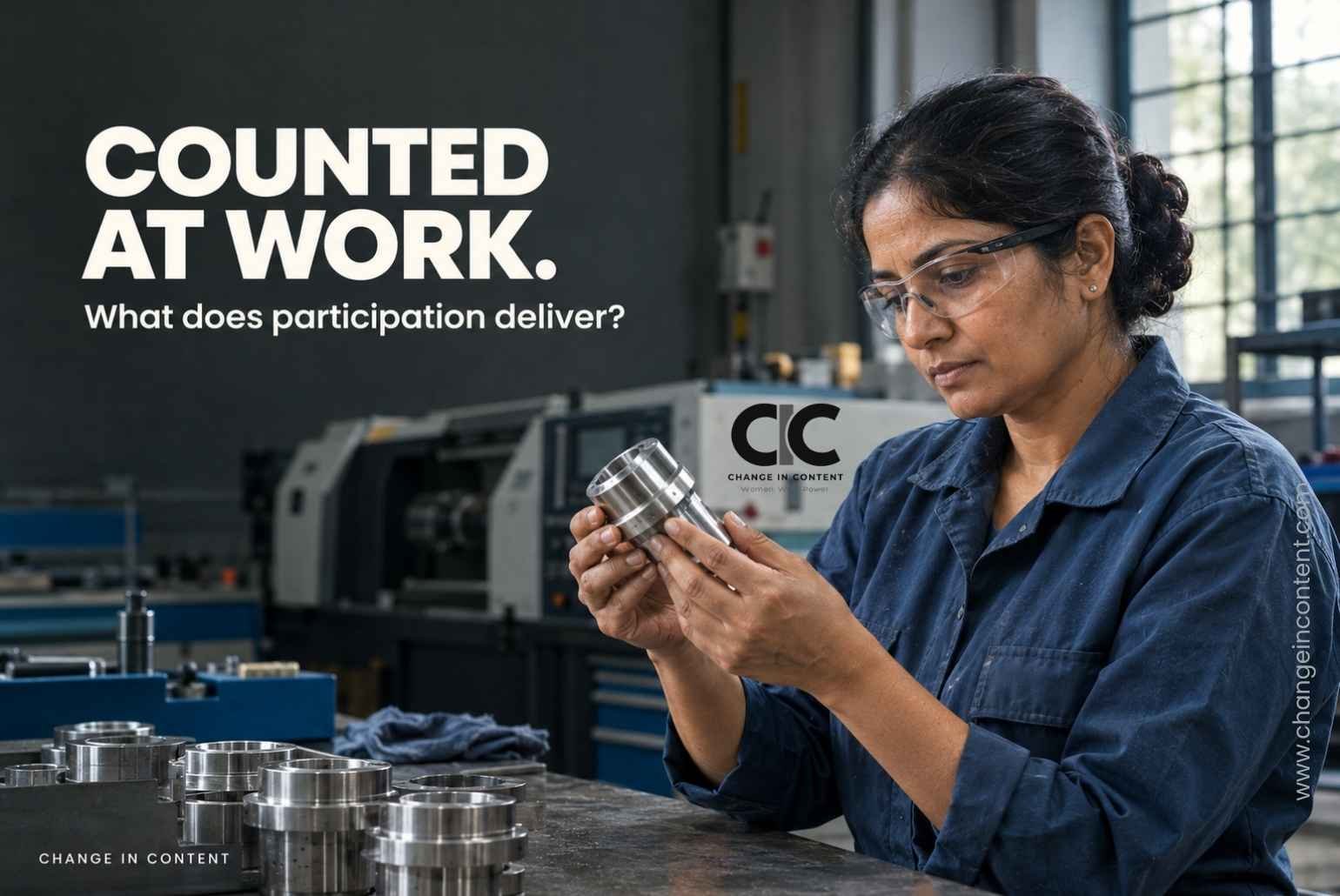
India’s women’s workforce participation figure of 40% deserves attention, and a careful reading. A government update published on 15 October highlights the increase from 23.3% in 2017–18. But the 40% figure refers to female labour-force participation in 2025, rather than a new employment milestone reached this October.
That gives Monday’s headline an essential qualification. More participation can widen women’s opportunities. Establishing how much financial independence it delivers requires looking beyond whether someone appears in the count.
Women’s workforce participation at 40%: What does 40% actually measure?
The labour-force participation rate, or LFPR, measures people who are employed or seeking or available for work as a share of the relevant population. Here, that population is women aged 15 and above across rural and urban India.
The worker population ratio, or WPR, counts those employed. For women in 2025, it stood at 38.8%. Neither figure means that women hold 40% of India’s jobs.
Both annual figures use “usual status”, which assesses activity over the preceding 365 days and includes principal and subsidiary activity. They should be read alongside the wider questions about women’s access to employment in India, rather than treated as a complete account of women’s working lives.
Timing matters too. The original annual release, published in March 2026, described participation and employment ratios as broadly stable against 2024. The October update makes a longer comparison with 2017–18. MoSPI also cautions that changes to the survey’s sampling and estimation from January 2025 can influence comparisons with earlier results.
There is a more recent reading. The September 2026 monthly bulletin reports female LFPR of 34.6%, compared with 34.1% a year earlier. It uses current weekly status, covering activity over the preceding seven days. Reading 40% and 34.6% as a straightforward decline would mix two different measures.
Being counted as employed does not always mean receiving a wage
The employment count includes several kinds of work: salaried employment, casual labour and self-employment. Within self-employment, the survey also recognises unpaid helpers in household enterprises.
Consider two illustrative situations. A woman receiving wages at a food-processing unit and a woman helping without individual pay in a family-run shop can both be counted as employed. Their work contributes economically, but their access to money may differ considerably.
Unpaid domestic duties within one’s own household are classified separately. Cooking, cleaning or caring for family members does not, by itself, make someone employed in the survey. This is a statistical boundary, not a judgement about the value of that labour.
Equally, self-employment should not automatically be treated as insecure or unsuccessful. A profitable business can offer substantial independence. The useful questions concern its earnings, stability and ownership, and whether the woman doing the work can make decisions about the income.
That is why redistributing women’s unpaid care work belongs in an employment conversation. A paid opportunity becomes difficult to sustain when care arrangements, working hours and the journey to work cannot fit together.
Credit, customers and skills: The policy effort behind participation
The October government update identifies support across several stages of enterprise development. It reports that women accounted for two-thirds of the more than 57.79 crore MUDRA loans sanctioned cumulatively by April 2026. These are loan accounts, not a count of unique women or successful businesses.
Access to customers is another part of the picture. Women-owned micro and small enterprises received contracts worth more than ₹28,000 crore through Government e-Marketplace in 2025–26, according to the update. Contract value, however, cannot tell us how much profit reaches each owner.
On skills, NAVYA had trained 1,105 adolescent girls by 31 August 2026 against its target of 3,850. Training creates an opening; placements, retention and subsequent earnings reveal what follows.
These measures address practical barriers and deserve recognition. Credit can fund equipment, procurement can create demand, and training can open occupations that previously felt inaccessible. Their existence alone cannot establish how much of the national participation change they caused.
The next stage of evaluation should follow women beyond enrolment or registration.
- Are borrowers building viable businesses?
- Are suppliers paid promptly?
- Are trainees finding work they can reach, retain and progress in?
The Change in Content We Need
For employers, this means examining retention, pay progression, predictable shifts and workable care support alongside hiring. For enterprise programmes, it means following revenue, repeat customers and income after business costs. Public reporting becomes more useful when it connects participation with these outcomes.
Women’s economic contribution deserves to be recognised accurately. So does the effort going into expanding their opportunities. The 40% figure helps describe participation; the stronger test of progress is whether work gives more women reliable income, safer conditions and greater freedom to make their own choices.
Editorial note and official sources
This report uses official government releases and PLFS definitions checked on 18 October 2026. Annual and monthly estimates are distinguished by reference period and measurement method. Programme figures retain their stated dates; they do not establish causation. The workplace examples are illustrative, and the recommendations are Change in Content’s editorial interpretation.
- Press Information Bureau — Women, Work and Enterprise: India’s Push for Better Livelihoods, 15 October 2026.
- MoSPI — PLFS Annual Report 2025 release, 27 March 2026.
- MoSPI — PLFS Monthly Bulletin September 2026 release, 15 October 2026.
- MoSPI — PLFS survey changes and questionnaire, 2025.